Consumers are tuning out traditional ads—and turning to one another instead. In today’s digital landscape, user-generated content (UGC) has emerged as one of the most powerful tools for brands looking to build authenticity, foster trust, and increase conversions. Whether it’s a customer review, an unboxing video, a tagged social media post, or a product photo shared by a fan, UGC serves as modern word-of-mouth marketing.
Unlike polished brand campaigns that are carefully scripted and professionally produced, user-generated content is raw, unscripted, and grounded in real-life experiences. It captures genuine emotions, spontaneous moments, and the authentic voices of everyday users. That authenticity is exactly what makes it so powerful—it feels more trustworthy, more human, and ultimately, more persuasive.
Why User-Generated Content Works
People trust people. UGC provides proof that real users are engaging with your product or service—and enjoying it. It reduces hesitation, overcomes skepticism, and gives potential customers the social reassurance they need to buy.
Key reasons UGC drives trust:
It adds credibility: A happy customer story feels more genuine than a paid ad
It improves conversion rates: Pages with authentic reviews or photos tend to convert better
It humanizes your brand: UGC highlights real people and real experiences
It supports community building: Sharing content from your audience shows you value their voice
In a world where consumers crave transparency, UGC delivers social proof in a way no in-house creative team can replicate.
Types of User-Generated Content You Can Leverage
UGC comes in many forms across channels. Some of the most effective include:
Social media posts: Photos, videos, or stories where users tag your brand
Product reviews and ratings: Honest feedback shared on your website or third-party platforms
Testimonials: Longer, story-based endorsements you can feature on landing pages
Unboxing or “how-to” videos: Especially common for tech, beauty, and lifestyle products
Forum comments or blog mentions: Natural brand mentions in niche communities
Contests and challenges: User-created submissions prompted by campaigns
Each of these assets provides a new opportunity to reach prospects in a trustworthy and engaging way.
How to Get More User-Generated Content
Encouraging customers to share their experiences doesn’t always happen organically—you need a thoughtful strategy.
1. Make the ask simple and clear
Sometimes all it takes is asking. Use post-purchase emails, thank-you pages, or packaging inserts to encourage users to:
Leave a review
Share a photo or video on social media
Tag your brand for a chance to be featured
Make it easy by offering direct links or hashtags they can copy.
2. Create a branded hashtag
A memorable hashtag allows you to organize and track user content across platforms.
Tips:
Keep it short, unique, and on-brand
Promote it on product pages, social bios, and in email campaigns
Engage with users who use the hashtag—like, comment, or reshare
When done well, a hashtag becomes a hub for brand storytelling led by your audience.
3. Run UGC-based contests or campaigns
Incentivizing participation can increase UGC submissions dramatically.
Examples:
Share your best experience using [product] and win [reward]
Post a photo with [hashtag] for a chance to be featured
Tell your story in the comments—our favorite gets a free gift
Be sure to outline simple rules, and always request permission before using submitted content in official materials.
4. Highlight UGC regularly on your channels
The more you showcase user content, the more others will want to participate.
Places to feature UGC:
Instagram stories and feed
Facebook and LinkedIn posts
Homepage or product pages
Email newsletters
Paid ad creatives
When customers see their peers being highlighted, it encourages others to join in.
Best Practices for Using UGC Effectively
While UGC is inherently more informal, brands should still follow a few key guidelines when integrating it into marketing:
Always ask for permission before reposting or repurposing
Give clear credit to the original creator
Choose content that aligns with your brand’s values and tone
Moderate reviews to filter out spam, but don’t delete honest criticism
Maintain a diverse mix of content formats and user perspectives
Respect and recognition go a long way in sustaining a healthy community of advocates.
What This Means for Your Brand
User-generated content is more than a trend—it’s a bridge between brand and buyer. It breaks down the barriers of polished marketing and brings authenticity to the forefront of your digital presence. By encouraging and embracing UGC, you not only build trust—you invite your audience to become part of the story.
Done right, UGC transforms your customers into marketers, your community into your creative team, and your brand into a conversation.
Interested in building a UGC strategy that grows with your business? Check out more actionable guides and ideas on our blog to start turning customers into your most credible content creators.
Digital marketing is no longer a one-way broadcast—it’s a conversation. As audiences become more skeptical of traditional advertising, they’re turning to spaces where they can connect, learn, and belong: digital communities. These online tribes—formed on platforms like Facebook Groups, Reddit, Discord, Slack, and private forums—are shaping consumer behavior and brand perception like never before.
For marketers, the shift is no longer optional—building or engaging in digital communities has become a core strategy for driving meaningful engagement, brand trust, and long-term customer loyalty.
Why Digital Communities Matter Now
In a world flooded with constant content, competing messages, and algorithm-driven experiences, people are no longer just looking for information—they’re seeking connection, meaning, and a sense of belonging. Digital communities fulfill this need by offering a space where authenticity thrives, real conversations happen, and individuals feel seen, heard, and valued beyond the transactional noise of typical marketing channels.
What’s driving the surge?
Trust in peers over brands
The decline of organic social reach
The rise of interest-based groups
Customer-led growth movements
From parenting groups to SaaS Slack channels to niche subreddits, these ecosystems are where buying decisions are influenced, often without a brand directly involved.
Types of Digital Communities Brands Can Engage With
Owned Communities
You control the space, content, and moderation.
Examples: Facebook Groups, private forums, membership sites, Discord servers Use cases: Product feedback, VIP access, support groups, ambassador programs
Participatory Communities
Spaces you don’t own but actively contribute to.
Examples: Reddit threads, Quora, industry-specific Slack groups Use cases: Sharing value, answering questions, building authority
Platform-Based Micro-Communities
Smaller, algorithm-driven spaces that behave like communities.
Examples: Twitter Spaces, LinkedIn groups, Instagram broadcast channels Use cases: Topic education, idea validation, interactive campaigns
Strategies to Leverage Digital Communities
1. Lead with value, not promotion
The fastest way to alienate a community is to sell too early or too often. The most respected brands in these spaces are listeners and contributors first.
Tips:
Answer questions sincerely, even if your product isn’t the solution
Share insights, tools, or experiences without strings attached
Offer exclusive content or early access in exchange for feedback
People want to feel that you’re there to help, not just to promote.
2. Create community-led content
Your community is a content goldmine. Tap into their voices to create marketing that’s more credible and relatable.
Ideas:
Turn real questions into blog posts or videos
Use testimonials or discussion highlights
Invite members to co-create (guest posts, webinars, Q&As)
This approach not only builds trust, but it also increases engagement and visibility.
3. Identify your community advocates
Every thriving community has a few highly active and passionate members. These are your future brand ambassadors.
How to engage:
Recognize and reward their contributions
Give them early access or testing opportunities
Encourage them to lead discussions or moderate
When advocates feel seen, they naturally become champions for your brand.
4. Monitor sentiment and conversation trends
Communities offer unfiltered insight into your audience’s priorities and pain points.
What to track:
Repeated questions or complaints
Phrases people use to describe your product or industry
Emerging themes or unmet needs
These insights can shape your content, product roadmap, and messaging.
5. Use the community as a support channel
Support inside a community builds transparency and loyalty. It’s also an efficient way to reduce response time and create peer-to-peer help systems.
Platforms to consider:
Facebook Groups with designated Q&A threads
Subreddits or Discord channels dedicated to support
Product forums with searchable answers
Users appreciate quick help, and many enjoy helping others in return.
What This Means for Brand Growth
Community is more than just engagement—it’s the foundation of sustainable brand trust. Businesses that invest in genuine conversation, shared purpose, and long-term connection stand out in a noisy digital landscape.
Whether you’re building a group from scratch or joining one that already exists, the same principle applies: listen more, contribute often, and let your audience lead. Over time, these spaces evolve into something more powerful than any single campaign—a living, breathing network of advocates, customers, and collaborators.
Looking to start your brand’s community or join one that matters? Explore more resources on our blog to discover how to grow your brand in the most human way possible—through connection.
Search engine optimization (SEO) has long been about earning the click. But as Google evolves to provide more immediate answers directly on the results page, businesses are facing a new challenge: how to win in search when users never actually visit your site.
This growing trend, known as zero-click searches, is reshaping how marketers think about SEO. Rather than focusing solely on page visits, today’s strategies must consider how to capture attention, build authority, and deliver value—even when users stay on the SERP (Search Engine Results Page).
What Are Zero-Click Searches?
Zero-click searches happen when users find the information they need right on the search page, without clicking through to any website. These answers are typically displayed in formats such as:
Featured snippets (paragraphs, lists, tables)
Knowledge panels
People Also Ask boxes
Google Business listings
Weather, stock, and sports widgets
Definitions or calculator results
According to industry studies, more than 50% of Google searches result in zero clicks, especially on mobile. While that might sound discouraging, it opens a new playing field for brands that know how to adapt.
Why Zero-Click SEO Matters
Even if a search doesn’t drive direct traffic to your site, it can still deliver brand visibility, credibility, and user engagement. Appearing in high-visibility positions like featured snippets or local packs signals authority, especially when users associate your name with reliable, fast answers.
Consider this: if someone sees your brand answering a key question, they’re more likely to remember you, click on you later, or choose your product when ready to buy. Zero-click visibility builds top-of-mind awareness and trust, even without the click.
How to Optimize for Zero-Click Opportunities
1. Target Featured Snippets
Featured snippets are pulled from high-ranking pages that answer a query clearly and concisely. To compete for these:
Identify common questions in your niche (use tools like Answer the Public, AlsoAsked, or Google’s People Also Ask)
Write direct answers in 40–60 words
Use proper formatting (lists, tables, headings)
Answer one clear question per paragraph
Example: If the query is “What is behavioral marketing?”, write a header with that exact phrase and follow it with a short, precise definition.
2. Optimize for Branded Search and Knowledge Panels
When users search for your company name, you want to dominate that space with rich, accurate information.
Claim and verify your Google Business Profile
Use structured data (schema markup) on your website (for organization, FAQ, reviews, events, etc.)
Ensure consistency in your NAP (name, address, phone number) across the web
Encourage positive reviews and update your business description regularly
Goal: Own as much of the SERP real estate for your brand name as possible.
3. Create Clear and Contextual Content
Google favors content that answers user intent. Rather than stuffing keywords, focus on clarity and structure.
Use short, clean headings with natural language
Include FAQ sections to target multiple questions
Avoid walls of text—use bullet points and bolded phrases
Match content length to the query type (brief for definitions, longer for how-tos)
Pro tip: Add a “key takeaway” box or summary at the top of longer posts for quick scanning.
4. Use Schema Markup Strategically
Schema markup helps search engines understand your content better and increases the chances of showing up in rich snippets.
Zero-click searches aren’t just text-based. Google is integrating more visual and local features:
Use alt text and image schema to optimize visuals for search
For local businesses, focus on Google Maps visibility, reviews, and accurate listings
Upload regular photos to your Google Business Profile (Google favors freshness)
Outcome: You’re not just in the rankings—you’re present across the full digital touchpoints.
Key Takeaways
Zero-click searches are not a threat—they’re a new opportunity. Brands that adapt by focusing on clarity, structure, and helpfulness will continue to succeed, even when users don’t visit their site immediately.
Visibility, not just traffic, is the new benchmark for SEO performance. By optimizing for featured snippets, structured data, and voice-friendly content, your business can gain trust, win mindshare, and stay relevant in an evolving digital landscape.
Want more ways to strengthen your SEO presence? Browse our blog for practical strategies, fresh insights, and real-world tactics to keep your marketing future-ready—clicks or no clicks.
Digital marketing isn’t just about technology, data, or creative visuals—it’s deeply rooted in human behavior. Understanding why people click, buy, or bounce is just as important as knowing how to run ads or build funnels.
By tapping into the psychological triggers that influence decision-making, marketers can create messages and experiences that resonate with audiences on a subconscious level. Concepts like scarcity, social proof, and cognitive ease aren’t new, but applying them thoughtfully to digital strategy can dramatically improve engagement and conversion rates.
What Are Behavioral Triggers in Marketing?
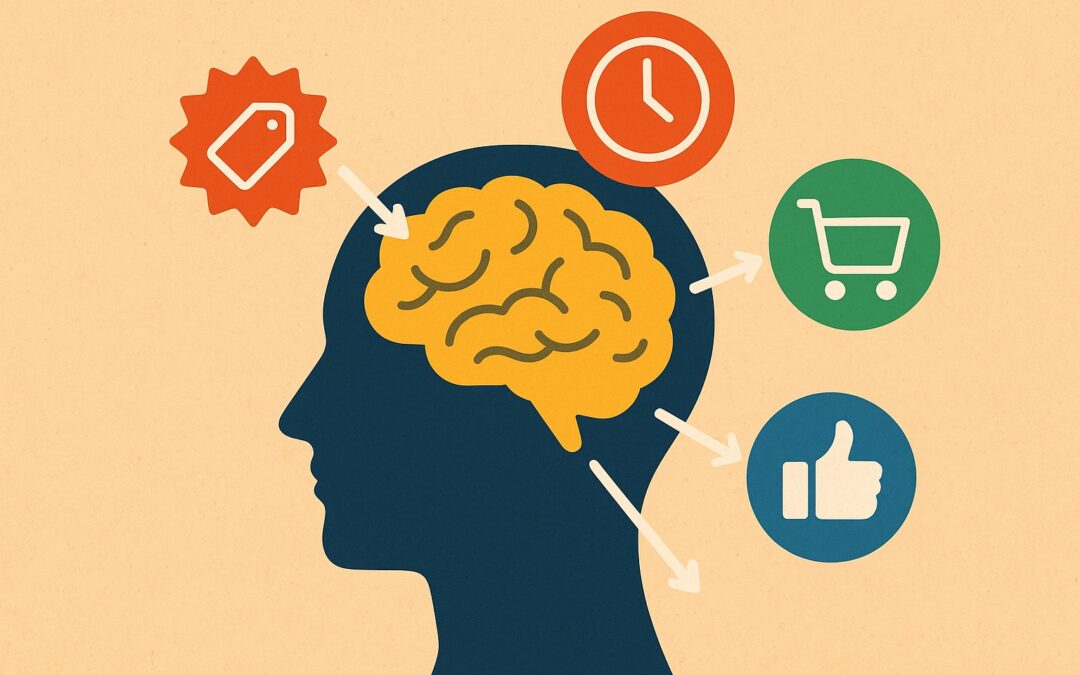
Behavioral triggers are subtle psychological cues that influence how people act—especially when making purchasing decisions. These triggers work beneath the surface of conscious thought, guiding users to take action based on instinct, emotion, and social dynamics.
When woven into digital touchpoints like websites, emails, and ads, these principles help brands build trust, drive urgency, and increase sales without sounding pushy.
Five Proven Psychological Triggers That Boost Conversions
1. Scarcity: The Power of Limited Availability
Scarcity creates value by signaling that something won’t be around forever. When users see limited stock or exclusive access, they tend to act faster, driven by the fear of missing out (FOMO).
Examples to try:
“Only 2 spots left in the course”
“Early bird pricing ends tonight”
“Limited-time bundle offer”
Why it works: People naturally assign more value to things that are harder to get. Scarcity taps into loss aversion, a powerful motivator.
2. Urgency: Prompting Quick Decisions
Urgency adds time pressure, prompting users to make faster decisions. When the clock is ticking, hesitation turns into action.
Ways to build urgency:
Countdown timers on landing pages
Flash sale announcements via email or SMS
Time-sensitive bonuses (e.g., “Sign up today and get a free guide”)
Use it ethically: Avoid artificial urgency. Repeat countdowns or false deadlines can break trust. Be honest—and make the offer worth it.
3. Social Proof: Reassurance in Numbers
When people see others engaging with a product or service, they feel more confident in making the same choice. That’s the essence of social proof.
Effective formats include:
Star ratings and user reviews
Testimonials with photos or job titles
“Trusted by 5,000+ professionals” statements
Placement matters: Showcase social proof on product pages, checkouts, or email opt-in forms to reduce doubt and build credibility.
4. Reciprocity: Give to Get
Reciprocity works because people feel a natural obligation to return a favor. Offering something valuable up front—like a free trial or premium resource—can lead to stronger engagement and future conversions.
Ideas for value-first offers:
Downloadable templates or toolkits
Free consultations or mini-courses
Personalized assessments or audits
Bonus tip: Make the gift truly useful. Generic freebies feel like bait. High-quality, relevant content builds trust and positions your brand as generous and helpful.
5. Cognitive Ease: Remove Friction
When content is easy to understand and interact with, users are more likely to convert. Cognitive ease refers to how smoothly people can process information, which directly affects how much they trust it.
Simplify the journey by:
Using clean, uncluttered page layouts
Writing in plain, clear language
Designing intuitive navigation and CTAs
Real-world impact: A complicated checkout or wordy landing page increases bounce rates. Make every step feel natural and effortless.
Strategic Application Across the Funnel
Each psychological trigger plays a different role depending on where the user is in the buying journey:
Trigger
Best Used At
Sample Use Case
Scarcity
Product and service pages
Display limited stock count
Urgency
Email, landing pages
Flash sale announcements
Social Proof
Homepage, testimonials
Highlight top reviews
Reciprocity
Lead magnets, pop-ups
Offer free ebook for sign-up
Cognitive Ease
Entire site experience
Clear, fast-loading pages
Stacking these triggers—without overwhelming the audience—can lead to compounding results. For example, a landing page offering a free template (reciprocity) with testimonials (social proof) and a limited-time bonus (urgency) covers three bases without feeling forced.
Staying Ethical in Psychological Marketing
Using behavioral triggers isn’t about manipulation—it’s about alignment. The goal is to match your message with how users naturally think and behave.
Avoid these pitfalls:
Faking urgency or limited availability
Using deceptive social proof or fake reviews
Overcomplicating user journeys to create confusion
Transparency, value, and consistency are your best long-term assets. Aim to guide, not pressure. Audiences can sense the difference.
Final Thoughts
Digital marketing powered by psychology gives brands an edge, not because it tricks people, but because it speaks their language. When campaigns mirror how people already make decisions, you’re not pushing them—you’re helping them say yes.
Behavioral triggers like scarcity, urgency, social proof, reciprocity, and cognitive ease are proven tools to increase engagement and conversions. Test them thoughtfully, measure results, and always prioritize user trust.
Ready to elevate your digital strategy with psychology-backed techniques? Explore more insights on our blog for practical tips and real-world examples of marketing that speak to the mind—and convert from the heart.
In an environment where customer expectations shift quickly and competition grows tighter by the day, making informed decisions isn’t enough—brands need to anticipate what comes next. Predictive analytics offers marketers a way to do just that. By analyzing historical data patterns, predictive tools help forecast future behaviors, preferences, and outcomes, enabling smarter campaigns and more strategic resource allocation.
This isn’t about crystal-ball guessing. It’s about using real data—clicks, purchases, engagements, and more—to predict which customers are likely to buy, churn, or respond to a particular message. When used responsibly, predictive analytics strengthens personalization, reduces wasted spend, and helps businesses stay one step ahead.
What Is Predictive Analytics in Marketing?
Predictive analytics involves the use of statistical algorithms, machine learning, and historical data to forecast future events or customer actions. In marketing, this means applying those insights to improve segmentation, messaging, product recommendations, ad targeting, and campaign planning.
For example, based on a user’s previous browsing and purchase history, predictive models can estimate their likelihood to convert, respond to an upsell, or unsubscribe from communications. These insights allow marketers to tailor their actions accordingly—without waiting for the behavior to occur.
Why It Matters More Than Ever
In today’s data-rich but attention-poor landscape, timing and relevance are everything. Predictive analytics helps marketers focus efforts where they’re most likely to pay off. It removes guesswork from key decisions, whether you’re deciding who to retarget, when to send a follow-up email, or what content to promote.
Moreover, predictive insights allow for greater personalization at scale. Instead of creating generic segments based on age or geography, marketers can prioritize based on future value—targeting high-probability buyers or identifying customers at risk of leaving.
This kind of foresight doesn’t just optimize campaigns—it improves customer experience. When users receive messages that reflect their needs and timing, trust and engagement naturally follow.
Common Use Cases in Marketing
Marketers across industries are using predictive analytics in ways that are both strategic and practical. Some of the most common applications include:
Lead scoring Assigning a probability to each lead based on their likelihood to convert. This helps sales and marketing teams prioritize outreach and allocate resources more effectively.
Churn prediction Identifying customers who are showing signs of disengagement. Early intervention—like personalized offers or check-ins—can reduce loss and boost retention.
Product recommendations Using past purchase behavior and browsing history to suggest relevant items. This is widely used in e-commerce and subscription services.
Dynamic pricing Adjusting prices based on predicted demand, user behavior, or timing. This technique is common in travel, SaaS, and online retail.
Campaign optimization Testing creative elements, timing, and channels to predict which combinations will yield the best results—before the campaign finishes running.
These use cases demonstrate how predictive analytics can support both high-level planning and day-to-day decision-making.
Tools and Technologies That Make It Possible
You don’t need to build a data science team from scratch to implement predictive analytics. Many modern marketing platforms now include built-in predictive capabilities or integrations with analytics tools. Some of the most accessible options include:
CRM and marketing automation tools like Salesforce, HubSpot, and Marketo, which offer predictive lead scoring and customer lifecycle modeling.
E-commerce platforms like Shopify and BigCommerce that support predictive recommendations through apps or built-in features.
Analytics suites such as Google Analytics 4, Adobe Analytics, or Mixpanel, which can track events and model likely user paths.
Dedicated predictive platforms like Pega, SAS, or IBM Watson Marketing for businesses with complex data environments and personalization needs.
Choosing the right tool depends on your company size, tech stack, and data maturity. Even simple models can bring value when integrated thoughtfully into marketing workflows.
Best Practices for Success
To fully harness the potential of predictive analytics in marketing, it’s essential for teams to approach it with a clear framework. This involves more than just adopting the right tools—it requires setting intentional goals, maintaining clean data, and applying insights with both strategy and sensitivity. The following principles can help guide a thoughtful and effective implementation:
Start with clear objectives Before building or applying any predictive model, define what you want to achieve. Whether it’s increasing email engagement, reducing customer churn, or optimizing ad spend, having a specific goal ensures that the analytics remain actionable and focused.
Use quality data Predictive accuracy depends on the quality of the data feeding the model. Work with clean, relevant, and up-to-date information. Remove duplicates, fill gaps where possible, and ensure your sources are consistent and reliable.
Test and validate predictions Don’t assume that predictions will always be correct. Continuously measure your model’s performance against real-world results. Use A/B testing and feedback loops to refine predictions and understand what’s working—or not.
Balance automation with human oversight Predictive tools are powerful, but they should inform rather than replace strategic decision-making. Combine analytical insights with human experience and brand understanding to guide creative direction and campaign choices.
Be transparent and respect privacy Use customer data responsibly by clearly communicating how it will be used. Offer users control over their preferences and comply with regulations like GDPR or CCPA. Ethical handling of data builds trust and long-term credibility.
Final Perspective
Predictive analytics empowers marketers to make proactive, data-informed decisions that align with user needs and business goals. Instead of reacting to behavior, you’re anticipating it—creating more targeted, timely, and effective campaigns in the process.
As tools become more accessible and models more refined, predictive analytics is no longer reserved for large enterprises. Any team willing to invest in data structure and testing can benefit from this approach. In a landscape defined by change and choice, the ability to look ahead is no longer a luxury—it’s a competitive necessity.
Modern digital marketing is less about broadcasting one message to a broad audience and more about understanding individual behavior and delivering tailored experiences. That’s where behavioral segmentation comes in. By categorizing your audience based on what they do, rather than just who they are, you can develop campaigns that are timely, relevant, and more likely to convert.
Behavioral segmentation helps marketers group users by actions such as website visits, content interaction, past purchases, app usage, and more. Unlike demographic or geographic data, these behaviors reveal intent. They tell you not just who the customer is, but how they think and what stage of the buyer journey they’re in.
This strategy allows brands to move from guesswork to precision, crafting messages that respond to what users actually want in real time.
Why Behavioral Segmentation Matters
Customer behavior provides context that traditional data can’t. Two people might share the same demographic profile, but their actions tell completely different stories. One might be browsing repeatedly without buying, while the other converts after a single visit. Treating them the same wastes potential.
When you analyze and group customers based on behavior, you can prioritize what matters to them. That leads to more relevant email campaigns, smarter ad targeting, and higher-performing landing pages.
Marketers using behavioral segmentation often see stronger engagement metrics, including lower bounce rates, longer session times, and better return on ad spend. More importantly, it enhances customer satisfaction because people feel like the brand understands them.
Types of Behavioral Segmentation
There are many ways to approach behavioral segmentation, but the most effective strategies often combine a few core categories:
Purchase behavior Segment users by what they’ve bought, how often, and how recently. This is essential for upselling, cross-selling, and re-engagement strategies.
Engagement level Analyze how often users visit your website or app, what pages they view, and how long they stay. Frequent interaction may indicate high interest or loyalty.
Occasion-based behavior Look at when users interact with your brand—seasonal shopping, event-based usage, or lifecycle moments like birthdays or renewals. These insights help you time your offers.
Usage behavior For SaaS and app-based products, this includes features used, frequency of login, or completion of onboarding. This data supports retention and training strategies.
Benefits sought Track what users value most—whether it’s low prices, fast delivery, or specific product features. Behavioral tags like this can guide product development as well as marketing.
Each type adds another layer to your understanding of customer motivation, allowing you to tailor content, offers, and messaging accordingly.
Applying Behavioral Segmentation in Campaigns
Once you’ve segmented your audience by behavior, the next step is to act on it. Here’s how to apply those insights across channels:
Email marketing Send dynamic emails based on behavior. For example, trigger a cart abandonment email for users who added items but didn’t check out, or reward loyal buyers with exclusive discounts based on purchase frequency.
Ad targeting Tailor your display or social ads to specific user segments. You might target high-engagement users with upgrade offers or re-engage dormant ones with time-limited discounts.
Website personalization Show different homepage banners or featured products based on user behavior. Someone browsing a specific product line can be greeted with content or offers related to that interest on their next visit.
Product recommendations Use behavioral history to suggest products that align with what the customer has viewed or bought. This is one of the most powerful conversion tools in e-commerce.
Customer retention workflows For users who haven’t logged in or interacted for a while, set up reactivation campaigns with helpful reminders, updates, or incentives to return.
Behavioral segmentation creates opportunities for automation without sacrificing relevance. When executed well, it feels like the brand is one step ahead—offering exactly what the user needs, when they need it.
Tools That Support Behavioral Segmentation
Implementing behavioral segmentation doesn’t require guesswork. Many marketing tools now integrate behavioral data as a core feature:
CRM platforms like HubSpot, Salesforce, and ActiveCampaign can track user behavior across multiple channels and build workflows around those insights.
Email automation tools such as Mailchimp or Klaviyo offer behavior-triggered campaigns based on actions like clicks, opens, and product views.
Analytics tools, including Google Analytics 4, Mixpanel, and Heap, allow marketers to view granular user paths, engagement scores, and conversion behavior.
On-site personalization platforms like Optimizely or Dynamic Yield help deliver behavior-based experiences in real time.
Choosing the right mix depends on your business type, but even small to mid-sized teams can use behavioral data to create sophisticated customer journeys with minimal complexity.
The Balance Between Personalization and Privacy
As with any data-driven strategy, behavioral segmentation requires transparency and trust. Let users know what you’re collecting and why. Provide easy opt-out options and comply with regulations like GDPR or CCPA.
Personalization works best when users feel they’re gaining something in return. Whether it’s better recommendations, faster service, or fewer irrelevant emails, the value exchange should always be clear.
Striking that balance not only protects your brand, it reinforces the sense that your marketing is thoughtful and respectful, rather than invasive.
Final Perspective
Behavioral segmentation is one of the most practical ways to bridge the gap between data and real customer value. By observing what people do, rather than assuming based on static categories, you can deliver marketing that feels relevant, timely, and personal.
As digital competition increases, it’s no longer enough to rely on broad segments or generic messaging. Behavioral data gives you the insight needed to adapt in real time and meet your audience where they are in their journey.
In a world where personalization drives results, behavioral segmentation gives you the strategy to do it with clarity and precision.