
by Research Team | Jan 17, 2026 | Artificial Intelligence, Automation, Digital Marketing
Automation has become a cornerstone of modern marketing. From chatbots and email sequences to AI-driven personalization and predictive analytics, technology allows businesses to reach wider audiences with greater efficiency. Yet with this convenience comes a challenge: how to maintain a sense of humanity in an increasingly automated world.
Customers still crave authenticity. They want to feel seen, heard, and valued—not like they are just another data point in a system. Finding the right balance between automation and human touch is what separates brands that build lasting loyalty from those that fade into the noise.
Why Automation Alone Isn’t Enough
Automation saves time, scales campaigns, and reduces costs. It makes personalization possible on a scale that would otherwise be impossible. But when overused or poorly executed, it can feel robotic and impersonal.
Think of an inbox overflowing with automated emails that sound identical, or a chatbot that can’t understand nuanced questions. Instead of building trust, these experiences erode it. Customers expect efficiency, but they also expect empathy and understanding.
Where the Human Touch Matters Most
While automation excels at efficiency, not every interaction can or should be handed off to a machine. Some situations demand empathy, nuance, and the ability to respond flexibly in ways that technology has yet to master. These are the moments when the human touch becomes irreplaceable, shaping experiences that feel genuine and leaving customers with a sense of being heard and understood:
- Customer service escalations: When frustration is high, speaking with a real person can diffuse tension in a way automation cannot.
- Storytelling and brand voice: Content rooted in authentic experiences resonates more deeply than AI-generated filler.
- Relationship building: Sales conversations, networking, and partnerships thrive on human connection.
- Creative strategy: While AI can assist with insights, vision and originality often emerge from human perspective.
Automation works best when it supports people in these roles rather than replacing them.
Using AI and Automation Wisely
Automation is not the enemy of authenticity—in fact, when implemented with intention, it can enhance human efforts rather than replace them. The challenge lies in finding ways to use technology as a supportive partner instead of letting it dominate every customer touchpoint. Successful brands understand this dynamic and take steps to design workflows where automation amplifies value while people remain central to the experience. They often:
- Automate repetitive tasks like scheduling, data collection, and simple FAQs, freeing humans for more complex work.
- Use AI as a co-pilot rather than a replacement, assisting with ideation, analysis, or content drafts while keeping humans in control.
- Blend personalization with empathy, ensuring messages sound genuine and reflect an understanding of the audience’s real needs.
- Set clear boundaries for when automation should hand over to a person, such as escalating customer service issues quickly.
By positioning automation as a tool that enhances rather than replaces human value, businesses can maintain both efficiency and authenticity.
Balancing Technology With Storytelling
Storytelling remains one of the most powerful tools in marketing. AI may help generate ideas or analyze engagement data, but authentic stories come from lived experience. A customer testimonial, a behind-the-scenes look at your team, or the founder’s personal journey brings a human element that automation cannot replicate.
Sharing these stories through automated channels—like email, social media, or chatbots—creates the best of both worlds: technology delivers the message, but humanity provides the heart.
Challenges in Striking the Balance
Balancing automation with authenticity is easier said than done. While the promise of efficiency and scalability is tempting, too much automation can create experiences that feel detached or hollow. Companies that fail to evaluate their approach risk alienating audiences who are looking for genuine human connection. As a result, many brands face recurring challenges, particularly when it comes to:
- Over-automation that creates a sense of distance between company and customer
- Lack of transparency, where audiences can’t tell if they’re interacting with a person or a machine
- Inconsistent tone, with some messages feeling human and others sounding artificial
The key is constant evaluation. Collecting feedback, testing approaches, and being willing to adjust helps ensure that automation never overshadows authenticity.
How Businesses Can Achieve Balance
The path forward is not to choose between automation and human touch, but to find a harmony that leverages the strengths of both. Businesses that strike this balance are the ones most likely to build loyalty and trust while still benefiting from the scale and efficiency that technology provides. To move toward this alignment in practical ways, companies can:
- Map the customer journey and identify where automation enhances the experience versus where human touch is essential.
- Train teams to work alongside AI, ensuring staff can step in when empathy and adaptability are required.
- Craft a consistent brand voice that reflects warmth and authenticity across all channels, automated or not.
- Regularly review and refine automated content so it doesn’t become stale or robotic.
This approach ensures that efficiency and empathy coexist, creating stronger connections with audiences.
Closing Reflection
In today’s digital landscape, automation and AI are powerful allies, but they cannot replace human authenticity. Customers want efficiency, but they also want to feel understood and valued. The brands that succeed are those that use technology to enhance—not erase—the human element.
When automation and human touch are balanced, businesses can deliver scalable, efficient marketing while still fostering trust, empathy, and genuine connection. And in a world that often feels automated, authenticity remains the ultimate competitive advantage.

by Research Team | Dec 25, 2025 | Automation, Customer Engagement, Digital Marketing, Social Media
Digital marketing has come full circle. After years of automation and one-way campaigns, audiences now crave genuine, two-way conversations with brands. In a world where attention spans are short and expectations are high, conversational marketing bridges that gap—using real-time dialogue to build trust, qualify leads, and deliver the kind of personal experience people value most.
From chatbots to live chat to social DMs, conversational marketing has evolved into one of the most effective ways to engage potential customers and move them smoothly through the sales funnel.
What Is Conversational Marketing
Conversational marketing is the practice of engaging with potential customers through personalized, real-time interactions—usually via chatbots, live chat widgets, or direct messaging on social platforms.
Instead of relying solely on static forms, email sequences, or landing pages, this approach invites the customer into a conversation. It’s less about broadcasting messages and more about listening, responding, and guiding them toward a solution.
Whether it’s a chatbot answering questions at midnight, a live agent helping someone choose a product, or a brand replying to Instagram DMs, these moments create a seamless, human experience that turns curiosity into connection.
Why Conversational Marketing Matters
Today’s consumers expect instant responses. They don’t want to wait 24 hours for a reply or dig through a website to find what they need. According to Drift’s State of Conversational Marketing report, over 80% of buyers expect real-time communication from brands.
That shift in expectation makes conversational marketing essential, not optional.
The benefits extend across the entire customer journey:
- Speed and convenience. Instant answers shorten the buyer’s path to purchase.
- Personalization. Conversations can adapt dynamically to each user’s intent and stage.
- Human touch at scale. Smart automation allows brands to engage thousands of users with a friendly, personalized feel.
- Higher conversion rates. Real-time engagement often converts leads faster than traditional email or static web forms.
Conversational marketing meets people where they already are—on messaging platforms they use daily—and helps brands build authentic relationships instead of transactional exchanges.
Tools of Conversational Marketing
The most successful conversational marketing strategies blend multiple tools and platforms, each serving a unique role in the conversation funnel.
Chatbots
Chatbots are the backbone of conversational marketing automation. They handle initial interactions, qualify leads, and provide information instantly—24/7.
Modern AI-powered chatbots go beyond scripted responses. They can recognize intent, pull from knowledge bases, and even hand off conversations to human agents when necessary. Tools like Drift, Intercom, and HubSpot’s Chatflow make chatbot deployment simple and scalable.
A well-designed chatbot can greet a visitor, ask relevant questions (“Are you looking for pricing or product details?”), and guide them to the next step—all without waiting for a sales rep.
Live Chat
Live chat complements chatbots by introducing a human layer. Once a conversation reaches a point where nuance or empathy matters, a live agent can step in.
This hybrid model—automation plus human connection—creates a smooth customer experience. Visitors never feel like they’re talking to a machine, and agents can handle multiple chats simultaneously with context and efficiency.
Live chat tools like Zendesk, Tidio, or LiveChat also integrate with CRMs, allowing every conversation to be logged and analyzed for future improvements.
Social Direct Messages (DMs)
Consumers increasingly prefer reaching brands through social media messages rather than traditional contact forms. Platforms like Facebook Messenger, Instagram, and LinkedIn have become customer service and sales channels in their own right.
Social DMs allow brands to meet customers in their preferred environment. Automated responses can acknowledge inquiries instantly, while human teams follow up with thoughtful, personalized replies.
Many brands also use DMs for post-purchase care, loyalty programs, and upselling opportunities—turning one-time buyers into long-term advocates.
How Conversational Marketing Nurtures Leads
At its core, conversational marketing is about progression. Each interaction should move a potential customer closer to conversion without feeling forced or overly promotional. Here’s how that flow typically works:
- Attract: Visitors arrive on your website, ad, or social profile. A chatbot or message prompt starts the interaction.
- Engage: The system asks questions to identify intent—such as budget, needs, or timeframe.
- Qualify: Based on responses, the chatbot segments leads and routes them to appropriate resources or agents.
- Convert: Live chat or DMs provide tailored information, pricing, or demo scheduling.
- Delight: Post-purchase, conversations continue for feedback, support, or cross-selling opportunities.
Unlike static forms, this conversational path feels natural. The visitor stays in control, and the brand remains responsive—a formula that builds trust and shortens decision cycles.
Best Practices for Implementing Conversational Marketing
To make conversational marketing effective, brands must balance automation with empathy. Here are a few principles to guide success:
Keep It Human
Even automated systems should sound natural and friendly. Use tone and language that reflect your brand’s personality. Avoid jargon and canned phrases that make users feel they’re speaking to a robot.
Personalize with Purpose
Use data wisely. Reference previous interactions or browsing behavior to make conversations relevant, but don’t cross privacy boundaries. The goal is to be helpful, not invasive.
Integrate with Your CRM
Every chat, message, or DM is a data point. Integrating your conversational tools with a CRM ensures leads aren’t lost and follow-ups are timely. It also helps you track conversions attributed to chat interactions.
Offer Seamless Handoffs
Make it easy for users to switch from a chatbot to a real person when needed. Frustration builds when someone hits a dead end in automation without human backup.
Measure and Optimize
Track metrics such as response time, satisfaction rate, conversion rate, and average conversation length. Use these insights to continuously improve scripts, timing, and workflows.
The Future of Conversational Marketing
As AI and natural language processing evolve, conversational marketing will only get smarter and more intuitive.
Voice assistants, predictive chatbots, and context-aware messaging will soon enable brands to anticipate customer needs before they’re even expressed. At the same time, privacy regulations will push marketers to prioritize consent and transparency in all automated interactions.
The most successful brands will be those that combine technological efficiency with human empathy—creating meaningful conversations that drive not just sales, but loyalty.
From Monologue to Meaningful Connection
Conversational marketing is more than a trend; it’s a return to what marketing was meant to be—dialogue, not monologue. When brands listen and respond in real time, they build stronger relationships, faster trust, and a more enjoyable customer experience.
In a digital world overflowing with noise, the brands that stop talking at customers and start talking with them will always stand out.

by Research Team | Dec 21, 2025 | Artificial Intelligence, Automation, Digital Advertising Strategy, Personalization
The digital advertising landscape is more competitive than ever, and the days of “one-size-fits-all” creative are long gone. Today’s consumers expect relevant, personalized experiences—whether they’re scrolling through social media, browsing a website, or streaming a video.
To meet these expectations, marketers are turning to Adaptive Creative Strategy, powered by Dynamic Creative Optimization (DCO)—a technology that tailors ad content in real time based on audience data, context, and performance insights.
This approach transforms digital ads from static messages into living, adaptive experiences that continuously improve engagement and ROI.
What Is Dynamic Creative Optimization (DCO)
Dynamic Creative Optimization is a technology that automatically assembles and serves ad variations based on user data, such as demographics, behavior, location, or device type.
Instead of manually designing hundreds of ad versions, DCO uses algorithms to combine creative elements—images, headlines, CTAs, offers, and backgrounds—in real time to match each viewer’s unique profile.
For example, a fitness brand might show a “30-Day Challenge” ad with gym imagery to one audience segment, while another group sees a “Yoga at Home” version—all from the same campaign setup.
In essence, DCO ensures every impression is as relevant as possible, improving click-through rates and conversion outcomes without increasing creative workload.
The Evolution Toward Adaptive Creative Strategy
Traditional digital advertising often relied on A/B testing—a limited process that compared a few versions of an ad to determine which performed better. While effective to a point, this method can’t keep up with modern audiences who expect personalization at scale.
Adaptive creative strategy builds on DCO by combining automation, machine learning, and real-time performance data. It doesn’t just test creative—it evolves it.
Instead of static campaigns that remain unchanged for weeks, adaptive strategies allow creatives to adjust continuously based on audience engagement, seasonality, and even external factors like weather or trends.
This constant optimization ensures that every ad impression contributes to learning and refinement.
How DCO Works
Dynamic Creative Optimization operates through a blend of data integration, automation, and machine learning. Here’s how the process typically unfolds:
1. Asset Creation
Marketers start by creating modular creative elements—headlines, images, videos, calls-to-action, colors, and copy snippets—that can be mixed and matched dynamically.
Each component is designed to stand alone and also complement others, giving the algorithm flexibility to build unique ad combinations.
2. Data Input
DCO systems integrate with first-party and third-party data sources, such as CRM platforms, website analytics, or ad networks. The data includes factors like audience demographics, interests, location, and browsing behavior.
3. Real-Time Assembly
When a user triggers an ad impression, the system instantly selects the most relevant creative combination based on available data. The ad is assembled in milliseconds and displayed to the user.
4. Optimization Loop
As campaigns run, the platform collects engagement and conversion data. Machine learning algorithms identify patterns, optimize combinations, and adjust creative delivery automatically. The result: ads that become smarter and more effective over time.
Benefits of Using Adaptive Creative Strategy
Implementing an adaptive creative strategy through DCO offers measurable benefits across marketing performance and efficiency.
Increased Relevance
By tailoring messaging to audience context, DCO ensures that ads resonate more deeply with viewers. Personalized creative increases attention, engagement, and ultimately, conversion rates.
Improved Efficiency
Marketers no longer need to manually design and test every ad variation. DCO automates this process, saving time and creative resources while generating hundreds of optimized versions on the fly.
Better Performance Insights
Adaptive campaigns generate vast data sets about which creative elements work best for specific segments. This information fuels smarter strategy decisions and future creative direction.
Scalability
Whether you’re targeting three personas or thirty, DCO can scale effortlessly. It allows brands to deliver customized experiences to millions of users across channels without manual adjustments.
Real-Time Responsiveness
Market trends change quickly, and consumer sentiment can shift overnight. DCO enables brands to adapt instantly—updating messaging, visuals, or offers in real time based on performance and conditions.
Real-World Applications of DCO
Dynamic Creative Optimization isn’t limited to one industry—it’s being used across sectors to drive engagement and sales.
- Retail: Personalized product recommendations based on browsing or purchase history.
- Travel: Dynamic ads showing destinations, pricing, or hotel options tailored to a user’s search behavior.
- Finance: Ads promoting services like mortgages or credit cards based on income range or location.
- Automotive: Customized visuals and copy highlighting specific models or incentives depending on user demographics.
The key lies in data-driven storytelling—where every ad tells a slightly different version of your brand story based on who’s listening.
Best Practices for Building an Adaptive Creative Strategy
To maximize the potential of DCO, strategy and structure are crucial. Here are some best practices:
Start with Solid Data
Strong personalization requires accurate data. Use clean, consent-based first-party data and integrate reliable third-party insights when necessary. The better your audience understanding, the more relevant your creative outputs.
Design for Modularity
Build your creative assets in interchangeable layers—headline, image, offer, CTA—so they can be recombined dynamically. Keep visual and messaging consistency across all variations to maintain brand integrity.
Test and Learn Continuously
Adaptive doesn’t mean “set and forget.” Monitor campaign performance, analyze which combinations drive results, and feed that data back into your creative strategy.
Maintain Brand Consistency
While variation is key, every ad should still look and feel like your brand. Consistency in tone, color palette, and message ensures personalization enhances recognition rather than fragmenting it.
Collaborate Across Teams
Adaptive creative requires alignment between marketing, creative, and data teams. Collaboration ensures both storytelling and analytics work together toward common performance goals.
The Future of Adaptive Creative
As technology evolves, adaptive creative strategies will become even more intelligent and intuitive.
Advancements in AI will enable real-time emotional recognition, voice-responsive ads, and hyper-contextualized messaging that adjusts based on weather, time of day, or even current events.
The focus will shift from mere personalization to prediction—anticipating what users need and want before they even realize it.
In this future, creativity and data won’t compete—they’ll collaborate. Marketers who embrace adaptive creative thinking today will be the ones leading tomorrow’s conversations.
Adaptive creative strategy redefines what digital advertising can be. With Dynamic Creative Optimization, your brand doesn’t just deliver ads—it delivers experiences. Every impression becomes an opportunity to learn, refine, and connect more meaningfully with your audience.
In a world that moves fast, adaptability isn’t just a competitive edge—it’s the new creative standard.

by Research Team | Dec 17, 2025 | AI Marketing, Automation, Customer Experience, Data - Driven Marketing, Personalization
Understanding your audience has always been at the heart of effective marketing. But in today’s fast-paced, data-driven world, guessing what customers want is no longer enough. Brands need to predict it.
Predictive audience targeting uses artificial intelligence (AI) and analytics to anticipate customer behavior—helping marketers reach the right people at the right time, with messages that feel personal and relevant. This proactive approach is transforming how businesses connect with their audiences, making campaigns more efficient, adaptive, and effective.
What Is Predictive Audience Targeting
Predictive audience targeting is a marketing strategy that leverages AI, machine learning, and data analytics to forecast customer behavior, preferences, and purchasing intent. Instead of relying solely on historical data, predictive systems analyze patterns and signals to anticipate future actions—such as who is most likely to convert, engage, or churn.
This approach goes beyond traditional segmentation. While traditional targeting groups people based on demographics or past actions, predictive targeting uses algorithms to dynamically identify emerging audiences and opportunities.
For example:
- A retailer can predict which customers are likely to buy again within the next month and automatically target them with personalized offers.
- A subscription business can identify users showing early signs of cancellation risk and deliver retention-focused messaging.
- A B2B company can forecast which leads are most likely to convert into qualified opportunities and prioritize them in sales outreach.
How Predictive Targeting Works
Predictive audience targeting combines multiple data inputs and analytical techniques to build a model that forecasts customer intent.
The process generally involves four main stages:
Data Collection
The foundation of predictive targeting lies in comprehensive, high-quality data. Brands collect information from multiple sources, such as website analytics, CRM systems, purchase histories, email interactions, and social media behavior.
The richer and cleaner the data, the more accurate the predictions.
Pattern Recognition
Machine learning algorithms analyze the data to identify behavioral trends and correlations. For instance, the system might detect that customers who visit a pricing page twice and download a case study have a high likelihood of becoming leads.
This stage allows AI to “learn” from user actions and refine its predictive capabilities over time.
Predictive Modeling
Using statistical techniques like regression analysis, clustering, and decision trees, the system builds models that predict specific outcomes—such as purchase probability or churn likelihood. These models continuously evolve as new data comes in, improving accuracy.
Actionable Insights and Automation
Once predictive segments are identified, marketers can integrate them into their campaigns. AI-driven platforms like Google Ads, Meta Advantage+, or HubSpot can then automatically deliver personalized content, offers, and timing based on each user’s predicted behavior.
The Benefits of Predictive Audience Targeting
Predictive targeting gives marketers the ability to act, not react. Here are some of its biggest advantages.
Improved Personalization
AI-driven targeting enables brands to deliver tailored experiences at scale. Instead of generic messaging, users receive content aligned with their specific interests, intent, and timing—leading to higher engagement and satisfaction.
Smarter Budget Allocation
Predictive analytics helps identify high-value prospects more efficiently. By focusing spend on users most likely to convert, marketers can reduce wasted impressions and improve return on ad spend (ROAS).
Higher Conversion and Retention Rates
When your outreach matches what customers actually need, conversion rates increase. Predictive models can also help retain existing customers by identifying early warning signs of disengagement or churn.
Real-Time Optimization
AI systems process data continuously, meaning campaigns can adapt in real time. If audience behavior changes, predictive targeting quickly updates its recommendations—keeping your strategy agile and relevant.
Enhanced Customer Lifetime Value (CLV)
By focusing on likely repeat customers and identifying upsell opportunities, predictive targeting extends the customer lifecycle, turning one-time buyers into long-term advocates.
Key Applications Across Marketing Channels
Predictive audience targeting can enhance nearly every aspect of digital marketing.
Email Marketing
Predictive analytics determines the best time, frequency, and content type for each subscriber. For example, it can identify which users are likely to open product recommendation emails versus educational content.
Paid Advertising
Programmatic ad platforms powered by AI automatically bid for ad placements based on predicted conversion potential. This ensures ads reach the most relevant users while minimizing wasted spend.
Content Marketing
By analyzing engagement patterns, predictive tools can suggest which topics or formats will resonate most with your target audience—helping shape your editorial calendar for maximum impact.
Social Media
Social listening tools powered by AI can predict trending topics or consumer sentiments, enabling brands to tailor their messaging ahead of time.
E-commerce
Online stores use predictive targeting to recommend products, forecast demand, and trigger personalized discounts for high-intent shoppers.
Building an Effective Predictive Targeting Strategy
To implement predictive audience targeting successfully, brands must combine strong data infrastructure with clear marketing objectives.
1. Start with Defined Goals
Decide what you want to predict—purchases, churn, engagement, or lifetime value. Specific objectives help shape the right models and metrics.
2. Invest in Data Quality
Data accuracy and consistency are critical. Eliminate duplicates, fill gaps, and integrate data from all customer touchpoints. Without clean data, predictions lose reliability.
3. Choose the Right Tools
Platforms such as Salesforce Einstein, Adobe Sensei, Google Analytics 4, and HubSpot leverage AI for predictive insights. Select tools that align with your data ecosystem and budget.
4. Integrate Predictive Segments Across Campaigns
Use predictive audiences to personalize ad messaging, email workflows, and on-site recommendations. Ensure marketing automation platforms are configured to act on predictive data automatically.
5. Test, Measure, and Refine
Treat predictive targeting as an evolving process. Monitor key performance indicators (KPIs) like conversion rate, cost per acquisition, and retention metrics to refine models over time.
The Role of Ethics and Privacy
As predictive targeting relies heavily on personal data, ethical considerations are paramount.
Marketers must respect privacy regulations such as GDPR, CCPA, and other regional data protection laws. Always obtain explicit consent for data collection and clearly communicate how customer information is used.
Transparency builds trust—and trust strengthens brand relationships.
It’s also important to use AI responsibly. Predictive systems can unintentionally reinforce bias if the input data is unbalanced. Regularly auditing algorithms and ensuring diversity in data sets helps maintain fairness and accuracy.
The Future of Predictive Marketing
The next generation of predictive audience targeting will go beyond forecasting—it will proactively shape experiences.
With advances in generative AI and real-time analytics, marketers will soon be able to dynamically create personalized ads, landing pages, and emails on the fly, all informed by predictive models.
The fusion of predictive intelligence with automation will allow campaigns to self-optimize, adjusting budgets, creative elements, and audience segments automatically as behavior evolves.
In this future, data won’t just inform marketing—it will drive it.
Brands that adopt predictive targeting today are not just improving efficiency; they’re building the foundation for more intelligent, empathetic, and responsive marketing ecosystems.

by Research Team | Dec 11, 2025 | AI Marketing, Artificial Intelligence, Automation, Ethical Marketing
Artificial intelligence has transformed marketing—streamlining workflows, improving personalization, and unlocking insights once impossible to achieve at scale. From automated ad placements to predictive analytics and AI-powered chatbots, technology now touches nearly every corner of digital marketing.
But as AI becomes more capable, it also raises deeper questions about transparency, authenticity, and trust. How can brands use automation responsibly without losing the human touch that connects them to their audiences?
Ethical AI in marketing isn’t about limiting innovation—it’s about ensuring technology serves people, not the other way around.
What Ethical AI in Marketing Means
Ethical AI refers to the responsible use of artificial intelligence in ways that align with values like fairness, transparency, and respect for human dignity. In marketing, this means leveraging automation and data-driven insights while maintaining honesty, empathy, and human oversight.
When marketers use AI ethically, they aim to enhance—not replace—authentic communication. The technology becomes a tool to understand customers better and deliver meaningful experiences rather than manipulate or exploit them.
The Promise and Power of AI in Marketing
AI has redefined efficiency and precision across marketing disciplines. Its ability to analyze massive datasets, detect patterns, and predict outcomes enables marketers to:
- Personalize content and recommendations in real time
- Automate repetitive tasks like email scheduling and campaign optimization
- Identify customer segments with higher accuracy
- Improve performance tracking through predictive analytics
- Enhance user experience with chatbots and conversational tools
When used responsibly, AI helps marketers focus more on creativity, strategy, and empathy—the human aspects that machines cannot replicate.
The Ethical Challenges of AI-Driven Marketing
As with any powerful technology, AI carries risks if used carelessly or without oversight. Ethical issues often emerge when efficiency overtakes empathy or when automation lacks transparency. Some of the most common challenges include:
Bias in Data and Algorithms
AI learns from data—and data reflects human behavior, including biases. If not properly managed, AI systems can reinforce stereotypes or discrimination, such as excluding certain groups from ads or skewing content visibility.
Lack of Transparency
Many consumers don’t fully understand how AI-driven systems target or influence them. When algorithms operate like “black boxes,” users may feel manipulated or deceived, especially when personalization crosses the line into intrusion.
Over-Automation
While automation saves time, it can also strip marketing of its personal touch. Audiences notice when interactions feel robotic or when messages lack genuine understanding.
Privacy and Data Ethics
AI thrives on data, but collecting, storing, and using personal information must comply with evolving privacy regulations and ethical boundaries. Transparency about data use is key to maintaining trust.
Why Ethical AI Matters to Brands
Consumers increasingly expect brands to be transparent about how they use technology. Ethical AI builds credibility, while careless automation risks eroding trust.
According to recent studies, customers are more likely to engage with companies that demonstrate fairness and honesty in their AI-driven interactions. Ethical AI isn’t just a moral choice—it’s a business advantage.
Brands that prioritize integrity see:
- Higher customer loyalty and satisfaction
- Stronger brand reputation and trust
- Reduced compliance and PR risks
- More meaningful long-term engagement
The future of marketing will belong to those who combine data intelligence with emotional intelligence.
Principles for Practicing Ethical AI in Marketing
Ethical AI isn’t about following one fixed rulebook—it’s about adopting guiding principles that shape responsible decision-making. Here are key foundations every brand should embrace.
1. Transparency
Be open about when and how AI is used in campaigns or communications. Consumers should know if they’re interacting with an AI chatbot or if their data informs recommendations. Transparency fosters confidence.
2. Human Oversight
AI should assist humans, not replace them. Always include human review for automated processes that affect customer experience or brand reputation. Oversight ensures empathy and accountability remain intact.
3. Fairness and Inclusion
Train AI systems on diverse data to minimize bias. Regularly audit algorithms to detect and correct skewed outcomes. Fair marketing reflects the diversity of real audiences.
4. Privacy Protection
Collect only the data you need, and clearly communicate why it’s being collected. Use secure, compliant systems and allow users control over their information. Responsible data handling is the cornerstone of trust.
5. Empathy in Design
When creating automated campaigns or chat experiences, focus on how users feel. Ethical AI should enhance convenience and care—not pressure or manipulate. Prioritize value-driven, human-centered design.
Humanizing Automation: Finding the Balance
The most effective marketers use AI not to replace relationships, but to deepen them. Automation can handle the “what” and “when,” while humans focus on the “why.”
For example:
- AI can identify patterns in customer data, but humans interpret what those patterns mean emotionally.
- Chatbots can handle routine questions, but human agents step in when empathy or complex judgment is needed.
- Predictive tools can suggest next actions, but strategy still requires creativity, ethics, and intuition.
The right balance turns AI into an extension of human capability rather than a substitute for it.
Building an Ethical AI Framework in Your Marketing Strategy
Marketers can ensure responsible automation by implementing an ethical AI framework that aligns with brand values.
Step 1: Define Ethical Guidelines
Document clear standards for data collection, personalization, and automation use. Ensure everyone—from executives to content creators—understands these principles.
Step 2: Audit Regularly
Review algorithms and data pipelines to identify unintended bias or performance issues. Ethical marketing requires continuous evaluation.
Step 3: Empower the Team
Train marketing teams to think critically about AI’s role. Encourage discussions about fairness, empathy, and the impact of automated decisions.
Step 4: Involve Customers
Invite feedback from users about their experience with AI-powered touchpoints. Customer sentiment can reveal gaps between your intentions and perceptions.
Step 5: Align With Brand Purpose
Ethical AI should always reinforce your brand’s mission. If your purpose centers on empowerment, transparency, or inclusion, your technology should reflect those values.
The Future of Ethical Marketing
AI will continue to evolve—becoming more conversational, contextual, and creative. As it does, ethical marketing will no longer be optional. It will define brand trust, consumer confidence, and competitive advantage.
In the coming years, successful marketing won’t hinge on who uses the most advanced technology, but on who uses it most responsibly.
Ethical AI ensures that automation enhances humanity rather than replacing it. By combining the precision of data with the warmth of empathy, brands can create meaningful experiences that feel both intelligent and human.
by Research Team | Dec 6, 2025 | Automation, Customer Experience, Personalization
Every interaction a customer has with a brand shapes their perception—whether it’s a social media ad, a support email, or an in-store conversation. Yet many brands still treat these moments as separate events rather than a connected story.
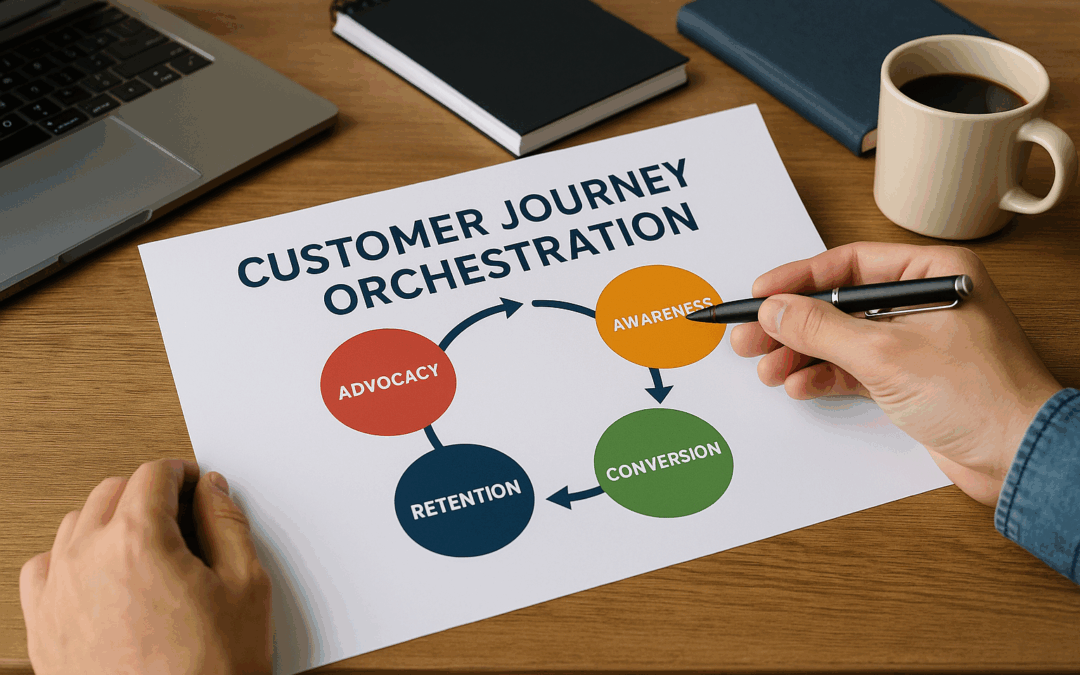
Customer journey orchestration (CJO) changes that. It’s the process of designing and synchronizing every touchpoint across the customer lifecycle to create a seamless, personalized experience. When done effectively, CJO transforms fragmented interactions into a cohesive journey that feels effortless to the customer and strategic for the brand.
What Is Customer Journey Orchestration
Customer journey orchestration goes beyond mapping out customer paths—it’s about managing them in real time. Traditional journey mapping visualizes what customers might do, while orchestration actively responds to what they are doing.
It integrates data, automation, and analytics to deliver the right message, on the right channel, at the right moment.
In simple terms, CJO connects every part of the customer experience—marketing, sales, service, and loyalty—so that no interaction feels disconnected or repetitive. The result is a brand experience that’s consistent, personalized, and continuous.
Why Customer Journey Orchestration Matters
Today’s customers expect more than convenience—they expect consistency. They move between devices, channels, and platforms seamlessly, and they expect brands to keep up.
Without orchestration, experiences become fragmented: marketing messages don’t match sales offers, and customer support might not know about previous interactions. This creates frustration and erodes trust.
Here’s why CJO has become essential for modern marketing:
- Personalization at scale: It uses data to deliver experiences tailored to individual preferences and behaviors.
- Real-time responsiveness: Brands can react instantly to customer signals, improving satisfaction and conversions.
- Cross-department alignment: Marketing, sales, and service teams work from a unified understanding of the customer.
- Higher retention and loyalty: Seamless experiences increase satisfaction and reduce friction.
In an omnichannel world, orchestration is the key to making personalization truly work.
The Key Components of Effective Journey Orchestration
To build a synchronized customer journey, brands must align three critical elements: data, technology, and strategy.
1. Unified Customer Data
A complete view of the customer is the foundation of orchestration. That means consolidating data from multiple sources—CRM, website analytics, email, social, and offline interactions—into a single profile.
Unified data helps identify where each customer is in their journey and what actions will move them forward. The more accurate the data, the more effective the orchestration.
2. Intelligent Automation
Automation tools power orchestration by managing repetitive processes and triggering real-time actions based on customer behavior. For example, if a user abandons a shopping cart, the system can automatically send a reminder email or personalized offer.
3. Journey Analytics
Analytics turn raw data into insight. Journey analytics track how customers interact across touchpoints, identifying pain points, opportunities, and drop-offs. These insights guide optimization and help refine messaging and timing.
4. Orchestration Platforms
Customer journey orchestration platforms—like Adobe Journey Optimizer, Salesforce Interaction Studio, or Iterable—integrate data and automation into one ecosystem. They enable marketers to design, execute, and monitor journeys in real time.
5. Human Oversight
While automation drives efficiency, human creativity and empathy remain essential. Marketers interpret insights, craft narratives, and ensure that automated experiences stay aligned with brand values.
Steps to Implement a Customer Journey Orchestration Strategy
Transitioning from fragmented marketing to orchestrated experiences requires structure and patience. Here’s how to approach it effectively.
Step 1: Map the Customer Lifecycle
Begin by defining your major journey stages—awareness, consideration, conversion, retention, and advocacy. Identify the goals, emotions, and pain points customers experience at each phase.
Step 2: Audit Existing Touchpoints
List all customer interactions across channels, from digital ads to post-purchase support. Look for inconsistencies, gaps, or duplicated messages that could confuse or frustrate users.
Step 3: Centralize Data Sources
Integrate customer data across departments. A unified data view ensures that everyone—from marketing to customer service—operates from the same understanding of the user.
Step 4: Segment and Personalize
Group customers by intent, behavior, or lifecycle stage rather than broad demographics. Then tailor messaging and offers for each segment using automation and predictive analytics.
Step 5: Automate Responsively
Set up automated workflows triggered by real-time actions. For example, if a user views a product multiple times but doesn’t purchase, send a dynamic email offering additional information or an incentive.
Step 6: Measure and Refine
Use journey analytics to track engagement, satisfaction, and conversion across touchpoints. Adjust messaging, timing, and channel mix based on insights. Orchestration is a continuous process of learning and improvement.
Common Challenges in Journey Orchestration
Implementing CJO isn’t without its hurdles. The most common challenges include:
- Data silos: Disconnected systems prevent a unified view of the customer.
- Complex tech stacks: Managing multiple platforms can create integration issues.
- Over-automation: Too many automated messages can feel impersonal or overwhelming.
- Lack of alignment: Teams often operate in isolation without shared goals or metrics.
Overcoming these challenges requires clear leadership, cross-functional collaboration, and ongoing refinement. The most successful brands build orchestration into their culture—not just their marketing technology.
Real-World Applications of Journey Orchestration
Customer journey orchestration can be applied across industries to deliver more relevant, seamless experiences.
- E-commerce: Automate abandoned cart recovery, product recommendations, and loyalty follow-ups.
- Finance: Coordinate onboarding, education, and retention communications for new clients.
- Healthcare: Streamline patient engagement with personalized appointment reminders and follow-ups.
- Education: Guide prospective students from inquiry to enrollment with contextual content.
- B2B Marketing: Align lead nurturing, sales outreach, and customer success into one integrated experience.
In each case, orchestration ensures that every step of the journey feels connected and meaningful.
The Future of Customer Experience Is Orchestrated
The future of marketing lies in connection—not just between brands and customers, but between every touchpoint that defines their relationship.
As technology advances, AI and predictive analytics will make journey orchestration even more precise, anticipating needs before customers express them. But the heart of orchestration will always be empathy—the ability to understand, anticipate, and respond with care.
When brands orchestrate journeys thoughtfully, they transform marketing into relationship-building. The result isn’t just higher engagement or conversion—it’s loyalty built on consistency, trust, and understanding.