
by Research Team | Oct 18, 2025 | Data Privacy, Digital Marketing
Consumers are more informed, connected, and cautious than ever. With growing concerns about data use, misinformation, and manipulative tactics, ethical marketing has shifted from a brand differentiator to a business necessity.
Today’s audiences expect more than quality products or clever campaigns. They want honesty. They want respect for their privacy. And they want to align with brands that reflect their values.
In a digital environment where trust can be gained—or lost—with a single post, ethical marketing isn’t just good practice—it’s a long-term growth strategy.
What Is Ethical Marketing?
Ethical marketing refers to strategies and practices that prioritize honesty, fairness, and responsibility in how businesses communicate and operate. It ensures that messaging is truthful, customer data is respected, and decisions are made with integrity—not just profitability—in mind.
Ethical marketing:
- Tells the truth (no exaggerations or false claims)
- Respects user privacy and consent
- Avoids fear-based or manipulative messaging
- Reflects inclusivity and cultural sensitivity
- Stands behind the value of the product or service
It’s about doing what’s right—even when no one’s watching.
Why Ethical Marketing Matters More Than Ever
The digital age has brought incredible opportunity, but also growing scrutiny. With fast access to information and platforms for public feedback, customers are quick to question, review, or call out questionable practices.
What’s changed:
- Data privacy laws (like GDPR and CCPA) require consent-based practices
- Social media enables real-time feedback and backlash
- Review platforms and watchdogs hold brands accountable
- Younger audiences (especially Gen Z) expect transparency and alignment with values
- AI-generated content raises new questions about originality and authenticity
Trust isn’t just a buzzword. It’s a brand asset—and once lost, it’s hard to regain.
Common Ethical Challenges in Digital Marketing
Even well-meaning brands can fall into unethical traps, especially when chasing fast growth or automation efficiency.
Examples include:
- Collecting user data without clear consent
- Using fake urgency (e.g., false countdown timers)
- Publishing AI-generated content without human review or fact-checking
- Falsifying reviews or buying social proof
- Misleading product photos or pricing information
- Making overly bold claims that aren’t backed by facts
The best defense? Clear policies, consistent review processes, and a company culture that values integrity.
Key Principles for Ethical Digital Marketing
1. Practice Transparency in Messaging
Be clear about what your product does, what it costs, and what the customer can expect. Avoid clickbait headlines or vague offers that overpromise.
Tips:
- Make terms and pricing easy to find
- Avoid hiding conditions in fine print
- Share honest comparisons with competitors (if relevant)
- Provide context and disclaimers where necessary
Clarity builds confidence.
2. Respect User Privacy and Consent
Privacy is a human right, and one that digital marketers must treat seriously.
Best practices:
- Use cookie consent banners and explain why you collect data
- Let users opt in (not just opt out) to marketing emails or tracking
- Allow easy access to unsubscribe or manage preferences
- Don’t share or sell data without explicit permission
The more transparent you are, the more users trust your intentions.
3. Be Responsible with Automation and AI
Tools like email automation, chatbots, and AI content generators are powerful, but they should enhance human connection, not replace it.
Suggestions:
- Review AI-generated content for accuracy and tone
- Don’t pretend bots are human
- Avoid over-personalizing in a way that feels intrusive
- Use automation to serve, not manipulate
Ethical automation respects context, consent, and human nuance.
4. Embrace Inclusivity and Representation
Ethical marketing means representing diverse audiences in your content and campaigns.
Actions to consider:
- Avoid stereotypes in imagery and messaging
- Use inclusive language and visuals
- Test for accessibility (e.g., alt text, contrast, mobile readability)
- Feature different voices, cultures, and experiences
Representation signals respect—and widens your audience.
5. Own Your Mistakes and Respond with Integrity
No brand is perfect. But how you handle criticism says everything.
When things go wrong:
- Acknowledge the issue without deflecting
- Apologize sincerely when appropriate
- Explain what actions you’ll take to make it right
- Respond in a timely, human way
Owning your mistakes can deepen trust when done well.
What This Means for the Future
As marketing becomes more automated, data-driven, and AI-assisted, the brands that stand out will be those that stay human at their core. Ethical marketing isn’t a restriction—it’s a roadmap for building lasting relationships in a world overloaded with messages.
Choosing transparency, empathy, and responsibility isn’t just good ethics—it’s smart business.
Want to market with clarity and integrity in a digital-first world?
Explore more strategies on our blog to help you build trust and grow your brand, without cutting corners.
by Research Team | Oct 15, 2025 | Digital Marketing, SEO, Small Business Marketing
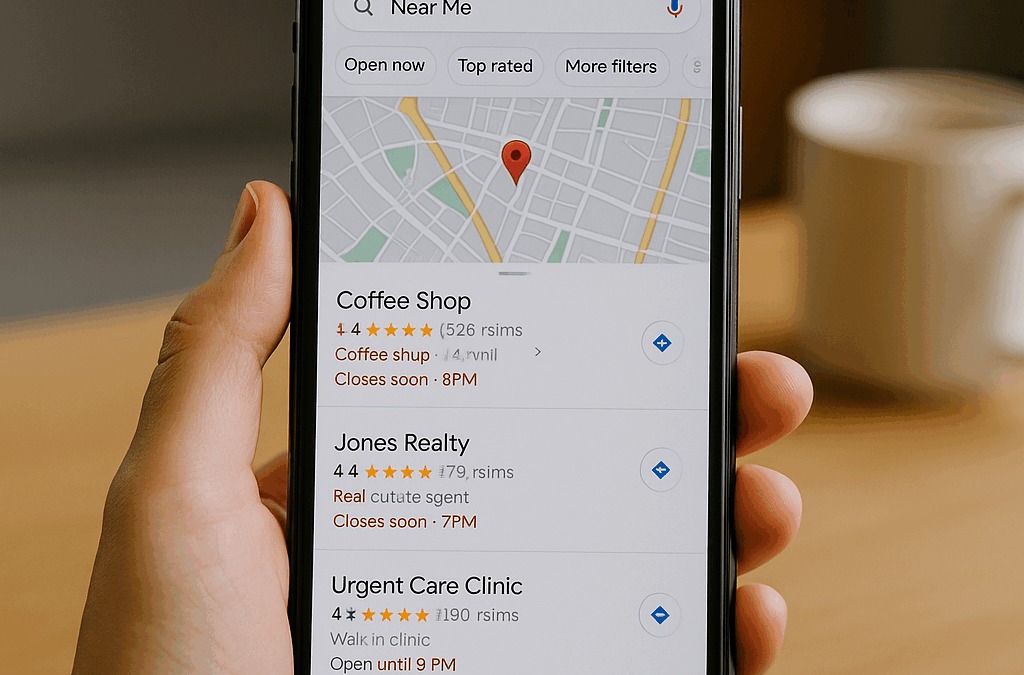
In an era dominated by global eCommerce and international brand reach, it’s easy to overlook the importance of local search. But for businesses that serve specific cities, neighborhoods, or regions, local SEO is not just relevant—it’s essential. Whether you’re running a dental clinic, a boutique bakery, or a mobile repair service, optimizing for local search ensures the right people nearby find you at the right moment.
Despite the rise of national competitors, many customers still start their search with location-specific phrases like “near me” or “[service] in [city].” If your business doesn’t appear in those results, chances are your competitors will.
What Is Local SEO?
Local SEO (Search Engine Optimization) is the practice of optimizing your online presence to increase visibility in local search results. It’s what helps you appear when someone searches for services like:
- “Coffee shop near me”
- “Best real estate agent in Miami”
- “Urgent care is open now.”
Unlike general SEO, which focuses on ranking nationally or globally, local SEO narrows the focus to a defined geographical area—connecting nearby prospects with your business quickly and conveniently.
Why It Still Works—and Always Will
Local search is built on intent. People searching with local keywords are usually ready to take action. They’re looking for a solution nearby, not browsing casually.
Key benefits of local SEO:
- Higher conversion rates—local searchers are more likely to visit or call
- Stronger visibility on Google Maps and mobile results
- Better alignment with voice searches and mobile queries
- Low competition compared to national SEO
- More trust from customers who see real locations, reviews, and updates
In short, local SEO meets real-time intent with relevance and trust.
Essential Elements of a Local SEO Strategy
1. Google Business Profile Optimization
Formerly known as Google My Business, your Google Business Profile is one of the most powerful free tools available.
Key actions:
- Claim and verify your business listing
- Choose the right business categories
- Add accurate business hours, address, and contact info
- Upload recent photos of your location, team, or work
- Encourage and respond to customer reviews
- Use posts to highlight updates, events, or promos
This listing is often the first thing people see—make it count.
2. Localized Website Content
Your website should clearly indicate the areas you serve.
Tips:
- Include your city or region in key pages and headings
- Create location-specific landing pages if you serve multiple areas
- Add directions, parking info, or neighborhood landmarks
- Use schema markup to help search engines understand your location
Search engines value specificity—help them help you get found.
3. Consistent NAP (Name, Address, Phone Number)
Your business info must be identical across all platforms, including:
- Website footer and contact page
- Social media profiles
- Online directories (Yelp, Yellow Pages, Bing Places)
- Local business citations
Inconsistencies confuse search engines and can hurt your ranking.
4. Online Reviews and Ratings
Social proof matters—especially when it’s coming from local customers.
Encourage reviews by:
- Asking satisfied customers to leave feedback
- Including review links in follow-up emails or thank-you messages
- Responding to both positive and negative reviews professionally
- Featuring strong reviews on your website
The more recent, relevant, and authentic your reviews are, the more trust you build.
5. Mobile Optimization
Most local searches happen on mobile devices. If your site doesn’t load fast or work well on a phone, you’ll lose traffic fast.
Make sure:
- Your website is responsive across devices
- Contact buttons (call, map, directions) are easy to use
- Pages load in under 3 seconds
- Navigation is clear and uncluttered
Accessibility leads to action, especially on the go.
Low-Cost Ways to Boost Local Presence
You don’t need a huge budget to strengthen your local SEO.
Try:
- Participating in local events and getting mentioned online
- Collaborating with other local businesses for mutual backlinks
- Writing blog posts about local topics or news
- Sponsoring community organizations or sports teams
- Listing your business in local directories or the chamber of commerce sites
The more you’re mentioned in context with your community, the more authority your brand earns locally.
Why This Matters for the Long Haul
Local SEO isn’t a trend—it’s a long-term asset. As search algorithms become smarter and more personalized, location-based results will continue to dominate for service-driven businesses. Investing in local SEO now means setting up a sustainable way for customers to find you later, without relying entirely on paid ads or social algorithms.
Being visible in your neighborhood online is just as important as having a physical sign on your storefront.
Want your business to show up when customers nearby are searching?
Explore more actionable guides on our blog and learn how to build a local SEO strategy that works where it matters most.

by Research Team | Oct 12, 2025 | Content Marketing, Digital Marketing, Influencer Marketing, Small Business Marketing
Influencer marketing isn’t just for celebrity endorsements or million-follower accounts anymore. Some of the most effective partnerships today come from micro-influencers—individuals with smaller but highly engaged followings in niche communities.
These creators may not be household names, but their influence is powerful. With follower counts typically between 1,000 and 100,000, micro-influencers offer authenticity, trust, and a closer connection to their audiences, making them ideal partners for brands looking to drive meaningful engagement without breaking the bank.
Why Micro-Influencers Matter More Than Ever
Micro-influencers speak the language of their communities. Their content feels personal, relatable, and rooted in real experiences—not paid scripts. As consumer trust in traditional advertising continues to decline, micro-influencers provide a trusted bridge between brand and audience.
Here’s what makes them so effective:
- Higher engagement rates compared to macro-influencers
- Niche-specific audiences with shared interests
- More affordable partnerships
- Greater perceived authenticity
- Willingness to collaborate on creative, personalized content
For small to mid-sized brands, micro-influencers often deliver a better return on investment than larger influencers or paid ads.
What Makes a Good Micro-Influencer?
It’s not just about the follower count. A strong micro-influencer has:
- Consistent, high-quality content
- Active engagement with their audience
- A clear niche or interest (fitness, fashion, parenting, travel, etc.)
- Alignment with your brand’s values or product category
- Credibility built through storytelling, not just aesthetics
You’re not looking for a one-time shoutout—you’re looking for someone who can become a natural advocate for your brand.
How to Identify the Right Micro-Influencers
Finding the right fit is more important than finding the biggest reach.
Tips for identifying strong partners:
- Look within your own followers first—are there customers already sharing their experiences?
- Search niche hashtags relevant to your product or industry
- Use influencer discovery tools (Upfluence, Heepsy, Aspire)
- Check local creators in your target geographic area
- Study engagement—not just likes, but genuine comments and responses
A smaller audience that listens is more powerful than a large audience that scrolls past.
Best Practices for Working with Micro-Influencers
1. Start with real relationships
Before pitching, engage with their content. Like, comment, share. Show appreciation for their work. Then, reach out with a personalized message that demonstrates why the collaboration makes sense.
2. Offer value, not just payment
Many micro-influencers value experiences, exclusivity, or useful tools as much as financial compensation. Depending on the situation, consider:
- Free product
- Affiliate commission
- Exclusive access or features
- Early previews of new releases
If budget allows, offer a small honorarium in exchange for creative input and content usage rights.
3. Encourage creative freedom
Don’t script every word. Influencers know how to speak to their audience—let them do it their way.
Provide:
- Brand background and goals
- Key talking points or must-mentions
- A preferred call to action
Then give space for natural integration into their content style.
4. Set clear expectations and goals
Even informal partnerships benefit from clarity.
Align on:
- Deliverables (number and type of posts, deadlines)
- Disclosure requirements (e.g., #ad or #sponsored)
- Performance tracking (links, codes, insights)
- Rights to reuse content (social proof, repurposing, etc.)
When both sides are aligned, the relationship grows beyond one post.
How to Measure Success with Micro-Influencers
Influencer marketing is most effective when measured beyond vanity metrics.
Track:
- Engagement rate (likes, comments, shares per post)
- Click-throughs to product or landing pages
- Use of promo codes or affiliate links
- Content saves or reposts
- Audience growth or brand mentions
- ROI over time (especially for repeat collaborations)
Don’t underestimate the long-tail effect—micro-influencer content can drive value weeks or even months later.
Why This Strategy Works Long-Term
Micro-influencer campaigns build momentum. Instead of relying on one viral moment, they create a steady stream of social proof and customer validation. Over time, your brand becomes recognizable within key communities through real people sharing real stories.
What’s more, these partnerships often evolve into deeper relationships. Loyal micro-influencers can become ambassadors, collaborators, and creative partners as your brand grows.
Want to reach new audiences through real conversations, not just promotions?
Explore more strategies on our blog and learn how to build influencer relationships that grow with your business.

by Research Team | Oct 9, 2025 | Digital Marketing, Small Business Marketing
Digital marketing doesn’t have to break the bank. Some of the most successful campaigns come from businesses that know how to stretch their resources without compromising results. Small businesses today can compete with larger brands by making smart, focused decisions that deliver real results—even with limited spending.
Instead of trying to do everything, the goal is to choose the right tactics, stay consistent, and build strong relationships with your audience.
Why Budget-Friendly Marketing Still Works
Digital marketing has leveled the playing field. Unlike traditional media, where large ad buys dominate, online platforms offer accessible tools and organic opportunities for small businesses to reach specific audiences.
Here’s why a strategic low-budget plan is powerful:
- Most digital platforms offer free tools or low-cost starter plans
- Content can be created in-house with basic tech and creativity
- Algorithms favor relevance and engagement over money
- Audiences value authenticity more than polish
- Data and analytics make it easier to pivot quickly and improve results
You don’t need to do everything—you just need to do a few things well.
Step 1: Define Clear Goals and a Focused Audience
Before spending anything, decide what success looks like.
Start with one or two goals:
- Generate leads through your website
- Increase traffic to a local storefront
- Build awareness for a new product or service
- Grow your email subscriber list
- Book consultations or demos
Then, define a narrow audience. Who are you speaking to? Where do they hang out online? What problems are they trying to solve? Knowing this keeps your messaging clear and your efforts targeted.
Step 2: Build a Simple, High-Impact Website
Your website is your digital storefront—even if you don’t sell anything online. It needs to look clean, load fast, and guide visitors to take action.
For a budget build:
- Use platforms like WordPress, Squarespace, or Wix
- Choose a modern, mobile-friendly template
- Focus on 3–5 core pages (home, about, services, contact, blog)
- Include strong calls-to-action like “Schedule a Call” or “Get a Quote.”
- Add a basic contact form or chatbot for inquiries
Even without a full e-commerce system, your website should work as a lead-generation engine.
Step 3: Prioritize Content You Can Produce Consistently
Content marketing works when it’s consistent, not just clever.
Low-cost content options include:
- Weekly blog posts (answer common questions from your audience)
- Short-form videos (recorded on a phone and uploaded to social or YouTube)
- Infographics made with free tools like Canva
- Email newsletters using platforms like MailerLite or Mailchimp
- User-generated content (reviews, testimonials, or customer stories)
Tip: Repurpose one core piece of content across multiple channels. For example, turn a blog post into 3 social media posts, a short video, and an email update.
Step 4: Use Social Media Selectively
You don’t need to be everywhere. Choose 1–2 platforms based on where your audience is most active.
Here’s how to keep it budget-friendly:
- Batch-create posts ahead of time using free scheduling tools (Buffer, Later)
- Focus on value-driven content—how-to tips, behind-the-scenes moments, FAQs
- Engage with followers by replying to comments and messages
- Use local or niche hashtags to boost discoverability
- Encourage shares and mentions from happy customers
Consistency matters more than perfection. Regular posting and real interaction go a long way.
Step 5: Explore Low-Cost Paid Ads Strategically
Even a small ad budget can go far when targeting is precise.
Smart ways to use $50–$150/month:
- Boost top-performing Facebook or Instagram posts to your local area
- Run Google Ads targeting high-intent keywords (e.g., “plumber near me”)
- Use retargeting to stay top-of-mind with website visitors
- Promote a lead magnet (e.g., free checklist or consultation) to grow your email list
Set a small test budget and track performance before scaling up.
Step 6: Track Results and Adjust Frequently
Without measurement, even free strategies waste time.
Track:
- Website traffic and conversions with Google Analytics
- Social engagement using native insights or free dashboards
- Email open rates, clicks, and unsubscribes
- Leads or calls generated each week
Don’t aim for perfection—aim for progress. If something doesn’t work, tweak it. If something performs well, double down.
What This Means for Small Business Growth
Digital marketing on a budget is not only doable—it’s often more effective. Limited resources force businesses to focus on what matters most: clear goals, genuine messaging, and consistent outreach.
With the right mindset and a lean strategy, small businesses can grow their digital presence and connect with more customers, without overspending or overcomplicating the process.
Looking to grow your business online without overspending?
Explore more practical, low-cost marketing strategies on our blog and start creating impact—even on a shoestring budget.

by Research Team | Oct 6, 2025 | Digital Marketing, Email Marketing
Social media platforms may rise and fall, but email marketing continues to be one of the most reliable and profitable tools in the digital marketer’s toolkit. Email still delivers one of the highest returns on investment across all channels, provided it’s used effectively.
Today’s consumers expect more than generic blasts. They want messages tailored to their needs, habits, and preferences. The challenge? Delivering that level of personalization at scale. The good news is: with the right tools and strategy, it’s not only possible—it’s practical.
Why Email Marketing Still Works
Email reaches users where they’re most engaged—directly in their inbox, often on their mobile devices. Unlike social media or search engines, you own your email list. There’s no algorithm standing between you and your audience.
What makes email so enduring?
- It’s permission-based—users opt in
- It’s cost-effective and scalable
- It’s versatile, supporting education, promotion, nurturing, and feedback
- It’s measurable, with clear metrics for open rate, click-through rate, and conversions
- It builds direct relationships without relying on third-party platforms
And when done right, email doesn’t just inform—it drives action.
The Shift to Personalization
Personalized emails outperform generic ones in almost every metric. They boost open rates, increase click-throughs, and improve customer retention. But personalization today goes beyond using someone’s first name.
Modern personalization involves:
- Dynamic content based on user behavior
- Product recommendations tailored to browsing or purchase history
- Email journeys triggered by specific actions
- Time zone and device-based send optimization
- Segmentation based on demographics, preferences, or lifecycle stage
Done well, personalization makes your email feel like it was written just for the reader, even when it’s sent to thousands.
How to Personalize Email Marketing at Scale
1. Build smarter segments
Start by grouping your audience into meaningful segments based on:
- Demographics (location, age, industry)
- Behavior (opens, clicks, purchases, downloads)
- Funnel stage (new lead, warm prospect, loyal customer)
- Preferences (product interest, content type, frequency)
The more relevant the message, the more likely it is to resonate.
2. Use automated email workflows
Automation allows you to deliver the right message at the right time without manual work. Examples of effective workflows include:
- Welcome series for new subscribers
- Abandoned cart reminders
- Re-engagement emails for inactive users
- Post-purchase follow-ups and upsells
These flows help you stay top of mind while respecting the user’s journey.
3. Leverage dynamic content blocks
Modern email platforms allow content to shift based on the recipient’s data. For example:
- Show different product images based on gender
- Swap in location-specific event invites
- Adjust calls-to-action based on user behavior
This level of detail can increase engagement dramatically without requiring multiple email versions.
4. Collect and use zero-party data
Encourage subscribers to tell you about their preferences up front through:
- Signup forms with interest checkboxes
- Onboarding surveys
- Email preference centers
- Quizzes or interactive emails
Using self-reported data ensures your personalization aligns with what users want.
Tips for Stronger Email Performance
Even the best content can fall flat if overlooked. Here’s how to keep your emails effective:
- Use compelling subject lines that promise value
- Keep the design mobile-friendly and accessible
- Include clear, singular calls-to-action
- Test send times and frequency to avoid fatigue
- A/B test different layouts, CTAs, and copy
- Regularly clean your list to maintain high deliverability
Consistency matters too. A predictable cadence keeps you top of mind without becoming intrusive.
What This Means for Your Strategy
Email marketing is far from outdated—it’s evolving. Brands that embrace personalization, automation, and smart segmentation can deepen relationships, boost engagement, and drive repeat business more effectively than ever.
Scaling personalization doesn’t require sending thousands of unique emails manually. With the right setup, you can automate meaningful experiences that feel handcrafted at every stage of the customer journey.
Looking to revamp your email marketing strategy or improve personalization?
Explore more guides on our blog and learn how to build emails your audience wants to open.

by Research Team | Oct 3, 2025 | Content Marketing, Customer Experience, Digital Marketing, Social Media
Consumers are tuning out traditional ads—and turning to one another instead. In today’s digital landscape, user-generated content (UGC) has emerged as one of the most powerful tools for brands looking to build authenticity, foster trust, and increase conversions. Whether it’s a customer review, an unboxing video, a tagged social media post, or a product photo shared by a fan, UGC serves as modern word-of-mouth marketing.
Unlike polished brand campaigns that are carefully scripted and professionally produced, user-generated content is raw, unscripted, and grounded in real-life experiences. It captures genuine emotions, spontaneous moments, and the authentic voices of everyday users. That authenticity is exactly what makes it so powerful—it feels more trustworthy, more human, and ultimately, more persuasive.
Why User-Generated Content Works
People trust people. UGC provides proof that real users are engaging with your product or service—and enjoying it. It reduces hesitation, overcomes skepticism, and gives potential customers the social reassurance they need to buy.
Key reasons UGC drives trust:
- It adds credibility: A happy customer story feels more genuine than a paid ad
- It improves conversion rates: Pages with authentic reviews or photos tend to convert better
- It humanizes your brand: UGC highlights real people and real experiences
- It supports community building: Sharing content from your audience shows you value their voice
In a world where consumers crave transparency, UGC delivers social proof in a way no in-house creative team can replicate.
Types of User-Generated Content You Can Leverage
UGC comes in many forms across channels. Some of the most effective include:
- Social media posts: Photos, videos, or stories where users tag your brand
- Product reviews and ratings: Honest feedback shared on your website or third-party platforms
- Testimonials: Longer, story-based endorsements you can feature on landing pages
- Unboxing or “how-to” videos: Especially common for tech, beauty, and lifestyle products
- Forum comments or blog mentions: Natural brand mentions in niche communities
- Contests and challenges: User-created submissions prompted by campaigns
Each of these assets provides a new opportunity to reach prospects in a trustworthy and engaging way.
How to Get More User-Generated Content
Encouraging customers to share their experiences doesn’t always happen organically—you need a thoughtful strategy.
1. Make the ask simple and clear
Sometimes all it takes is asking. Use post-purchase emails, thank-you pages, or packaging inserts to encourage users to:
- Leave a review
- Share a photo or video on social media
- Tag your brand for a chance to be featured
Make it easy by offering direct links or hashtags they can copy.
2. Create a branded hashtag
A memorable hashtag allows you to organize and track user content across platforms.
Tips:
- Keep it short, unique, and on-brand
- Promote it on product pages, social bios, and in email campaigns
- Engage with users who use the hashtag—like, comment, or reshare
When done well, a hashtag becomes a hub for brand storytelling led by your audience.
3. Run UGC-based contests or campaigns
Incentivizing participation can increase UGC submissions dramatically.
Examples:
- Share your best experience using [product] and win [reward]
- Post a photo with [hashtag] for a chance to be featured
- Tell your story in the comments—our favorite gets a free gift
Be sure to outline simple rules, and always request permission before using submitted content in official materials.
4. Highlight UGC regularly on your channels
The more you showcase user content, the more others will want to participate.
Places to feature UGC:
- Instagram stories and feed
- Facebook and LinkedIn posts
- Homepage or product pages
- Email newsletters
- Paid ad creatives
When customers see their peers being highlighted, it encourages others to join in.
Best Practices for Using UGC Effectively
While UGC is inherently more informal, brands should still follow a few key guidelines when integrating it into marketing:
- Always ask for permission before reposting or repurposing
- Give clear credit to the original creator
- Choose content that aligns with your brand’s values and tone
- Moderate reviews to filter out spam, but don’t delete honest criticism
- Maintain a diverse mix of content formats and user perspectives
Respect and recognition go a long way in sustaining a healthy community of advocates.
What This Means for Your Brand
User-generated content is more than a trend—it’s a bridge between brand and buyer. It breaks down the barriers of polished marketing and brings authenticity to the forefront of your digital presence. By encouraging and embracing UGC, you not only build trust—you invite your audience to become part of the story.
Done right, UGC transforms your customers into marketers, your community into your creative team, and your brand into a conversation.
Interested in building a UGC strategy that grows with your business?
Check out more actionable guides and ideas on our blog to start turning customers into your most credible content creators.

