
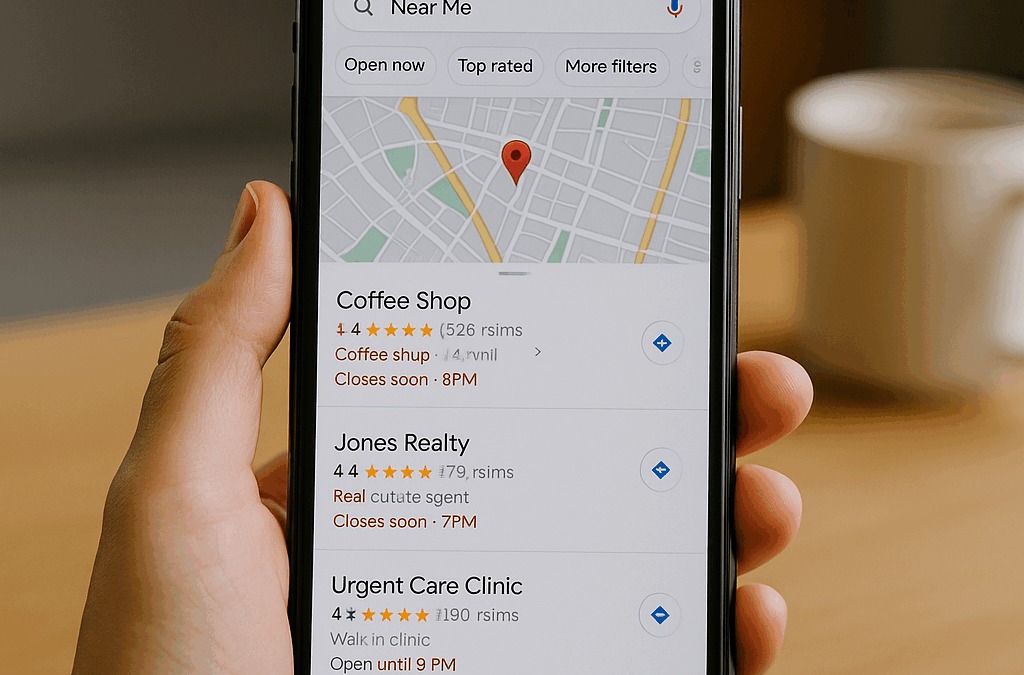
In an era dominated by global eCommerce and international brand reach, it’s easy to overlook the importance of local search. But for businesses that serve specific cities, neighborhoods, or regions, local SEO is not just relevant—it’s essential. Whether you’re running a dental clinic, a boutique bakery, or a mobile repair service, optimizing for local search ensures the right people nearby find you at the right moment.
Despite the rise of national competitors, many customers still start their search with location-specific phrases like “near me” or “[service] in [city].” If your business doesn’t appear in those results, chances are your competitors will.
What Is Local SEO?
Local SEO (Search Engine Optimization) is the practice of optimizing your online presence to increase visibility in local search results. It’s what helps you appear when someone searches for services like:
- “Coffee shop near me”
- “Best real estate agent in Miami”
- “Urgent care is open now.”
Unlike general SEO, which focuses on ranking nationally or globally, local SEO narrows the focus to a defined geographical area—connecting nearby prospects with your business quickly and conveniently.
Why It Still Works—and Always Will
Local search is built on intent. People searching with local keywords are usually ready to take action. They’re looking for a solution nearby, not browsing casually.
Key benefits of local SEO:
- Higher conversion rates—local searchers are more likely to visit or call
- Stronger visibility on Google Maps and mobile results
- Better alignment with voice searches and mobile queries
- Low competition compared to national SEO
- More trust from customers who see real locations, reviews, and updates
In short, local SEO meets real-time intent with relevance and trust.
Essential Elements of a Local SEO Strategy
1. Google Business Profile Optimization
Formerly known as Google My Business, your Google Business Profile is one of the most powerful free tools available.
Key actions:
- Claim and verify your business listing
- Choose the right business categories
- Add accurate business hours, address, and contact info
- Upload recent photos of your location, team, or work
- Encourage and respond to customer reviews
- Use posts to highlight updates, events, or promos
This listing is often the first thing people see—make it count.
2. Localized Website Content
Your website should clearly indicate the areas you serve.
Tips:
- Include your city or region in key pages and headings
- Create location-specific landing pages if you serve multiple areas
- Add directions, parking info, or neighborhood landmarks
- Use schema markup to help search engines understand your location
Search engines value specificity—help them help you get found.
3. Consistent NAP (Name, Address, Phone Number)
Your business info must be identical across all platforms, including:
- Website footer and contact page
- Social media profiles
- Online directories (Yelp, Yellow Pages, Bing Places)
- Local business citations
Inconsistencies confuse search engines and can hurt your ranking.
4. Online Reviews and Ratings
Social proof matters—especially when it’s coming from local customers.
Encourage reviews by:
- Asking satisfied customers to leave feedback
- Including review links in follow-up emails or thank-you messages
- Responding to both positive and negative reviews professionally
- Featuring strong reviews on your website
The more recent, relevant, and authentic your reviews are, the more trust you build.
5. Mobile Optimization
Most local searches happen on mobile devices. If your site doesn’t load fast or work well on a phone, you’ll lose traffic fast.
Make sure:
- Your website is responsive across devices
- Contact buttons (call, map, directions) are easy to use
- Pages load in under 3 seconds
- Navigation is clear and uncluttered
Accessibility leads to action, especially on the go.
Low-Cost Ways to Boost Local Presence
You don’t need a huge budget to strengthen your local SEO.
Try:
- Participating in local events and getting mentioned online
- Collaborating with other local businesses for mutual backlinks
- Writing blog posts about local topics or news
- Sponsoring community organizations or sports teams
- Listing your business in local directories or the chamber of commerce sites
The more you’re mentioned in context with your community, the more authority your brand earns locally.
Why This Matters for the Long Haul
Local SEO isn’t a trend—it’s a long-term asset. As search algorithms become smarter and more personalized, location-based results will continue to dominate for service-driven businesses. Investing in local SEO now means setting up a sustainable way for customers to find you later, without relying entirely on paid ads or social algorithms.
Being visible in your neighborhood online is just as important as having a physical sign on your storefront.
Want your business to show up when customers nearby are searching?
Explore more actionable guides on our blog and learn how to build a local SEO strategy that works where it matters most.
