by Research Team | Feb 23, 2026 | Conversion Optimization, Data - Driven Marketing, Performance Marketing, User Experience
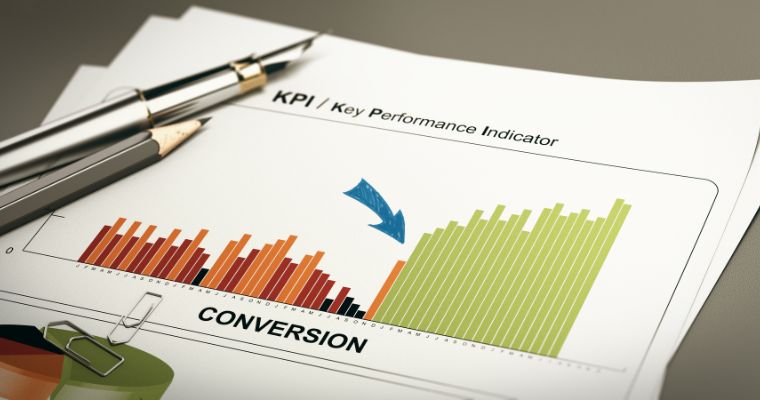
Driving traffic is only part of digital marketing success. What happens after users arrive determines whether marketing efforts deliver real value. Conversion rate optimization focuses on improving how effectively digital experiences turn visitors into leads, customers, or engaged users.
Conversion rate optimization, often referred to as CRO, helps marketers make smarter decisions by using data, testing, and user behavior insights to improve performance across channels. When applied strategically, CRO strengthens every aspect of digital marketing.
What Conversion Rate Optimization Really Is
Conversion rate optimization is the process of increasing the percentage of users who take a desired action on a website or digital platform. These actions may include form submissions, purchases, sign-ups, downloads, or other engagement goals.
Rather than increasing traffic volume, CRO improves the efficiency of existing traffic. It identifies friction points, removes obstacles, and aligns experiences with user intent.
CRO relies on evidence rather than assumptions. Testing and analysis guide decisions.
Why CRO Matters in Digital Marketing Strategy
Marketing budgets are finite. CRO ensures that existing investments generate greater returns.
By improving conversion rates, marketers can lower acquisition costs, increase revenue, and improve campaign performance without increasing spend. CRO also provides insight into what users value and how they interact with content.
These insights inform broader strategy decisions beyond individual landing pages.
The Role of User Behavior in CRO
User behavior data is central to conversion optimization.
Heatmaps, session recordings, scroll depth, and click patterns reveal how users interact with pages. These insights highlight where attention is focused and where confusion occurs.
Understanding behavior allows marketers to design experiences that feel intuitive rather than forced.
How CRO Supports Data-Driven Decision-Making
CRO replaces opinion-based decisions with measurable outcomes.
A structured testing approach evaluates changes based on performance rather than preference. Headlines, layouts, calls to action, and forms can be tested systematically.
This data-driven approach reduces risk and builds confidence in marketing decisions.
Key Elements of an Effective CRO Strategy
A successful CRO strategy includes several core components.
First, clear conversion goals must be defined. Without clear objectives, optimization lacks direction.
Second, data collection and analysis identify opportunities. Analytics, user feedback, and behavioral tools guide prioritization.
Third, testing validates hypotheses. Controlled experiments reveal what improves performance.
Finally, insights are documented and applied across channels to maximize impact.
Common CRO Techniques Used by Marketers
Several techniques are commonly used in conversion optimization.
A B testing compares variations to determine which performs better. Multivariate testing evaluates multiple elements simultaneously.
User feedback surveys provide qualitative insights. Simplified forms, clearer messaging, and improved page speed often yield meaningful gains.
The most effective CRO programs combine multiple techniques.
CRO and Customer Experience
Conversion optimization and customer experience are closely connected.
Optimizing for conversions does not mean pressuring users. Instead, it focuses on clarity, usability, and relevance.
When experiences are easy to navigate and aligned with intent, conversions increase naturally.
Positive experiences also support retention and brand perception.
CRO Across the Digital Funnel
CRO applies to every stage of the digital funnel.
At the top of the funnel, optimization improves engagement and lead capture. In the middle, it supports nurturing and consideration. At the bottom, it removes barriers to conversion.
Post-conversion optimization improves onboarding and long-term engagement.
Viewing CRO holistically maximizes its strategic value.
Integrating CRO With Other Marketing Channels
CRO insights extend beyond websites.
Landing page learnings inform email messaging, paid ad copy, and content strategy. Understanding what resonates with users improves consistency across channels.
This integration strengthens overall marketing performance.
Measuring the Impact of Conversion Optimization
The success of CRO should be measured through outcomes.
Key metrics include conversion rates, revenue per visitor, engagement quality, and customer acquisition costs.
Long-term measurement evaluates how optimization influences lifetime value and retention.
CRO provides both immediate and cumulative benefits.
Challenges in Conversion Rate Optimization
CRO presents challenges that require discipline.
One challenge is testing volume. Limited traffic can slow experimentation. Another is prioritization. Not every idea deserves testing.
Organizational patience is also important. CRO is an ongoing process, not a one-time fix.
Clear frameworks help teams overcome these challenges.
The Future of Conversion Rate Optimization
CRO continues to evolve with advances in analytics, automation, and personalization.
AI-driven testing, predictive insights, and real-time optimization will further enhance CRO capabilities.
As digital experiences become more complex, optimization will remain essential for performance and usability.
Turning Optimization Into Strategic Advantage
Conversion rate optimization strengthens digital marketing by improving efficiency and insight.
By focusing on user behavior, testing, and data-driven improvement, marketers make smarter decisions that compound over time.
CRO is not just a tactical tool. It is a strategic discipline that drives sustainable digital marketing success.

by Research Team | Nov 25, 2025 | Conversion Optimization, Marketing Analytics, Marketing Strategy
Marketing performance issues are rarely caused by a lack of effort. More often, they stem from a disconnect between how brands communicate and how customers actually experience the journey from first touch to conversion.
Customer journey mapping helps close that gap. By visualizing every interaction a customer has with your brand, marketers gain clarity on where friction occurs, where opportunities are missed, and where performance can be improved.
When used strategically, customer journey mapping becomes a powerful framework for optimizing campaigns, messaging, and conversions.
What Is Customer Journey Mapping
Customer journey mapping is the process of documenting and analyzing the steps a customer takes when interacting with a brand across channels and touchpoints.
This includes:
- Awareness and discovery
- Research and consideration
- Decision and conversion
- Post-purchase engagement and retention
A journey map focuses on customer behavior, motivations, emotions, and barriers, not just internal marketing activities. It shifts the perspective from what brands do to what customers experience.
Why Customer Journey Mapping Matters for Marketing Performance
Marketing performance improves when strategies align with customer reality. Journey mapping reveals where misalignment occurs.
Key benefits include:
- Identifying gaps between channels and messages
- Reducing friction that causes drop-offs
- Improving timing and relevance of campaigns
- Aligning teams around a shared customer view
- Increasing conversion rates and lifetime value
Without a clear journey map, marketing efforts often operate in silos, leading to inconsistent experiences and wasted spend.
Step 1: Define Your Customer Personas Clearly
Journey mapping starts with understanding who the journey belongs to. A single generic journey rarely reflects real behavior.
Define clear personas based on:
- Goals and pain points
- Buying motivations
- Objections and concerns
- Preferred channels and content formats
Each persona may follow a different path, even when purchasing the same product or service. Mapping journeys by persona ensures relevance and accuracy.
Step 2: Identify All Key Touchpoints
Touchpoints are every interaction a customer has with your brand, both direct and indirect.
Common touchpoints include:
- Search results and ads
- Blog content and landing pages
- Social media interactions
- Email campaigns
- Sales conversations
- Onboarding and support experiences
Map touchpoints across channels, not just owned platforms. Third-party reviews, referrals, and comparison sites often play a critical role in decision-making.
Step 3: Understand Customer Intent and Emotion at Each Stage
A strong journey map goes beyond listing steps. It captures intent and emotion at each stage.
Ask questions such as:
- What is the customer trying to achieve here?
- What questions or doubts do they have?
- What frustrations might they experience?
- What would build trust at this moment?
This insight helps marketers tailor messaging, content, and offers to match customer mindset instead of pushing premature calls to action.
Step 4: Identify Friction Points and Drop-Offs
Journey mapping exposes where performance breaks down.
Common friction points include:
- Confusing navigation or messaging
- Inconsistent information across channels
- Poor mobile experiences
- Lack of follow-up after engagement
- Misaligned offers or timing
Use data from analytics, CRM systems, and customer feedback to validate assumptions. High drop-off rates often indicate experience issues rather than demand problems.
Step 5: Align Marketing Channels to Support the Journey
Once friction points are identified, map each channel’s role in supporting the journey.
For example:
- SEO and content marketing support awareness and education
- Email nurtures consideration and trust
- Paid media accelerates decision-making
- Social proof reinforces confidence
- Post-conversion content supports retention
This alignment ensures channels work together rather than competing for attention.
Step 6: Optimize Content and Messaging by Stage
Customer journey mapping informs what content is needed and when.
At early stages, focus on education and problem definition.
At mid stages, provide comparisons, case studies, and deeper insights.
At decision stages, emphasize clarity, proof, and ease of action.
This approach prevents common mistakes such as pushing sales messages too early or overwhelming prospects with information at the wrong time.
Step 7: Use Journey Mapping to Improve Measurement
Journey mapping improves performance measurement by shifting focus from isolated metrics to holistic outcomes.
Instead of evaluating channels independently, assess how they contribute collectively to progression through the journey.
Key metrics may include:
- Assisted conversions
- Time between stages
- Engagement by journey stage
- Retention and repeat behavior
This perspective leads to more accurate attribution and smarter optimization decisions.
Step 8: Keep the Journey Map Updated
Customer behavior evolves. Platforms change. Expectations shift.
Journey maps should be reviewed regularly and updated based on:
- New data insights
- Changes in offerings
- Feedback from sales and support teams
- Market and competitive shifts
Treat the journey map as a living document, not a one-time exercise.
Common Mistakes to Avoid
Customer journey mapping fails when:
- It is created without real customer data
- Teams treat it as a visual exercise only
- Insights are not acted upon
- Ownership is unclear
The value lies not in the map itself, but in how it informs decisions.
Strategic Insight
Customer journey mapping improves marketing performance by aligning strategy with real customer behavior. It reveals where marketing supports progress and where it unintentionally creates friction.
Brands that invest in understanding and optimizing the journey create more consistent experiences, stronger trust, and better results across channels.
When marketing decisions are guided by the customer journey, performance becomes a natural outcome rather than a constant struggle.

by Research Team | Nov 17, 2025 | Brand Strategy, Conversion Optimization, Marketing Strategy
Digital marketing and user experience design are meant to guide users toward meaningful actions. However, when persuasion crosses into manipulation, trust erodes and long-term performance suffers. This is where dark patterns enter the conversation.
Dark patterns are design tactics that intentionally steer users into actions they may not otherwise choose. While these practices can produce short-term gains, they undermine brand credibility, increase churn, and raise ethical and regulatory concerns.
Understanding dark patterns and replacing them with ethical UX and marketing practices is essential for brands focused on sustainable growth.
What Are Dark Patterns in UX and Marketing
Dark patterns are user interface or marketing techniques designed to manipulate behavior through deception, pressure, or confusion.
Common characteristics include:
- Hiding important information
- Making opt-out actions difficult
- Creating false urgency or scarcity
- Using misleading language or visual hierarchy
These patterns exploit cognitive biases rather than supporting informed decision-making.
Common Types of Dark Patterns
Dark patterns appear across websites, apps, and marketing campaigns. Some of the most common examples include:
Forced continuity
Users are enrolled in subscriptions without clear disclosure and charged after a free trial ends.
Hidden costs
Additional fees appear late in the checkout process after the user has already committed time and effort.
Confirmshaming
Opt-out buttons use guilt-inducing language to pressure users into saying yes.
Roach motel designs
Signing up is easy, but cancellation requires multiple steps or customer support interaction.
False urgency and scarcity
Countdown timers or limited availability claims that are not genuine.
While these tactics may boost short-term conversion rates, they often lead to refunds, complaints, and reputational damage.
Why Dark Patterns Hurt Long-Term Marketing Performance
Dark patterns create friction that extends beyond the immediate interaction. Users who feel tricked are less likely to trust future messaging or return.
Long-term consequences include:
- Lower customer lifetime value
- Higher churn and refund rates
- Negative reviews and word-of-mouth
- Increased regulatory risk
- Damaged brand perception
Ethical marketing prioritizes transparency and respect, which strengthens trust and loyalty over time.
The Line Between Persuasion and Manipulation
Effective marketing persuades. Unethical marketing manipulates.
Persuasion supports informed choice by:
- Clearly communicating value
- Removing unnecessary friction
- Guiding users with clarity and relevance
Manipulation obscures choice by:
- Withholding information
- Using fear or guilt
- Creating artificial pressure
The distinction lies in intent and execution. Ethical UX helps users make decisions that align with their goals, not just the brand’s metrics.
How Ethical UX Improves Marketing Outcomes
Ethical UX design does not weaken performance. It improves it.
Benefits include:
- Higher-quality conversions
- Increased trust and credibility
- Lower post-conversion regret
- Stronger brand loyalty
- Better alignment with customer expectations
When users feel respected, they are more likely to engage, convert, and advocate for the brand.
Replacing Dark Patterns With Ethical Best Practices
Brands can achieve strong performance without relying on manipulative tactics.
Ethical alternatives include:
Clear disclosure
Be upfront about pricing, terms, and commitments.
Honest urgency
Use urgency only when it is real and verifiable.
Easy opt-out and cancellation
Make leaving as easy as joining.
Neutral language
Avoid guilt-based or shaming copy in choices.
Accessible design
Ensure all users can understand and navigate experiences easily.
These practices build confidence rather than resistance.
The Role of Regulation and Consumer Awareness
Regulatory bodies are increasingly addressing dark patterns through consumer protection laws. As awareness grows, tolerance for manipulative practices declines.
Brands that proactively adopt ethical UX are better positioned to:
- Comply with evolving regulations
- Avoid costly penalties
- Maintain public trust
- Differentiate themselves competitively
Ethics are becoming a strategic advantage, not a limitation.
Aligning Teams Around Ethical Marketing
Ethical UX and marketing require cross-team alignment.
Key steps include:
- Establishing internal design and marketing principles
- Training teams on ethical decision-making
- Reviewing campaigns for potential manipulation risks
- Measuring success beyond short-term conversion rates
When ethics are embedded into process, consistency follows.
Measuring Success Without Dark Patterns
Performance metrics should reflect long-term value, not just immediate wins.
Consider tracking:
- Retention and repeat engagement
- Refund and cancellation rates
- Customer satisfaction and sentiment
- Trust indicators such as reviews and referrals
These metrics provide a more accurate picture of sustainable growth.
Practical Reflection
Dark patterns may promise quick results, but they come at a cost that compounds over time. Ethical UX and marketing practices prioritize clarity, respect, and trust, which are essential to lasting performance.
Brands that choose transparency over manipulation build stronger relationships and more resilient marketing systems. In an environment where consumers are increasingly informed and empowered, ethical design is not just the right choice. It is the smart one.

by Research Team | Nov 15, 2025 | Conversion Optimization, Marketing Strategy
Digital marketing audiences expect more than static content and one-way messaging. As competition for attention intensifies, immersive experiences are becoming a differentiator rather than a novelty. Augmented reality, commonly referred to as AR, offers brands a way to engage audiences in interactive, memorable, and conversion-focused experiences.
AR blends digital elements into real-world environments through devices such as smartphones and tablets. When applied strategically, it enhances understanding, reduces hesitation, and helps users move confidently toward action.
This draft explores how augmented reality fits into digital marketing strategy and how it can be used to support measurable conversion outcomes.
What Augmented Reality Means for Marketers
Augmented reality overlays digital visuals, data, or interactions onto a real-world view. Unlike virtual reality, which replaces the environment entirely, AR enhances what users already see.
In marketing, AR experiences may include:
- Product visualization in real-world settings
- Interactive demos or tutorials
- Virtual try-ons
- Location-based experiences
- Immersive storytelling elements
The value of AR lies in its ability to reduce uncertainty and increase engagement by making experiences tangible before purchase.
Why AR Is Gaining Momentum in Digital Marketing
AR adoption has accelerated as mobile technology and consumer expectations evolve. Most users already carry AR-capable devices, lowering barriers to entry for brands.
From a marketing perspective, AR addresses several challenges:
- Short attention spans
- Lack of product understanding
- High purchase hesitation
- Low differentiation in crowded markets
By allowing users to interact with products or concepts directly, AR creates clarity and confidence, which are critical to conversion.
How AR Supports the Conversion Funnel
Augmented reality can influence multiple stages of the customer journey when designed with intent.
At the awareness stage, AR experiences capture attention and encourage exploration. Interactive filters, previews, or animations create curiosity and brand recall.
During consideration, AR helps users evaluate options more effectively. Visualizing scale, fit, or functionality reduces reliance on imagination alone.
At the decision stage, AR minimizes friction by answering unspoken questions. When users feel confident in what they are getting, conversion rates improve.
Post-conversion, AR can support onboarding, education, and retention by reinforcing value and usability.
Common AR Use Cases That Drive Results
Certain applications of AR consistently support performance goals.
Product visualization
Users can see how a product looks or functions in their own environment. This is especially effective for ecommerce, home goods, and fashion.
Virtual try-ons
Trying before buying reduces returns and increases confidence. Beauty, apparel, and accessories brands benefit significantly from this approach.
Interactive demos
AR-based demonstrations allow users to explore features step by step, improving understanding and perceived value.
Experiential campaigns
Location-based or event-driven AR experiences create memorable brand interactions that encourage sharing and engagement.
Each use case should be aligned with a specific conversion or engagement objective.
Designing AR Experiences With Strategy in Mind
AR should support business goals, not exist as a standalone novelty.
Effective AR strategy starts with clarity:
- What decision is the user trying to make?
- What information do they need to move forward?
- Where does uncertainty or friction exist?
Design AR experiences to answer those questions clearly and efficiently. Simplicity often outperforms complexity.
The experience should feel intuitive, load quickly, and integrate seamlessly with existing digital touchpoints.
Integrating AR Into Existing Marketing Channels
AR works best when embedded into broader campaigns rather than isolated activations.
Common integration points include:
- Paid social and display ads
- Landing pages and product pages
- Email campaigns
- QR code activations
- In-store or event experiences
For example, an AR preview embedded in a landing page can increase time on page and improve conversion rates without disrupting the user journey.
Measuring the Impact of AR on Conversions
Like any marketing initiative, AR must be measured to validate its effectiveness.
Key performance indicators may include:
- Engagement time and interaction rates
- Click-through and conversion rates
- Drop-off reduction during consideration
- Return and refund rates
- Post-purchase satisfaction
AR data should be evaluated alongside traditional analytics to understand its role within the full funnel.
Challenges and Considerations
While powerful, AR requires thoughtful execution.
Common challenges include:
- Overcomplicated experiences that frustrate users
- Technical limitations across devices
- High production costs without clear ROI
- Poor alignment with brand or audience expectations
Start with focused use cases and test performance before scaling. AR success depends more on relevance than spectacle.
Ethical and Accessibility Considerations
AR experiences should be inclusive and transparent.
Ensure:
- Clear user consent and privacy protection
- Accessibility considerations for different abilities
- Honest representation of products or outcomes
Ethical execution builds trust and prevents disappointment that can undermine conversions.
When AR Makes Strategic Sense
AR is not necessary for every brand or campaign. It is most effective when:
- Visualization significantly improves understanding
- Products benefit from spatial or contextual interaction
- Decision-making involves uncertainty
- Differentiation is needed in a competitive market
Used selectively, AR enhances rather than complicates digital strategy.
Practical Insight
Augmented reality offers marketers a way to bridge the gap between interest and action. By making experiences interactive and tangible, AR reduces hesitation and supports confident decision-making.
Brands that treat AR as a strategic tool rather than a trend can create meaningful engagement and stronger conversion outcomes. When immersive experiences serve clarity and value, performance follows.

by Research Team | Nov 9, 2025 | Conversion Optimization, Marketing Analytics
Landing pages are designed with a single goal in mind: action. Whether that action is a form submission, a purchase, or a consultation booking, performance depends on how real users interact with the page. Assumptions about user behavior often fall short, which is why heatmaps and user behavior analytics are essential tools for optimization.
Rather than guessing what works, these tools reveal what users actually do. When interpreted correctly, they provide clear insight into friction points, engagement patterns, and missed opportunities for conversion improvement.
What Heatmaps and User Behavior Analytics Show
Heatmaps visualize user interaction data across a page. They highlight where users click, scroll, hover, or disengage.
Common heatmap types include:
- Click heatmaps, showing where users attempt to interact
- Scroll heatmaps, indicating how far users move down the page
- Hover or movement maps, revealing attention patterns
User behavior analytics extends beyond visuals to include session recordings, event tracking, and funnel analysis. Together, these tools paint a detailed picture of how users experience a landing page.
Why Traditional Analytics Are Not Enough
Standard analytics tools report what happened, but not why it happened.
Metrics such as bounce rate or conversion rate signal performance issues but do not explain user intent or frustration. Heatmaps and behavior analytics add context by showing:
- Where attention drops off
- Which elements distract from the main goal
- Whether users notice calls to action
- How page layout influences decision-making
This context turns data into actionable insight.
Identifying Attention and Engagement Patterns
One of the first insights heatmaps reveal is whether users see what matters most.
Scroll maps help determine:
- If critical content appears too low
- Whether users reach testimonials or trust signals
- How far users scroll before leaving
Click maps show whether users interact with:
- Primary calls to action
- Secondary links that may cause distraction
- Non-clickable elements that look interactive
Misalignment between design intent and user behavior often explains underperformance.
Optimizing Calls to Action Using Behavioral Data
Calls to action are central to landing page success. Heatmaps reveal whether they attract attention or get ignored.
Use behavior data to:
- Test placement of primary calls to action
- Reduce competing links near conversion points
- Adjust copy length and clarity
- Improve visual contrast and hierarchy
If users hover around a call to action but do not click, it often signals hesitation rather than disinterest.
Reducing Friction and Confusion
Session recordings and behavior analytics highlight friction that analytics alone cannot detect.
Common friction points include:
- Forms that feel too long or unclear
- Navigation elements that pull users away
- Page elements that overlap or obscure content
- Mobile usability issues
Watching real user sessions reveals hesitation, repeated scrolling, or abandoned actions that point directly to experience issues.
Improving Content Structure and Messaging
Heatmaps also inform content prioritization.
If users consistently skip over certain sections, those sections may be:
- Poorly positioned
- Too dense or verbose
- Misaligned with user intent
Conversely, sections that receive high attention can be leveraged more effectively. Move key messages, benefits, or proof points closer to high-engagement zones to reinforce decision-making.
Segmenting Behavior for Better Insight
Not all users behave the same way. Segment behavior data by:
- Device type
- Traffic source
- New versus returning users
- Campaign-specific traffic
For example, paid traffic may behave differently from organic traffic, requiring tailored landing page variations. Segmenting data prevents misleading conclusions based on averages alone.
Using Heatmaps to Support A/B Testing
Heatmaps work best when combined with controlled testing.
Use behavior insights to:
- Form hypotheses for A/B tests
- Validate whether changes improve interaction
- Identify why one variation outperforms another
Instead of testing randomly, heatmaps guide experimentation toward areas with the greatest potential impact.
Common Mistakes to Avoid
Heatmap tools are powerful, but misinterpretation leads to poor decisions.
Avoid:
- Making changes based on small sample sizes
- Optimizing for clicks instead of conversions
- Ignoring user intent behind behavior
- Treating heatmaps as standalone evidence
Heatmaps show patterns, not conclusions. Always pair them with performance metrics.
Turning Insight Into Measurable Improvement
The goal of heatmaps and user behavior analytics is not observation. It is optimization.
Use insights to:
- Simplify page layout
- Clarify messaging
- Strengthen calls to action
- Remove distractions
- Improve mobile experience
Small adjustments informed by real behavior often produce meaningful conversion gains.
Practical Application
High-performing landing pages are built on understanding, not assumptions. Heatmaps and user behavior analytics provide that understanding by revealing how users actually interact with your content.
When design, messaging, and structure align with real behavior, landing page performance improves naturally. Brands that continuously observe, test, and refine based on user behavior create experiences that convert more effectively and consistently over time.

by Research Team | Nov 4, 2025 | Conversion Optimization, Marketing Strategy
Mobile devices are no longer a secondary touchpoint in the customer journey. For many audiences, mobile is the primary, and sometimes only, way they interact with brands. From discovery and research to conversion and post-purchase engagement, mobile shapes how users experience digital marketing.
A mobile-first marketing strategy prioritizes the mobile experience from the start rather than adapting desktop strategies after the fact. Brands that adopt this approach create more accessible, responsive, and effective marketing experiences for modern, on-the-go audiences.
The discussion that follows focuses on building a mobile-first approach that aligns with user behavior and on-the-go decision-making.
What Mobile-First Marketing Really Means
Mobile-first marketing means designing campaigns, content, and experiences with mobile users as the primary audience. It does not mean ignoring desktop users. It means recognizing that mobile behavior drives the majority of engagement and decision-making.
A mobile-first mindset influences:
- Website and landing page design
- Content formatting and length
- Messaging clarity and speed
- Channel selection and timing
- Conversion and interaction design
When mobile considerations lead strategy, experiences feel intuitive rather than constrained.
Why Mobile-First Is No Longer Optional
Mobile usage continues to dominate digital activity. Users browse, compare, communicate, and purchase from their phones throughout the day.
Mobile-first strategies matter because:
- Attention spans are shorter on mobile
- Screen space is limited
- Load speed expectations are higher
- Interruptions are more frequent
- Context shifts rapidly
Marketing that performs well on mobile respects these realities instead of fighting them.
Understanding Mobile User Behavior
Mobile users behave differently than desktop users. They are often task-oriented, time-conscious, and seeking immediate value.
Common mobile behaviors include:
- Skimming rather than deep reading
- Prioritizing visuals over long text
- Expecting fast load times
- Using touch-based navigation
- Switching between apps and tasks quickly
Mobile-first marketing adapts content and design to support these behaviors rather than forcing desktop conventions onto smaller screens.
Designing Mobile-First Websites and Landing Pages
Mobile-first design starts with simplicity.
Effective mobile pages:
- Load quickly on cellular connections
- Use clear visual hierarchy
- Feature concise headlines and copy
- Place calls to action prominently
- Minimize unnecessary elements
Forms should be short, easy to complete, and optimized for touch input. Navigation should be intuitive and accessible without precision tapping.
When mobile usability improves, conversion rates often follow.
Optimizing Content for Mobile Consumption
Mobile-first content prioritizes clarity and scannability.
Best practices include:
- Short paragraphs and clear spacing
- Descriptive subheadings
- Bullet points for key information
- Visual breaks such as images or icons
- Strong opening sentences that convey value quickly
Mobile users decide quickly whether content is worth their attention. Clear value delivery keeps them engaged.
Mobile-First Email and Messaging Strategy
Email and messaging channels are overwhelmingly mobile-driven.
Mobile-first email strategies focus on:
- Concise subject lines
- Clear preview text
- Single primary calls to action
- Readable font sizes
- Touch-friendly buttons
Messages should be easy to understand at a glance. Overloading mobile emails with multiple actions reduces effectiveness.
Mobile Advertising and Paid Media Considerations
Paid media performs differently on mobile.
Mobile-first ad strategy includes:
- Vertical or square creative formats
- Clear messaging within the first seconds
- Thumb-friendly interaction design
- Fast-loading destination pages
- Consistent experience from ad to landing page
Creative should be designed for mobile placement first, not cropped from desktop assets.
Leveraging Mobile-Specific Features
Mobile devices offer capabilities that desktop cannot replicate.
Mobile-first strategies can incorporate:
- Location-based targeting
- Click-to-call actions
- SMS or messaging integrations
- QR code interactions
- App-based experiences
These features reduce friction and enable faster, more contextual engagement.
Measuring Mobile Performance Correctly
Mobile performance should be evaluated independently rather than blended into overall metrics.
Track metrics such as:
- Mobile conversion rates
- Page load speed on mobile
- Bounce rates by device
- Scroll depth and engagement
- Drop-off points on mobile forms
Segmenting mobile data reveals insights that desktop-focused analysis often misses.
Common Mobile-First Mistakes to Avoid
Mobile-first efforts fail when treated as cosmetic updates.
Common mistakes include:
- Prioritizing aesthetics over usability
- Hiding important content behind excessive taps
- Using desktop-length copy on mobile
- Ignoring load speed and performance
- Treating mobile as a secondary testing environment
Mobile-first success depends on intention, not just responsiveness.
Aligning Mobile-First Strategy With the Customer Journey
Mobile touches nearly every stage of the customer journey.
Mobile-first thinking ensures:
- Discovery is fast and accessible
- Research is easy on small screens
- Conversion paths are streamlined
- Post-purchase support is convenient
Consistency across stages builds trust and reduces friction.
The Broader Impact of Mobile-First Marketing
Mobile-first marketing improves more than mobile experiences. It often leads to better overall clarity, focus, and efficiency across channels.
By prioritizing simplicity and usability, brands create experiences that benefit all users, regardless of device.
Final Perspective
Mobile-first marketing reflects how people actually live, work, and make decisions today. Brands that optimize for on-the-go audiences meet customers where they are, with experiences that respect time, context, and attention.
When mobile leads strategy rather than follows it, marketing becomes more relevant, accessible, and effective. In a world where the smallest screen often carries the biggest influence, mobile-first thinking is a competitive advantage.