
by Research Team | Dec 11, 2025 | AI Marketing, Artificial Intelligence, Automation, Ethical Marketing
Artificial intelligence has transformed marketing—streamlining workflows, improving personalization, and unlocking insights once impossible to achieve at scale. From automated ad placements to predictive analytics and AI-powered chatbots, technology now touches nearly every corner of digital marketing.
But as AI becomes more capable, it also raises deeper questions about transparency, authenticity, and trust. How can brands use automation responsibly without losing the human touch that connects them to their audiences?
Ethical AI in marketing isn’t about limiting innovation—it’s about ensuring technology serves people, not the other way around.
What Ethical AI in Marketing Means
Ethical AI refers to the responsible use of artificial intelligence in ways that align with values like fairness, transparency, and respect for human dignity. In marketing, this means leveraging automation and data-driven insights while maintaining honesty, empathy, and human oversight.
When marketers use AI ethically, they aim to enhance—not replace—authentic communication. The technology becomes a tool to understand customers better and deliver meaningful experiences rather than manipulate or exploit them.
The Promise and Power of AI in Marketing
AI has redefined efficiency and precision across marketing disciplines. Its ability to analyze massive datasets, detect patterns, and predict outcomes enables marketers to:
- Personalize content and recommendations in real time
- Automate repetitive tasks like email scheduling and campaign optimization
- Identify customer segments with higher accuracy
- Improve performance tracking through predictive analytics
- Enhance user experience with chatbots and conversational tools
When used responsibly, AI helps marketers focus more on creativity, strategy, and empathy—the human aspects that machines cannot replicate.
The Ethical Challenges of AI-Driven Marketing
As with any powerful technology, AI carries risks if used carelessly or without oversight. Ethical issues often emerge when efficiency overtakes empathy or when automation lacks transparency. Some of the most common challenges include:
Bias in Data and Algorithms
AI learns from data—and data reflects human behavior, including biases. If not properly managed, AI systems can reinforce stereotypes or discrimination, such as excluding certain groups from ads or skewing content visibility.
Lack of Transparency
Many consumers don’t fully understand how AI-driven systems target or influence them. When algorithms operate like “black boxes,” users may feel manipulated or deceived, especially when personalization crosses the line into intrusion.
Over-Automation
While automation saves time, it can also strip marketing of its personal touch. Audiences notice when interactions feel robotic or when messages lack genuine understanding.
Privacy and Data Ethics
AI thrives on data, but collecting, storing, and using personal information must comply with evolving privacy regulations and ethical boundaries. Transparency about data use is key to maintaining trust.
Why Ethical AI Matters to Brands
Consumers increasingly expect brands to be transparent about how they use technology. Ethical AI builds credibility, while careless automation risks eroding trust.
According to recent studies, customers are more likely to engage with companies that demonstrate fairness and honesty in their AI-driven interactions. Ethical AI isn’t just a moral choice—it’s a business advantage.
Brands that prioritize integrity see:
- Higher customer loyalty and satisfaction
- Stronger brand reputation and trust
- Reduced compliance and PR risks
- More meaningful long-term engagement
The future of marketing will belong to those who combine data intelligence with emotional intelligence.
Principles for Practicing Ethical AI in Marketing
Ethical AI isn’t about following one fixed rulebook—it’s about adopting guiding principles that shape responsible decision-making. Here are key foundations every brand should embrace.
1. Transparency
Be open about when and how AI is used in campaigns or communications. Consumers should know if they’re interacting with an AI chatbot or if their data informs recommendations. Transparency fosters confidence.
2. Human Oversight
AI should assist humans, not replace them. Always include human review for automated processes that affect customer experience or brand reputation. Oversight ensures empathy and accountability remain intact.
3. Fairness and Inclusion
Train AI systems on diverse data to minimize bias. Regularly audit algorithms to detect and correct skewed outcomes. Fair marketing reflects the diversity of real audiences.
4. Privacy Protection
Collect only the data you need, and clearly communicate why it’s being collected. Use secure, compliant systems and allow users control over their information. Responsible data handling is the cornerstone of trust.
5. Empathy in Design
When creating automated campaigns or chat experiences, focus on how users feel. Ethical AI should enhance convenience and care—not pressure or manipulate. Prioritize value-driven, human-centered design.
Humanizing Automation: Finding the Balance
The most effective marketers use AI not to replace relationships, but to deepen them. Automation can handle the “what” and “when,” while humans focus on the “why.”
For example:
- AI can identify patterns in customer data, but humans interpret what those patterns mean emotionally.
- Chatbots can handle routine questions, but human agents step in when empathy or complex judgment is needed.
- Predictive tools can suggest next actions, but strategy still requires creativity, ethics, and intuition.
The right balance turns AI into an extension of human capability rather than a substitute for it.
Building an Ethical AI Framework in Your Marketing Strategy
Marketers can ensure responsible automation by implementing an ethical AI framework that aligns with brand values.
Step 1: Define Ethical Guidelines
Document clear standards for data collection, personalization, and automation use. Ensure everyone—from executives to content creators—understands these principles.
Step 2: Audit Regularly
Review algorithms and data pipelines to identify unintended bias or performance issues. Ethical marketing requires continuous evaluation.
Step 3: Empower the Team
Train marketing teams to think critically about AI’s role. Encourage discussions about fairness, empathy, and the impact of automated decisions.
Step 4: Involve Customers
Invite feedback from users about their experience with AI-powered touchpoints. Customer sentiment can reveal gaps between your intentions and perceptions.
Step 5: Align With Brand Purpose
Ethical AI should always reinforce your brand’s mission. If your purpose centers on empowerment, transparency, or inclusion, your technology should reflect those values.
The Future of Ethical Marketing
AI will continue to evolve—becoming more conversational, contextual, and creative. As it does, ethical marketing will no longer be optional. It will define brand trust, consumer confidence, and competitive advantage.
In the coming years, successful marketing won’t hinge on who uses the most advanced technology, but on who uses it most responsibly.
Ethical AI ensures that automation enhances humanity rather than replacing it. By combining the precision of data with the warmth of empathy, brands can create meaningful experiences that feel both intelligent and human.
by Research Team | Dec 1, 2025 | Artificial Intelligence, Customer Experience, Marketing Technology, Personalization
Automation has changed marketing forever. Tasks that once took hours—sending emails, analyzing data, scheduling content—now happen in seconds. Yet with all this efficiency, something vital is at risk: the human connection that makes marketing meaningful.
Human-centered automation bridges that gap. It combines the speed and precision of technology with the empathy, creativity, and emotional intelligence only people can provide. The result is marketing that feels personal, not mechanical—powered by data, but guided by humanity.
What Is Human-Centered Automation
Human-centered automation is the strategic use of technology to enhance, not replace, human interaction in marketing. It means designing automated systems that reflect empathy, respect, and understanding—ensuring customers feel valued, not processed.
Instead of using automation solely for volume or speed, brands apply it to improve relevance, timing, and personalization. This balance creates marketing that’s both efficient and emotionally resonant.
At its core, human-centered automation asks one key question: Does this automation make the customer’s experience better?
If the answer is yes, it’s aligned with true marketing purpose.
The Importance of Human Touch in Automated Marketing
Automation has undeniable benefits—cost savings, scale, and consistency. But overreliance can make communication cold and generic. Audiences today can sense when messages are mass-produced or impersonal, and they respond accordingly.
The human element is what builds trust. People don’t connect with algorithms; they connect with empathy, storytelling, and authenticity. When brands use automation responsibly, they enhance those human traits instead of erasing them.
Here’s why human-centered automation matters:
- It builds trust through authenticity. Personalized interactions show that a brand understands and respects its audience.
- It enhances efficiency without losing empathy. Smart automation saves time while keeping communication warm and relevant.
- It supports long-term loyalty. Customers are more likely to stay engaged with brands that treat them as individuals, not data points.
Human-centered automation transforms technology from a shortcut into a tool for deeper connection.
Principles of Human-Centered Automation
Balancing technology and empathy requires a thoughtful approach. These guiding principles ensure automation remains human-first.
1. Purpose Before Process
Every automated system should begin with a clear human purpose. Ask: what problem does this solve for the customer? Automation that benefits only the brand (like sending constant reminders) may create short-term engagement but long-term fatigue.
2. Personalization Without Intrusion
Use data to personalize experiences responsibly. Relevant recommendations and reminders are helpful; over-targeting or over-communicating feels invasive. Transparency about how data is used builds comfort and confidence.
3. Empathy in Design
Automated messages should reflect empathy in tone, timing, and context. A well-crafted “thank you” email or birthday message can feel just as genuine as one written by hand—if it’s thoughtfully designed.
4. Contextual Awareness
Timing matters as much as content. Sending an automated message at the wrong moment—such as promoting a product immediately after a complaint—is a sign of poor orchestration. Human-centered systems respond to context, not just triggers.
5. Collaboration Between Humans and AI
Automation should assist marketers, not replace them. While machines handle data processing, humans oversee strategy, storytelling, and emotion. The best results come from synergy, not substitution.
Real-World Applications of Human-Centered Automation
Human-centered automation isn’t theoretical—it’s already reshaping digital marketing across industries.
Personalized Email Journeys
AI-driven platforms can analyze behavior to send tailored messages, but the tone and narrative are still crafted by human marketers. This ensures each email feels like a conversation, not a command.
Smart Customer Support
Chatbots provide instant help for common issues, while human agents step in for complex or emotional situations. This blend offers efficiency and compassion.
Predictive Personalization
Predictive tools anticipate what customers need next, such as recommending products or content. Human review ensures these predictions align with brand values and customer sensitivity.
Social Media Automation
Scheduling tools free marketers from repetitive posting, allowing them to focus on real-time engagement, listening, and community building—the human side of social connection.
Voice and Conversational AI
As voice assistants grow, tone, pacing, and phrasing matter more than ever. Brands that humanize these experiences—through warmth and clarity—stand out.
Challenges in Keeping Automation Human
While automation offers immense potential, maintaining authenticity isn’t always easy. Common challenges include:
- Over-Automation: Excessive reliance on automated messages can make brands sound robotic or repetitive.
- Data Misinterpretation: Algorithms can misread context or emotion, leading to tone-deaf responses.
- Privacy Concerns: Personalization requires data, but mishandling it undermines trust.
- Loss of Creativity: Automation can encourage “set and forget” habits, stifling innovation and storytelling.
Solving these challenges means blending technology with human oversight. Automation should amplify creativity, not suppress it.
Best Practices for Human-Centered Marketing Automation
Design With Empathy
Write automated messages as if you’re speaking to one person, not thousands. Use natural language, avoid excessive jargon, and respect user preferences.
Set Boundaries
Automation should enhance—not dominate—the customer journey. Review automated workflows regularly to ensure they still serve the customer’s best interests.
Keep Humans in the Loop
Every automated system needs human supervision. Marketers should review message timing, sentiment, and performance to ensure ongoing relevance.
Test and Learn
A/B testing helps find the balance between efficiency and warmth. Track open rates, click-throughs, and sentiment to see how audiences respond to tone and timing.
Use Data Transparently
Explain how and why customer data is used. Offering control over frequency or content preferences demonstrates respect and builds trust.
The Future of Automation Is Human
As AI and machine learning continue to evolve, automation will become even more sophisticated. But the brands that succeed won’t be the ones that automate the most—they’ll be the ones that automate the best.
Human-centered automation isn’t about replacing people; it’s about freeing them to focus on what technology can’t replicate: creativity, emotion, and connection.
In the end, marketing is still a human conversation—just one enhanced by smarter tools. The goal isn’t to sound automated, but to sound like you care.
When automation works in harmony with empathy, brands don’t just save time—they build relationships that last.
by Research Team | Oct 27, 2025 | Artificial Intelligence, Automation, Customer Experience
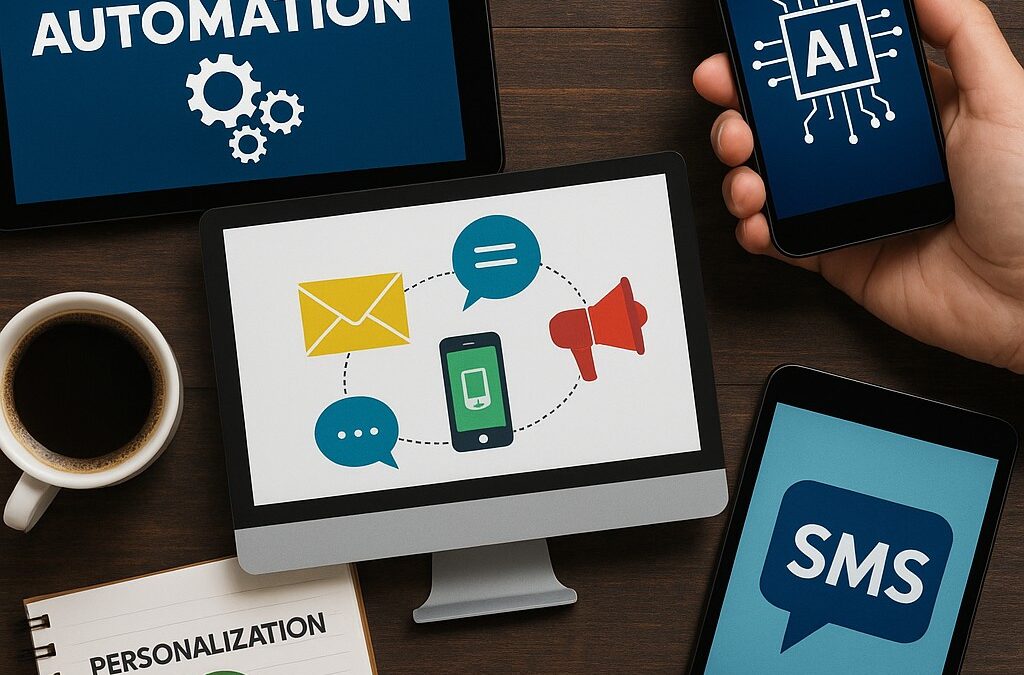
When most marketers think of automation, email campaigns often come to mind first. But today, marketing automation powered by AI has evolved far beyond inboxes and autoresponders. From intelligent chatbots to dynamic ad targeting and real-time SMS workflows, automation now reaches across nearly every digital channel—and it’s changing how brands engage customers at scale.
As customer expectations rise and personalization becomes the norm, brands that leverage automation across their ecosystem are better positioned to deliver timely, relevant, and consistent experiences.
The Evolution of Marketing Automation
Early marketing automation tools focused almost entirely on email—automating welcome sequences, drip campaigns, and cart recovery messages. These tools helped marketers nurture leads without constant manual intervention.
Today, automation capabilities extend across an entire customer journey and span channels such as:
- SMS and push notifications
- Chatbots and live chat platforms
- Website personalization
- Programmatic advertising
- CRM and sales automation
- Social media direct messaging
AI and machine learning now enable marketers to analyze behaviors, predict intent, and deliver tailored content, not just reactively, but proactively.
Why Automation Beyond Email Matters
1. Omnichannel Customer Expectations
Consumers no longer engage with brands on a single channel. They browse on mobile, follow on Instagram, chat via Messenger, and return later via desktop. Relying solely on email limits your ability to meet them where they are, when it matters most.
2. Speed and Responsiveness
AI-powered automation lets you respond in real time. Whether it’s an SMS triggered by cart abandonment or a chatbot that handles product inquiries instantly, faster responses increase conversions and customer satisfaction.
3. Scalability Without Burnout
As your customer base grows, maintaining 1:1 interactions manually becomes impossible. Automation enables scalable personalization—delivering meaningful touchpoints across thousands of users without sacrificing quality.
4. Behavior-Based Journeys
AI tools analyze real-time user behavior—like time on page, click patterns, and engagement history—to trigger tailored workflows. The result is a more dynamic and responsive user journey.
Key Channels Where AI-Powered Automation Thrives
SMS and Push Notifications
SMS automation allows marketers to send personalized messages at key moments, like restocking reminders, appointment alerts, or shipping updates. When combined with AI, these messages can be optimized for timing and relevance.
Example: A customer browses shoes but doesn’t buy. A few hours later, they receive a limited-time SMS discount for that exact item.
Chatbots and Conversational AI
Intelligent chatbots on websites or messaging platforms can answer questions, qualify leads, recommend products, and even assist with checkout. AI makes these bots feel more human, adapting to user tone and intent.
Example: A user lands on your site and asks about a product. The chatbot answers, suggests a related item, and offers a coupon—all before the visitor leaves.
Dynamic Content and Website Personalization
AI can analyze user data—like geographic location, behavior, or past purchases—to customize what content appears on your website. Landing pages can adapt based on visitor profiles to improve relevance and conversions.
Example: A repeat visitor sees different homepage banners than a first-time visitor. Product recommendations are based on their past shopping behavior.
Social Media and Direct Messaging
AI can monitor engagement on social platforms and trigger automated DMs to followers who comment, engage, or express interest in offers. Some strategies also sequence content based on past behavior to deepen engagement.
Example: A customer clicks on a carousel ad. Days later, they receive a follow-up promo message based on their interaction history.
CRM and Sales Automation
Modern marketing automation integrates with sales pipelines to score leads, automate follow-ups, and deliver personalized outreach based on intent. This improves alignment between marketing and sales while speeding up conversions.
Example: A lead downloads a case study, visits the pricing page twice, and replies to a chatbot. AI flags them as high-intent and auto-schedules a rep follow-up.
Enabling Automation: What You Need to Make It Work
Successfully implementing cross-channel automation doesn’t require the flashiest tools—it requires a clear strategy, thoughtful workflows, and the ability to unify your customer data across touchpoints. Before expanding your automation efforts, consider these foundational components:
1. Centralized Customer Data
To create seamless experiences across channels, your systems need to “talk” to each other. A centralized customer data framework helps ensure that your automation is based on accurate, up-to-date behavioral and demographic insights.
2. Clearly Defined Goals and Triggers
Every automation workflow should begin with a clear purpose. Whether you’re aiming to reduce cart abandonment, onboard new users, or re-engage inactive leads, define both the desired outcome and the behavioral trigger that will initiate the sequence.
3. Flexible Workflow Design
Effective automation strategies often follow branching logic, delivering different messages or actions based on customer responses or engagement. This flexibility ensures the experience remains relevant and timely for each user.
4. Consistent Messaging Across Channels
While automation allows you to engage users on various platforms, consistency in tone, branding, and value proposition is key. Each channel should support a unified story, even if it’s tailored to the medium.
5. Ongoing Monitoring and Refinement
Automation is not a set-it-and-forget-it strategy. Successful brands regularly test variations, review performance metrics, and make data-driven adjustments to improve outcomes over time.
Beyond the Inbox: The Future Is Integrated
Email is still powerful, but it’s just one thread in a much larger marketing web. Today’s consumers expect relevance, speed, and personalization—on the platform of their choice, at the time of their choosing.
By moving beyond email and embracing automation across SMS, web, chat, and social, marketers can create cohesive, data-driven experiences that meet users where they are. With AI as a backbone, these experiences feel timely, helpful, and—most importantly—human.
Brands that adopt a channel-agnostic, customer-centric approach to automation aren’t just keeping up with digital trends—they’re redefining what marketing can be.

by Research Team | May 6, 2025 | Artificial Intelligence, Automation, Digital Marketing, Social Media
The digital marketing landscape is evolving rapidly, and one of the most significant changes in recent years is the rise of zero-click marketing. As search engines, AI-driven assistants, and social media platforms prioritize immediate answers and on-platform engagement, businesses must adapt their marketing strategies to remain visible and influential—even without direct clicks to their websites.
In this article, we’ll explore what zero-click marketing is, why it’s reshaping digital strategies, and how brands can succeed in an era where clicks are no longer the primary measure of engagement.
What is Zero-Click Marketing?
Zero-click marketing refers to strategies that deliver brand value, information, and engagement without requiring users to click through to an external website. This shift is driven by search engine results pages (SERPs), AI-powered assistants, featured snippets, social media feeds, and voice search, all of which prioritize instant, in-platform content delivery.
Key Examples of Zero-Click Marketing:
- Google Featured Snippets – Providing direct answers to search queries on Google’s SERP.
- AI-Generated Search Summaries – Instant responses from AI-powered search engines.
- Social Media Content Consumption – Engagement with brand content within platforms like Instagram, LinkedIn, and TikTok.
- Voice Search Responses – Optimizing content for virtual assistants like Siri, Alexa, and Google Assistant.
- Google Business Profile & Local Pack Listings – Providing key information directly in search results without requiring a website visit.
Why Zero-Click Marketing Matters
1. Search Engine Evolution
With Google, Bing, and AI-powered search tools delivering instant responses, traditional click-through rates (CTRs) are declining. Brands must now focus on visibility within search results, not just traffic generation.
2. Rise of AI & Conversational Search
Users increasingly rely on AI chatbots and voice assistants for immediate answers, requiring businesses to adapt by structuring content for these platforms.
3. Social Media-First Content Consumption
Platforms like TikTok, Instagram, and LinkedIn encourage content engagement without leaving the app, meaning brands must build relationships within these ecosystems rather than directing users away.
4. Increased Competition for User Attention
With millions of websites competing for clicks, zero-click strategies offer brands a way to stay visible and relevant without relying solely on organic website traffic.
How to Win with Zero-Click Marketing
1. Optimize for Featured Snippets & AI Summaries
Brands should structure content for instant search results by:
- Using concise, well-formatted answers to common questions.
- Including bullet points, numbered lists, and FAQ sections.
- Optimizing for Google’s “People Also Ask” section.
2. Strengthen Your Google Business Profile
For local businesses, a well-optimized Google Business Profile ensures visibility in searches without requiring users to visit a website.
- Keep business hours, services, and contact details updated.
- Encourage customer reviews to build credibility.
- Post updates, promotions, and FAQs directly on your listing.
3. Create Engaging, Standalone Social Media Content
Instead of using social media to drive traffic to a website, brands should create self-contained, engaging content that delivers value on the platform itself.
- Use short-form videos (TikTok, Instagram Reels, YouTube Shorts).
- Publish carousel posts, infographics, and bite-sized insights.
- Engage through interactive polls, Q&A sessions, and live streams.
4. Optimize for Voice Search & Conversational AI
As voice search usage grows, brands must optimize for spoken queries by:
- Writing in natural, conversational language.
- Answering long-tail, question-based search queries.
- Structuring content with clear, concise responses that virtual assistants can pull from.
5. Focus on Brand Authority & Thought Leadership
Since zero-click marketing emphasizes visibility over clicks, building brand authority is key:
- Publish insights on LinkedIn, Medium, and industry forums.
- Leverage guest posts, podcast appearances, and expert commentary.
- Participate in Twitter/X conversations, Reddit AMAs, and industry discussions.
6. Utilize AI-Powered Chatbots & Instant Engagement Tools
Instead of directing users away from platforms, AI-driven chatbots can provide instant engagement, personalized recommendations, and customer support on websites, social media, and messaging apps.
Measuring Success in a Zero-Click World
Since traditional metrics like CTR are less relevant, brands should track:
- Brand Mentions & Search Visibility – How often your brand appears in search results, featured snippets, and social conversations.
- Engagement Metrics – Interaction rates on social posts, AI chatbot responses, and voice search results.
- Direct Queries & Brand Searches – Growth in users searching for your brand name directly, indicating strong awareness.
- Customer Actions on Google Business Profile – Click-to-call, direction requests, and photo views.
The Future of Zero-Click Marketing
- AI-Generated Search Summaries Will Dominate – AI-powered search engines will continue providing instant answers, reducing the need for website visits.
- Hyper-Personalized, Platform-Based Engagement – Brands will focus on personalized content delivery within apps and search engines.
- Augmented Reality (AR) & Immersive Content – Expect AR-powered search experiences that provide visual responses without clicking.
- Advanced Conversational AI & Voice Search Optimization – AI chatbots and virtual assistants will become primary customer interaction tools.
- Search Engine & Social Media Convergence – Platforms like Google, TikTok, and Meta will integrate AI-driven search functions, merging social and search marketing.
Conclusion
Zero-click marketing is not about eliminating websites or SEO, but rather adapting to changing user behaviors where instant engagement matters more than driving traffic. Brands that embrace on-platform engagement, AI-driven search optimization, and conversational marketing will thrive in this evolving landscape.
By focusing on visibility, brand authority, and platform-native content, businesses can succeed in a world where users increasingly interact without clicking.
Is your brand ready for the zero-click marketing revolution? The future of digital engagement is about meeting users where they are—without requiring a click.

by Research Team | May 4, 2025 | Artificial Intelligence, Digital Marketing
As digital marketing becomes increasingly data-driven, quantum computing is poised to revolutionize the industry. With the ability to process massive datasets at unprecedented speeds, quantum computing will enable marketers to analyze consumer behavior, optimize campaigns, and predict trends with unmatched accuracy.
By leveraging quantum algorithms, machine learning, and AI-driven predictive analytics, brands can gain deep insights into customer preferences, enabling hyper-personalized marketing strategies. This article explores how quantum computing will shape the future of digital marketing, its benefits, and practical applications for businesses.
What is Quantum Computing?
Quantum computing is a next-generation computing technology that harnesses the principles of quantum mechanics to perform complex calculations at speeds far beyond classical computers. Unlike traditional computers that process data using bits (0s and 1s), quantum computers use qubits, which can exist in multiple states simultaneously due to superposition and entanglement.
Key Differences Between Classical and Quantum Computing:
- Massive Parallel Processing – Quantum computers analyze multiple possibilities at once.
- Faster Data Analysis – Quantum algorithms accelerate big data processing and machine learning tasks.
- Better Predictive Analytics – Advanced simulations allow for real-time decision-making and forecasting.
- Enhanced Encryption & Security – Quantum cryptography ensures secure transactions and data protection.
How Quantum Computing Will Transform Digital Marketing
1. Ultra-Fast Data Processing & Real-Time Consumer Insights
Quantum computing will allow brands to process massive datasets in real time, providing immediate insights into customer behavior, preferences, and market trends.
2. Hyper-Personalization at Scale
Quantum algorithms can analyze multiple variables simultaneously, enabling brands to create highly personalized customer experiences with AI-driven recommendations and dynamic content adjustments.
3. Advanced Predictive Analytics & Market Forecasting
Quantum-powered AI can process historical and real-time data, predicting future consumer trends, sales performance, and demand fluctuations with unprecedented accuracy.
4. Optimization of Ad Targeting & Programmatic Advertising
Quantum computing can refine ad targeting algorithms, ensuring that digital ads reach the right audience at the right time, improving ROI for marketing campaigns.
5. Enhanced SEO & Voice Search Optimization
Quantum AI can process large-scale search intent data, optimizing content strategies for voice search, semantic search, and AI-powered search engines.
6. Fraud Detection & Cybersecurity in Marketing
Quantum encryption will protect consumer data, ensuring secure transactions, fraud prevention, and better compliance with data privacy regulations.
Practical Applications of Quantum Computing in Marketing
1. AI-Driven Content Creation & Strategy
Quantum computing will enhance AI-powered content marketing, enabling:
- Automated real-time content generation tailored to user preferences.
- AI-assisted content optimization and predictive engagement metrics.
- Enhanced A/B testing at quantum speeds for campaign performance.
2. Quantum-Powered Customer Journey Mapping
Quantum computing can analyze millions of customer interactions instantly, helping brands map the optimal customer journey and personalize touchpoints across websites, social media, and email marketing.
3. Sentiment Analysis & Brand Reputation Management
By analyzing billions of social media posts, reviews, and comments, quantum algorithms can provide real-time sentiment analysis, allowing brands to manage their reputation proactively.
4. Real-Time Dynamic Pricing & Demand Forecasting
Quantum computing can predict consumer purchasing patterns and adjust pricing dynamically based on market demand, competitor pricing, and economic conditions.
5. Quantum-Powered Chatbots & Virtual Assistants
AI-driven chatbots using quantum algorithms will deliver instant, human-like responses, improving customer service and conversational marketing strategies.
Future Trends in Quantum Computing for Marketing
- Quantum AI-Powered Voice Search & Smart Assistants – Enhanced AI will provide real-time responses to complex user queries.
- Quantum-Powered Metaverse Marketing – Ultra-fast data processing will create hyper-realistic, interactive brand experiences.
- AI-Driven Quantum CRM Systems – Customer relationship management will be fully automated with quantum-enhanced predictive insights.
- Quantum-Optimized Omnichannel Marketing – Seamless cross-channel marketing strategies with real-time optimization.
- Quantum Cryptography in Digital Advertising – Ultra-secure advertising transactions to prevent fraud and privacy breaches.
The Future of Quantum-Driven Marketing
Quantum computing is set to redefine digital marketing, offering brands an unparalleled ability to analyze, predict, and optimize marketing strategies at a scale never seen before. As the technology matures, businesses that embrace quantum-powered marketing solutions will gain a competitive edge in customer engagement, personalization, and data security.
With the rise of AI, automation, and predictive analytics, the future of marketing will be driven by real-time insights, ultra-fast computing power, and next-generation personalization techniques.
Is your brand ready to embrace the power of quantum computing in digital marketing? The future is quantum, and the time to innovate is now.

by Research Team | May 1, 2025 | Advertising, Artificial Intelligence, Digital Marketing
As technology advances, hyper-reality marketing is transforming the way brands interact with consumers. By blending augmented reality (AR), virtual reality (VR), and physical experiences, brands can create immersive, interactive, and engaging customer experiences that bridge the digital and physical worlds.
From virtual product try-ons to AR-powered retail experiences, hyper-reality marketing is redefining engagement by allowing customers to experience products and services in unprecedented ways. This article explores how hyper-reality marketing is shaping the future, its benefits, and how brands can implement it effectively.
What is Hyper-Reality Marketing?
Hyper-reality marketing is the fusion of AR, VR, AI, and real-world environments, offering customers seamless, immersive experiences that enhance brand interaction and engagement. Unlike standalone AR or VR applications, hyper-reality combines these elements to create a new dimension of consumer experiences.
Key Elements of Hyper-Reality Marketing:
- Augmented Reality (AR) – Digital overlays on the real world, such as interactive product displays and mobile AR filters.
- Virtual Reality (VR) – Fully immersive digital environments that allow users to experience products, services, or brand storytelling.
- Mixed Reality (MR) – The blending of digital and physical worlds where digital elements interact with real-world objects.
- AI-Powered Interactions – AI-driven chatbots, voice assistants, and adaptive content personalization within hyper-reality environments.
- Haptic & Sensory Technology – Enhancing experiences with touch, motion, and sound feedback.
- Spatial Computing – The use of advanced tracking to make digital interactions feel more natural in real-world spaces.
Benefits of Hyper-Reality Marketing
1. Enhanced Customer Engagement & Interaction
Hyper-reality marketing captivates users by providing interactive and experiential brand experiences, making engagement more dynamic and memorable.
2. Higher Conversion Rates & Reduced Purchase Hesitation
By allowing customers to visualize products in real-world settings, brands help reduce uncertainty, leading to higher purchase intent and lower return rates.
3. Personalized & Data-Driven Brand Experiences
AI integration enables brands to customize hyper-reality interactions, delivering real-time recommendations and tailored promotions.
4. Competitive Differentiation & Brand Innovation
Companies that invest in hyper-reality stand out by offering cutting-edge digital experiences, creating a strong brand identity and customer loyalty.
5. Bridging the Gap Between Online & Offline Shopping
Hyper-reality marketing integrates e-commerce with real-world shopping experiences, allowing customers to virtually try products before buying.
6. Immersive Brand Storytelling
Hyper-reality enhances brand narratives, making them more engaging and emotionally resonant through interactive elements and 360-degree experiences.
How Brands Can Implement Hyper-Reality Marketing
1. Augmented Reality for Product Visualization
Brands can use AR to allow customers to see how furniture fits in their homes, try on clothing, or test makeup virtually before purchasing.
2. Virtual Showrooms & Immersive Retail Experiences
Retailers can create VR-powered virtual stores, where customers can explore products, interact with brand representatives, and make purchases in an immersive environment.
3. Interactive AR Advertising & Billboards
Brands can design AR-powered ad campaigns that enable users to interact with billboards, posters, and product displays through their smartphones.
4. AI-Powered Hyper-Reality Assistants
Virtual shopping assistants, powered by AI, can guide users through personalized, real-time experiences in hyper-reality environments.
5. Gamification & Brand Storytelling in VR
Brands can integrate game mechanics, interactive storytelling, and challenges within VR experiences to create engaging marketing campaigns.
6. AR-Powered Social Media Filters & Experiences
Brands can enhance engagement through interactive AR filters on platforms like Instagram, Snapchat, and TikTok, allowing users to experience branded content in real-time.
7. Hyper-Realistic Event Marketing
Companies can create virtual concerts, brand activations, and product launches within hyper-reality spaces, blending real and digital experiences seamlessly.
Future Trends in Hyper-Reality Marketing
- AI-Generated Virtual Influencers – AI-driven avatars will engage with customers in hyper-reality spaces.
- Metaverse & Virtual Brand Ecosystems – Companies will establish digital stores, events, and customer experiences within virtual environments.
- 5G-Powered Hyper-Reality – High-speed connectivity will enable real-time, seamless hyper-reality interactions.
- Brain-Computer Interfaces (BCIs) – Future advancements will allow thought-controlled hyper-reality experiences.
- Personalized AR Shopping Journeys – AI will adapt AR-powered shopping experiences to individual user preferences.
- Immersive Live Events & Brand Activations – Brands will create interactive, multi-sensory live events blending VR, AR, and real-world participation.
- Digital Twin Experiences – Hyper-reality will enable real-time, AI-generated replicas of real-world stores and venues, allowing users to interact with them remotely.
- Wearable Hyper-Reality Devices – Smart glasses, haptic gloves, and AR/VR headsets will enhance real-world and digital interactions.
The Future of Hyper-Reality in Marketing
Hyper-reality marketing is reshaping the digital landscape, offering brands a powerful way to engage customers through multi-sensory, interactive experiences. By merging the physical and digital worlds, brands can redefine storytelling, enhance engagement, and drive higher conversions.
With advancements in AI, spatial computing, and immersive technology, hyper-reality will become an integral part of future marketing strategies. As consumers seek more interactive, personalized, and meaningful experiences, brands that embrace hyper-reality marketing will have a significant competitive advantage.
Businesses that invest in hyper-reality-driven campaigns will lead the industry, bridging digital and physical interactions like never before.
Is your brand ready to embrace hyper-reality marketing? Now is the time to innovate and redefine the way customers interact with your brand in 2025 and beyond.