
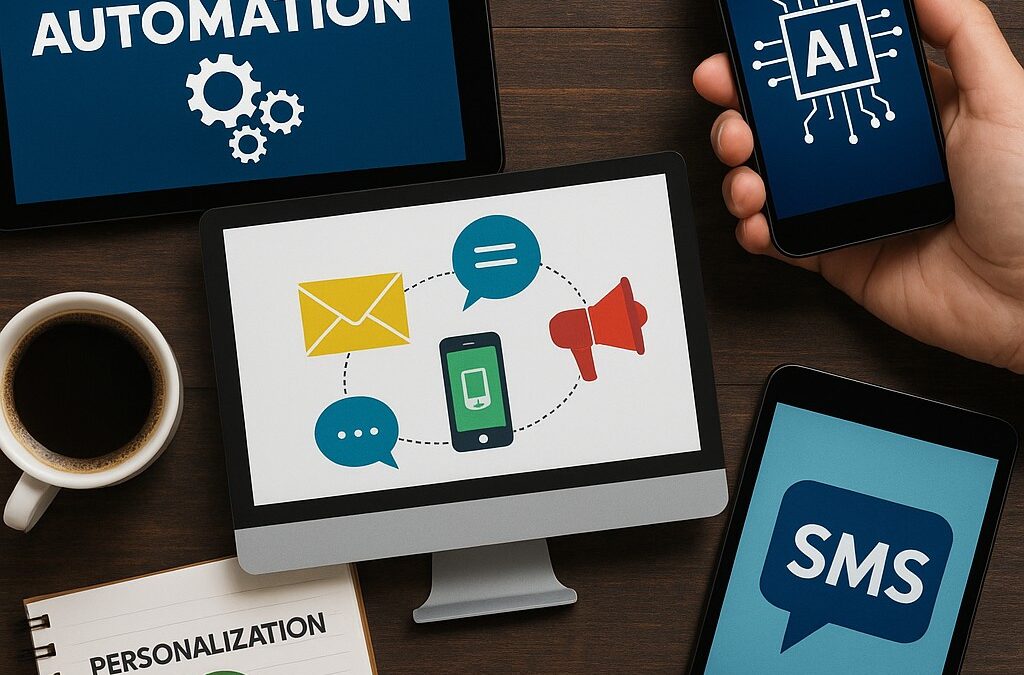
When most marketers think of automation, email campaigns often come to mind first. But today, marketing automation powered by AI has evolved far beyond inboxes and autoresponders. From intelligent chatbots to dynamic ad targeting and real-time SMS workflows, automation now reaches across nearly every digital channel—and it’s changing how brands engage customers at scale.
As customer expectations rise and personalization becomes the norm, brands that leverage automation across their ecosystem are better positioned to deliver timely, relevant, and consistent experiences.
The Evolution of Marketing Automation
Early marketing automation tools focused almost entirely on email—automating welcome sequences, drip campaigns, and cart recovery messages. These tools helped marketers nurture leads without constant manual intervention.
Today, automation capabilities extend across an entire customer journey and span channels such as:
- SMS and push notifications
- Chatbots and live chat platforms
- Website personalization
- Programmatic advertising
- CRM and sales automation
- Social media direct messaging
AI and machine learning now enable marketers to analyze behaviors, predict intent, and deliver tailored content, not just reactively, but proactively.
Why Automation Beyond Email Matters
1. Omnichannel Customer Expectations
Consumers no longer engage with brands on a single channel. They browse on mobile, follow on Instagram, chat via Messenger, and return later via desktop. Relying solely on email limits your ability to meet them where they are, when it matters most.
2. Speed and Responsiveness
AI-powered automation lets you respond in real time. Whether it’s an SMS triggered by cart abandonment or a chatbot that handles product inquiries instantly, faster responses increase conversions and customer satisfaction.
3. Scalability Without Burnout
As your customer base grows, maintaining 1:1 interactions manually becomes impossible. Automation enables scalable personalization—delivering meaningful touchpoints across thousands of users without sacrificing quality.
4. Behavior-Based Journeys
AI tools analyze real-time user behavior—like time on page, click patterns, and engagement history—to trigger tailored workflows. The result is a more dynamic and responsive user journey.
Key Channels Where AI-Powered Automation Thrives
SMS and Push Notifications
SMS automation allows marketers to send personalized messages at key moments, like restocking reminders, appointment alerts, or shipping updates. When combined with AI, these messages can be optimized for timing and relevance.
Example: A customer browses shoes but doesn’t buy. A few hours later, they receive a limited-time SMS discount for that exact item.
Chatbots and Conversational AI
Intelligent chatbots on websites or messaging platforms can answer questions, qualify leads, recommend products, and even assist with checkout. AI makes these bots feel more human, adapting to user tone and intent.
Example: A user lands on your site and asks about a product. The chatbot answers, suggests a related item, and offers a coupon—all before the visitor leaves.
Dynamic Content and Website Personalization
AI can analyze user data—like geographic location, behavior, or past purchases—to customize what content appears on your website. Landing pages can adapt based on visitor profiles to improve relevance and conversions.
Example: A repeat visitor sees different homepage banners than a first-time visitor. Product recommendations are based on their past shopping behavior.
Social Media and Direct Messaging
AI can monitor engagement on social platforms and trigger automated DMs to followers who comment, engage, or express interest in offers. Some strategies also sequence content based on past behavior to deepen engagement.
Example: A customer clicks on a carousel ad. Days later, they receive a follow-up promo message based on their interaction history.
CRM and Sales Automation
Modern marketing automation integrates with sales pipelines to score leads, automate follow-ups, and deliver personalized outreach based on intent. This improves alignment between marketing and sales while speeding up conversions.
Example: A lead downloads a case study, visits the pricing page twice, and replies to a chatbot. AI flags them as high-intent and auto-schedules a rep follow-up.
Enabling Automation: What You Need to Make It Work
Successfully implementing cross-channel automation doesn’t require the flashiest tools—it requires a clear strategy, thoughtful workflows, and the ability to unify your customer data across touchpoints. Before expanding your automation efforts, consider these foundational components:
1. Centralized Customer Data
To create seamless experiences across channels, your systems need to “talk” to each other. A centralized customer data framework helps ensure that your automation is based on accurate, up-to-date behavioral and demographic insights.
2. Clearly Defined Goals and Triggers
Every automation workflow should begin with a clear purpose. Whether you’re aiming to reduce cart abandonment, onboard new users, or re-engage inactive leads, define both the desired outcome and the behavioral trigger that will initiate the sequence.
3. Flexible Workflow Design
Effective automation strategies often follow branching logic, delivering different messages or actions based on customer responses or engagement. This flexibility ensures the experience remains relevant and timely for each user.
4. Consistent Messaging Across Channels
While automation allows you to engage users on various platforms, consistency in tone, branding, and value proposition is key. Each channel should support a unified story, even if it’s tailored to the medium.
5. Ongoing Monitoring and Refinement
Automation is not a set-it-and-forget-it strategy. Successful brands regularly test variations, review performance metrics, and make data-driven adjustments to improve outcomes over time.
Beyond the Inbox: The Future Is Integrated
Email is still powerful, but it’s just one thread in a much larger marketing web. Today’s consumers expect relevance, speed, and personalization—on the platform of their choice, at the time of their choosing.
By moving beyond email and embracing automation across SMS, web, chat, and social, marketers can create cohesive, data-driven experiences that meet users where they are. With AI as a backbone, these experiences feel timely, helpful, and—most importantly—human.
Brands that adopt a channel-agnostic, customer-centric approach to automation aren’t just keeping up with digital trends—they’re redefining what marketing can be.
