
by Research Team | Dec 9, 2025 | Audience Engagement, Content Marketing, Digital Marketing, Marketing Strategy, Personalization
Digital marketing has become more competitive than ever. Every day, audiences scroll past countless ads, videos, and blog posts. To stand out, brands must move beyond passive content and create experiences that invite participation.
That’s where interactive content comes in. Whether through quizzes, polls, calculators, or interactive videos, this strategy transforms audiences from passive viewers into active participants. It’s a shift from broadcasting messages to building connections—and it’s proving to be one of the most effective ways to capture attention in a distracted digital world.
What Is Interactive Content
Interactive content is any digital material that requires users to actively engage rather than simply consume. Instead of reading or watching, users click, answer, choose, or explore.
Examples include:
- Quizzes that match products or personalities
- Polls that invite opinions or feedback
- Calculators that estimate savings, ROI, or pricing
- Interactive infographics that reveal insights as users scroll
- Interactive videos that allow viewers to choose story paths
This engagement turns ordinary content into a two-way conversation. It not only increases time on page and social shares but also provides valuable data about audience preferences and intent.
Why Interactive Content Matters
Today’s users expect more personalized and engaging experiences. Static posts can educate, but interactive content involves, entertains, and converts.
Here’s why it’s become a key part of modern marketing:
Captures Attention in a Crowded Space
Interactive formats break the monotony of endless scrolling. They invite curiosity, spark action, and give users something to do instead of just something to see.
Increases Engagement and Retention
People remember experiences better than information. Interactive content encourages participation, which boosts retention and recall—helping your brand stay top of mind.
Provides Actionable Insights
Every interaction is a source of data. When users answer quiz questions or use calculators, marketers learn more about their needs, pain points, and buying intent—all voluntarily shared.
Builds Trust and Personalization
By offering interactive experiences that feel useful or fun, brands can gather zero-party data (information users willingly share). This enables deeper personalization built on consent and transparency.
Boosts Conversions
Interactive tools often guide users toward decisions—helping them understand which product, service, or plan best fits their needs. This creates a seamless bridge between engagement and conversion.
The Most Effective Types of Interactive Content
While there are many forms of interactive content, certain formats consistently perform well across industries.
Quizzes
Quizzes are one of the most engaging formats because they blend entertainment with insight. They can educate users, recommend products, or reveal personalized results.
For example, a quiz that helps users discover their ideal fitness plan or digital marketing strategy makes learning fun while collecting valuable preference data.
Polls and Surveys
Polls are excellent for encouraging quick participation. They invite opinions, spark conversation, and generate a sense of inclusion. Sharing poll results also demonstrates transparency and builds community around your brand.
Calculators
Interactive calculators turn complex decisions into clarity. Whether estimating costs, potential savings, or return on investment, they provide immediate value. They’re especially useful for industries like finance, real estate, software, or education.
Interactive Infographics
Infographics have always been a visual favorite, but interactive versions go further. They allow users to click through data, filter results, or reveal new insights dynamically. This format works well for storytelling and thought leadership.
Interactive Videos
Viewers can choose what happens next, explore product features, or take action directly within a video. These experiences increase dwell time and keep audiences engaged throughout the journey.
How to Build an Effective Interactive Content Strategy
Creating interactive content isn’t just about adding flashy features—it’s about designing experiences that align with user intent and brand goals.
1. Define Your Objective
Start by identifying what you want to achieve: awareness, lead generation, education, or conversion. The type of interactive content you create should match your marketing funnel goals. For instance, quizzes work well at the top of the funnel, while calculators perform best near purchase stages.
2. Know Your Audience
Understanding your audience’s motivations is essential. Do they crave entertainment, advice, or information? Use existing analytics, surveys, or persona insights to guide your content creation.
3. Focus on Value Exchange
Audiences are more likely to engage when they receive something in return—knowledge, clarity, or personalized recommendations. Make sure your interactive content offers genuine value, not just novelty.
4. Keep It Simple and Intuitive
Interactive elements should enhance, not complicate, the user experience. Avoid unnecessary steps or distractions. Clear design, short interactions, and fast loading times are crucial for maintaining engagement.
5. Integrate Data Collection Responsibly
If your content collects user data, be transparent about how it’s used. Respect privacy and ensure compliance with data protection standards. Zero-party data should always be consent-based.
6. Promote Across Channels
Once your content is live, amplify it through email, social media, paid campaigns, and your website. The more visibility it gets, the greater the engagement potential.
7. Measure and Optimize
Track metrics such as completion rate, dwell time, lead conversion, and feedback quality. Use these insights to refine your future content and continuously improve the experience.
Real-World Applications of Interactive Marketing
Interactive content is highly adaptable across industries and objectives. Here are a few examples of how different sectors use it effectively:
- Education and E-Learning: Course recommendation quizzes and progress trackers make learning more personalized.
- Finance and Insurance: ROI calculators and budgeting tools help users make informed decisions.
- Healthcare and Wellness: Symptom checkers or lifestyle assessments encourage proactive engagement.
- Technology and SaaS: Demos and feature comparison tools help prospects explore solutions interactively.
- Hospitality and Travel: Trip planners and experience selectors inspire discovery and booking confidence.
Each use case demonstrates how interactivity not only enhances engagement but also deepens brand understanding and trust.
The Role of AI in Interactive Content
Artificial intelligence is expanding what’s possible in interactive marketing. AI tools can personalize quiz results, recommend content dynamically, or adjust calculators in real time based on user inputs.
AI-driven chat experiences can even simulate two-way conversations, blending automation with personalization. This fusion of interactivity and intelligence ensures users receive more relevant and responsive experiences—while marketers gain deeper insights into preferences and behavior.
Why Interactivity Is the Future of Engagement
As audiences grow more selective about the content they consume, interactivity will become a defining factor in digital marketing success. Static posts inform—but interactive experiences inspire action, emotion, and loyalty.
When done right, interactive content feels less like marketing and more like collaboration. It empowers users, creates dialogue, and transforms engagement into insight.
In an era where attention is fleeting, the brands that invite participation will be the ones that truly connect.
by Research Team | Dec 6, 2025 | Automation, Customer Experience, Personalization
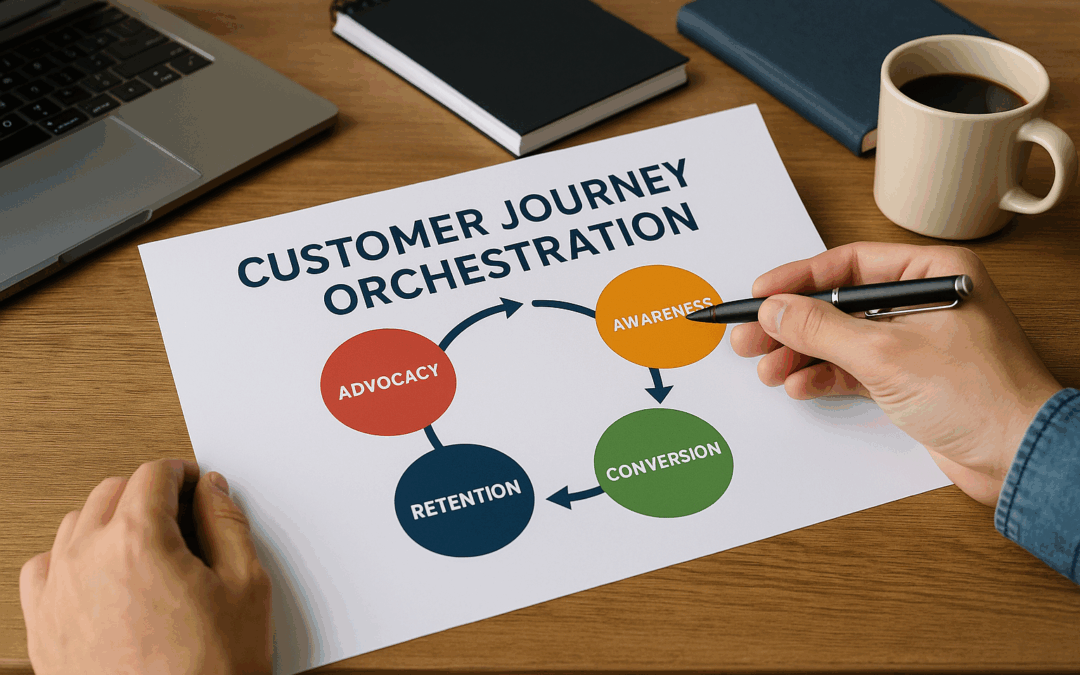
Every interaction a customer has with a brand shapes their perception—whether it’s a social media ad, a support email, or an in-store conversation. Yet many brands still treat these moments as separate events rather than a connected story.
Customer journey orchestration (CJO) changes that. It’s the process of designing and synchronizing every touchpoint across the customer lifecycle to create a seamless, personalized experience. When done effectively, CJO transforms fragmented interactions into a cohesive journey that feels effortless to the customer and strategic for the brand.
What Is Customer Journey Orchestration
Customer journey orchestration goes beyond mapping out customer paths—it’s about managing them in real time. Traditional journey mapping visualizes what customers might do, while orchestration actively responds to what they are doing.
It integrates data, automation, and analytics to deliver the right message, on the right channel, at the right moment.
In simple terms, CJO connects every part of the customer experience—marketing, sales, service, and loyalty—so that no interaction feels disconnected or repetitive. The result is a brand experience that’s consistent, personalized, and continuous.
Why Customer Journey Orchestration Matters
Today’s customers expect more than convenience—they expect consistency. They move between devices, channels, and platforms seamlessly, and they expect brands to keep up.
Without orchestration, experiences become fragmented: marketing messages don’t match sales offers, and customer support might not know about previous interactions. This creates frustration and erodes trust.
Here’s why CJO has become essential for modern marketing:
- Personalization at scale: It uses data to deliver experiences tailored to individual preferences and behaviors.
- Real-time responsiveness: Brands can react instantly to customer signals, improving satisfaction and conversions.
- Cross-department alignment: Marketing, sales, and service teams work from a unified understanding of the customer.
- Higher retention and loyalty: Seamless experiences increase satisfaction and reduce friction.
In an omnichannel world, orchestration is the key to making personalization truly work.
The Key Components of Effective Journey Orchestration
To build a synchronized customer journey, brands must align three critical elements: data, technology, and strategy.
1. Unified Customer Data
A complete view of the customer is the foundation of orchestration. That means consolidating data from multiple sources—CRM, website analytics, email, social, and offline interactions—into a single profile.
Unified data helps identify where each customer is in their journey and what actions will move them forward. The more accurate the data, the more effective the orchestration.
2. Intelligent Automation
Automation tools power orchestration by managing repetitive processes and triggering real-time actions based on customer behavior. For example, if a user abandons a shopping cart, the system can automatically send a reminder email or personalized offer.
3. Journey Analytics
Analytics turn raw data into insight. Journey analytics track how customers interact across touchpoints, identifying pain points, opportunities, and drop-offs. These insights guide optimization and help refine messaging and timing.
4. Orchestration Platforms
Customer journey orchestration platforms—like Adobe Journey Optimizer, Salesforce Interaction Studio, or Iterable—integrate data and automation into one ecosystem. They enable marketers to design, execute, and monitor journeys in real time.
5. Human Oversight
While automation drives efficiency, human creativity and empathy remain essential. Marketers interpret insights, craft narratives, and ensure that automated experiences stay aligned with brand values.
Steps to Implement a Customer Journey Orchestration Strategy
Transitioning from fragmented marketing to orchestrated experiences requires structure and patience. Here’s how to approach it effectively.
Step 1: Map the Customer Lifecycle
Begin by defining your major journey stages—awareness, consideration, conversion, retention, and advocacy. Identify the goals, emotions, and pain points customers experience at each phase.
Step 2: Audit Existing Touchpoints
List all customer interactions across channels, from digital ads to post-purchase support. Look for inconsistencies, gaps, or duplicated messages that could confuse or frustrate users.
Step 3: Centralize Data Sources
Integrate customer data across departments. A unified data view ensures that everyone—from marketing to customer service—operates from the same understanding of the user.
Step 4: Segment and Personalize
Group customers by intent, behavior, or lifecycle stage rather than broad demographics. Then tailor messaging and offers for each segment using automation and predictive analytics.
Step 5: Automate Responsively
Set up automated workflows triggered by real-time actions. For example, if a user views a product multiple times but doesn’t purchase, send a dynamic email offering additional information or an incentive.
Step 6: Measure and Refine
Use journey analytics to track engagement, satisfaction, and conversion across touchpoints. Adjust messaging, timing, and channel mix based on insights. Orchestration is a continuous process of learning and improvement.
Common Challenges in Journey Orchestration
Implementing CJO isn’t without its hurdles. The most common challenges include:
- Data silos: Disconnected systems prevent a unified view of the customer.
- Complex tech stacks: Managing multiple platforms can create integration issues.
- Over-automation: Too many automated messages can feel impersonal or overwhelming.
- Lack of alignment: Teams often operate in isolation without shared goals or metrics.
Overcoming these challenges requires clear leadership, cross-functional collaboration, and ongoing refinement. The most successful brands build orchestration into their culture—not just their marketing technology.
Real-World Applications of Journey Orchestration
Customer journey orchestration can be applied across industries to deliver more relevant, seamless experiences.
- E-commerce: Automate abandoned cart recovery, product recommendations, and loyalty follow-ups.
- Finance: Coordinate onboarding, education, and retention communications for new clients.
- Healthcare: Streamline patient engagement with personalized appointment reminders and follow-ups.
- Education: Guide prospective students from inquiry to enrollment with contextual content.
- B2B Marketing: Align lead nurturing, sales outreach, and customer success into one integrated experience.
In each case, orchestration ensures that every step of the journey feels connected and meaningful.
The Future of Customer Experience Is Orchestrated
The future of marketing lies in connection—not just between brands and customers, but between every touchpoint that defines their relationship.
As technology advances, AI and predictive analytics will make journey orchestration even more precise, anticipating needs before customers express them. But the heart of orchestration will always be empathy—the ability to understand, anticipate, and respond with care.
When brands orchestrate journeys thoughtfully, they transform marketing into relationship-building. The result isn’t just higher engagement or conversion—it’s loyalty built on consistency, trust, and understanding.

by Research Team | Dec 1, 2025 | Artificial Intelligence, Customer Experience, Marketing Technology, Personalization
Automation has changed marketing forever. Tasks that once took hours—sending emails, analyzing data, scheduling content—now happen in seconds. Yet with all this efficiency, something vital is at risk: the human connection that makes marketing meaningful.
Human-centered automation bridges that gap. It combines the speed and precision of technology with the empathy, creativity, and emotional intelligence only people can provide. The result is marketing that feels personal, not mechanical—powered by data, but guided by humanity.
What Is Human-Centered Automation
Human-centered automation is the strategic use of technology to enhance, not replace, human interaction in marketing. It means designing automated systems that reflect empathy, respect, and understanding—ensuring customers feel valued, not processed.
Instead of using automation solely for volume or speed, brands apply it to improve relevance, timing, and personalization. This balance creates marketing that’s both efficient and emotionally resonant.
At its core, human-centered automation asks one key question: Does this automation make the customer’s experience better?
If the answer is yes, it’s aligned with true marketing purpose.
The Importance of Human Touch in Automated Marketing
Automation has undeniable benefits—cost savings, scale, and consistency. But overreliance can make communication cold and generic. Audiences today can sense when messages are mass-produced or impersonal, and they respond accordingly.
The human element is what builds trust. People don’t connect with algorithms; they connect with empathy, storytelling, and authenticity. When brands use automation responsibly, they enhance those human traits instead of erasing them.
Here’s why human-centered automation matters:
- It builds trust through authenticity. Personalized interactions show that a brand understands and respects its audience.
- It enhances efficiency without losing empathy. Smart automation saves time while keeping communication warm and relevant.
- It supports long-term loyalty. Customers are more likely to stay engaged with brands that treat them as individuals, not data points.
Human-centered automation transforms technology from a shortcut into a tool for deeper connection.
Principles of Human-Centered Automation
Balancing technology and empathy requires a thoughtful approach. These guiding principles ensure automation remains human-first.
1. Purpose Before Process
Every automated system should begin with a clear human purpose. Ask: what problem does this solve for the customer? Automation that benefits only the brand (like sending constant reminders) may create short-term engagement but long-term fatigue.
2. Personalization Without Intrusion
Use data to personalize experiences responsibly. Relevant recommendations and reminders are helpful; over-targeting or over-communicating feels invasive. Transparency about how data is used builds comfort and confidence.
3. Empathy in Design
Automated messages should reflect empathy in tone, timing, and context. A well-crafted “thank you” email or birthday message can feel just as genuine as one written by hand—if it’s thoughtfully designed.
4. Contextual Awareness
Timing matters as much as content. Sending an automated message at the wrong moment—such as promoting a product immediately after a complaint—is a sign of poor orchestration. Human-centered systems respond to context, not just triggers.
5. Collaboration Between Humans and AI
Automation should assist marketers, not replace them. While machines handle data processing, humans oversee strategy, storytelling, and emotion. The best results come from synergy, not substitution.
Real-World Applications of Human-Centered Automation
Human-centered automation isn’t theoretical—it’s already reshaping digital marketing across industries.
Personalized Email Journeys
AI-driven platforms can analyze behavior to send tailored messages, but the tone and narrative are still crafted by human marketers. This ensures each email feels like a conversation, not a command.
Smart Customer Support
Chatbots provide instant help for common issues, while human agents step in for complex or emotional situations. This blend offers efficiency and compassion.
Predictive Personalization
Predictive tools anticipate what customers need next, such as recommending products or content. Human review ensures these predictions align with brand values and customer sensitivity.
Social Media Automation
Scheduling tools free marketers from repetitive posting, allowing them to focus on real-time engagement, listening, and community building—the human side of social connection.
Voice and Conversational AI
As voice assistants grow, tone, pacing, and phrasing matter more than ever. Brands that humanize these experiences—through warmth and clarity—stand out.
Challenges in Keeping Automation Human
While automation offers immense potential, maintaining authenticity isn’t always easy. Common challenges include:
- Over-Automation: Excessive reliance on automated messages can make brands sound robotic or repetitive.
- Data Misinterpretation: Algorithms can misread context or emotion, leading to tone-deaf responses.
- Privacy Concerns: Personalization requires data, but mishandling it undermines trust.
- Loss of Creativity: Automation can encourage “set and forget” habits, stifling innovation and storytelling.
Solving these challenges means blending technology with human oversight. Automation should amplify creativity, not suppress it.
Best Practices for Human-Centered Marketing Automation
Design With Empathy
Write automated messages as if you’re speaking to one person, not thousands. Use natural language, avoid excessive jargon, and respect user preferences.
Set Boundaries
Automation should enhance—not dominate—the customer journey. Review automated workflows regularly to ensure they still serve the customer’s best interests.
Keep Humans in the Loop
Every automated system needs human supervision. Marketers should review message timing, sentiment, and performance to ensure ongoing relevance.
Test and Learn
A/B testing helps find the balance between efficiency and warmth. Track open rates, click-throughs, and sentiment to see how audiences respond to tone and timing.
Use Data Transparently
Explain how and why customer data is used. Offering control over frequency or content preferences demonstrates respect and builds trust.
The Future of Automation Is Human
As AI and machine learning continue to evolve, automation will become even more sophisticated. But the brands that succeed won’t be the ones that automate the most—they’ll be the ones that automate the best.
Human-centered automation isn’t about replacing people; it’s about freeing them to focus on what technology can’t replicate: creativity, emotion, and connection.
In the end, marketing is still a human conversation—just one enhanced by smarter tools. The goal isn’t to sound automated, but to sound like you care.
When automation works in harmony with empathy, brands don’t just save time—they build relationships that last.

by Research Team | Nov 23, 2025 | Audience Engagement, Personalization
Modern marketing succeeds when messages reach the right people at the right time. Traditional broad segmentation often falls short because audiences behave in more complex and varied ways than basic demographic data can capture. Micro-audience segmentation solves this challenge by creating smaller, more refined audience groups based on specific behaviors, intent signals, and contextual factors. These groups allow marketers to deliver personalized experiences, increase relevance, and reduce wasted ad spend.
Micro-segmentation has become a strategic advantage for brands that want to improve performance without increasing budgets. It helps marketers understand customers at a deeper level and build campaigns that match real needs rather than broad assumptions. This article explores how micro-audience segmentation works, why it matters, and how to use it effectively.
What Micro-Audience Segmentation Means
Micro-segmentation is the process of dividing an audience into smaller, more specific groups based on detailed characteristics. Instead of segmenting by age or location alone, micro-segmentation looks at:
- Behavioral patterns
- Search intent
- Purchase readiness
- Engagement frequency
- Content preferences
- Customer lifecycle stage
- Interaction history
- Motivations and challenges
These details help marketers identify smaller groups with shared traits that influence how they respond. When campaigns reflect these traits, engagement improves and wasted impressions decrease.
Why Micro-Segmentation Matters in Today’s Marketing Environment
Customers expect personalization. They want content that fits their goals and solves their challenges without requiring them to search for what they need. Micro-segmentation supports this expectation in several ways.
It increases campaign relevance
When messaging closely matches what an audience wants, people pay attention. Micro-segmentation allows marketers to speak to motivations, preferences, and real-time needs. Relevance builds trust and improves results.
It reduces wasted impressions
Broad targeting often reaches people who have little interest in the offer. Micro-segmentation ensures campaigns focus on the customers most likely to respond.
It improves return on ad spend
Smaller, more accurate groups deliver higher engagement. As relevancy increases, click through rates and conversion rates rise. This leads to better performance without increasing budgets.
It creates smoother customer journeys
Micro-segmentation supports tailored sequences that guide customers through awareness, consideration, and decision stages. This structured approach improves the user experience.
It strengthens loyalty
Customers return to brands that understand them. Personalized experiences encourage long term engagement.
Key Ways to Create Micro-Audience Segments
Micro-segmentation requires careful research and thoughtful structure. The following methods help marketers build effective audience groups based on meaningful insights.
Segment by behavioral patterns
Behavior offers important clues about what a customer wants. Useful behavioral signals include:
- Pages visited on the website
- Frequency of visits
- Actions taken such as downloads or video views
- Time spent on specific sections
- Abandoned carts or form session starts
These patterns help identify interest level, intent, and readiness to engage.
Segment by search and content intent
Intent based segmentation focuses on what users are trying to achieve. Categories may include:
- Research intent
- Comparison intent
- Purchase intent
- Post purchase intent
Matching content to intent ensures the audience receives information that supports their immediate goals.
Segment by customer lifecycle stage
Customers behave differently at each stage of the journey. Micro-segmentation helps structure:
- Early stage awareness groups
- High interest groups
- Evaluation stage groups
- Repeat customer groups
- Dormant customer groups
Each stage requires different messaging and different calls to action.
Segment by engagement level
Some audiences engage daily, while others check in occasionally. Engagement level reveals how often messaging should appear and how detailed it should be.
Segment by micro-personas
Micro-personas represent smaller subsets of customers within your broader persona. They may reflect unique motivations, specialized roles, or niche challenges. Micro-personas help refine messaging even further.
How Micro-Segmentation Improves Campaign Performance
The benefits of micro-audience segmentation extend beyond refining targeting. It also improves the structure and impact of campaigns across channels.
Email campaigns become more personalized
Instead of sending the same message to everyone, micro-segmentation delivers:
- Tailored product recommendations
- Personalized content sequences
- Lifecycle based campaigns
- Targeted reminders and follow ups
This leads to stronger open and click rates.
Social ad targeting becomes more efficient
Platforms reward relevance. Well designed micro-segments create higher quality interactions and lower cost per click.
Content becomes more strategic
Blog posts, guides, videos, and newsletters can be mapped to specific micro-segments. This ensures content speaks to real user needs instead of general themes.
Retargeting becomes more effective
Micro-segmentation identifies exactly where users drop off or lose interest. Retargeting can then focus on those specific points.
How to Get Started with Micro-Audience Segmentation
Marketers do not need to create dozens of segments at once. A structured approach helps ensure success without unnecessary complexity.
Step 1: Review existing audience data
Collect details from analytics tools, email automation systems, CRM platforms, and social data. Look for patterns that reveal how groups behave.
Step 2: Identify the most meaningful differences
Choose characteristics that genuinely influence behavior such as intent, lifecycle, or engagement.
Step 3: Build segments around those characteristics
Start with three to five micro-segments. These groups should be small enough to be specific but large enough to matter.
Step 4: Create tailored messaging
Each segment should receive content that feels designed for their goals. This includes wording, visuals, timing, and calls to action.
Step 5: Test, measure, and refine
Monitor click rates, conversion rates, and user behavior. Adjust segments as patterns change.
The Long Term Value of Micro-Segmentation
Micro-audience segmentation is not a trend. It is a long term approach to creating stronger digital marketing performance. As customer expectations continue to rise, brands need to understand their audiences more deeply. Micro-segmentation delivers this clarity. It improves the precision of campaigns, reduces wasted spend, and enhances the overall customer experience.
Marketers who adopt micro-segmentation early gain a competitive advantage. They build strategies that reflect real customer behavior, strengthen engagement, and support long term growth.