
by Research Team | Feb 17, 2026 | Customer Experience, Marketing Strategy, Personalization
Digital marketing success depends on how well brands understand their customers. While data provides insight into performance, it does not always explain intent, motivation, or friction. Customer journey mapping bridges this gap by visualizing how users move through each stage of interaction with a brand.
Customer journey mapping helps marketers design more relevant experiences, align teams, and improve performance across channels. When used strategically, it becomes a powerful foundation for digital marketing decision-making.
What Customer Journey Mapping Really Is
Customer journey mapping is the process of documenting every interaction a customer has with a brand across touchpoints. This includes awareness, research, engagement, conversion, onboarding, retention, and advocacy.
The goal is not simply to list channels, but to understand customer needs, emotions, and actions at each stage. Journey maps reveal where expectations are met and where gaps exist.
Effective journey mapping focuses on real behavior rather than assumptions.
Why Customer Journey Mapping Matters in Digital Marketing
Digital marketing often spans multiple channels and teams. Without a shared view of the customer journey, efforts become fragmented.
Journey mapping provides clarity by aligning messaging, timing, and experience design. It helps marketers see how campaigns connect and where inconsistencies appear.
This alignment leads to better customer experiences and stronger marketing outcomes.
Key Components of an Effective Customer Journey Map
A strong journey map includes several essential elements.
First, it defines clear stages that reflect how customers actually move through the buying process. Second, it identifies touchpoints across channels such as websites, email, social media, ads, and support interactions.
Third, it highlights customer goals and pain points at each stage. Finally, it connects these insights to business objectives and performance metrics.
When these components work together, journey maps become actionable tools rather than static diagrams.
How Journey Mapping Improves Personalization
Personalization works best when it aligns with customer intent.
Journey mapping reveals what customers need at each stage, allowing marketers to tailor content and messaging accordingly. Early-stage users may need education, while later-stage users may require reassurance or incentives.
By matching personalization to journey stage, marketers avoid irrelevant messaging and improve engagement.
Identifying Friction Points Through Journey Mapping
Friction often occurs when expectations are unclear or experiences are inconsistent.
Journey maps help identify where users drop off, hesitate, or disengage. These moments signal opportunities for improvement.
Addressing friction points leads to smoother experiences, higher conversion rates, and increased customer satisfaction.
Aligning Channels With Customer Journeys
One of the most valuable benefits of journey mapping is channel alignment.
Rather than treating channels independently, marketers can see how each touchpoint contributes to the overall experience. This supports cohesive storytelling and consistent messaging across platforms.
Channel alignment reduces redundancy and improves efficiency.
Using Data to Inform Journey Maps
Journey mapping should be grounded in data.
Behavioral analytics, CRM insights, customer feedback, and conversion data provide evidence for how users move through journeys. This data ensures maps reflect reality rather than assumptions.
Regular updates keep journey maps relevant as customer behavior evolves.
Journey Mapping and Team Alignment
Customer journeys span multiple departments, not just marketing.
Journey mapping helps align marketing, sales, customer success, and support teams around shared goals. A unified understanding of the customer experience reduces silos and improves collaboration.
This alignment leads to more consistent and effective execution.
Measuring the Impact of Journey Mapping
The success of journey mapping should be measured through outcomes.
Key indicators include improved engagement, higher conversion rates, reduced drop-off, increased retention, and stronger customer satisfaction scores.
When journey mapping informs strategy, performance improvements follow.
Common Challenges in Customer Journey Mapping
One common challenge is overcomplication. Maps that are too detailed become difficult to use.
Another challenge is relying on internal assumptions instead of customer data. This leads to inaccurate representations of behavior.
Successful journey mapping requires focus, data validation, and ongoing refinement.
Integrating Journey Mapping Into Digital Strategy
Journey mapping should not be a one-time exercise.
Integrating journey insights into campaign planning, content strategy, automation, and personalization ensures ongoing impact. Maps should guide decisions rather than sit unused.
Regular reviews help keep journey strategies aligned with business goals.
The Future of Customer Journey Mapping
As technology advances, journey mapping will become more dynamic.
Real-time data, automation, and predictive insights will enable adaptive journeys that respond to behavior as it happens. Journey mapping will move from static documentation to active orchestration.
Brands that invest in journey thinking now will be better prepared for this evolution.
Turning Journey Insights Into Better Experiences
Customer journey mapping strengthens digital marketing by shifting focus from channels to people.
By understanding how customers interact, what they need, and where they struggle, marketers can design experiences that feel intuitive and valuable.
When journey insights guide strategy, digital marketing becomes more cohesive, effective, and customer-centered.

by Research Team | Jan 15, 2026 | Analytics and Data, Marketing Strategy
Modern businesses generate more data than ever before, from customer behaviors and campaign performance to market insights and sales patterns. Yet data alone rarely inspires action. For decision-makers, the true value of analytics emerges when numbers are transformed into stories that clarify meaning, reveal patterns, and guide strategy. This is where data storytelling becomes an essential skill in digital marketing.
Data storytelling bridges the gap between raw analytics and informed decisions. By combining visuals, context, and narrative, marketers can turn complex information into compelling insights that resonate with leaders and drive meaningful change.
Why Data Storytelling Matters
Decision-makers are often pressed for time and may not have the expertise to interpret raw datasets or detailed dashboards. While numbers are critical, they can quickly overwhelm without the right framing. Data storytelling ensures insights are not only accurate but also engaging and actionable.
When presented as a story, data becomes easier to understand and remember. It can highlight challenges, explain outcomes, and point toward future opportunities in a way that spreadsheets and charts alone cannot achieve.
Elements of Effective Data Storytelling
Turning data into stories involves much more than arranging figures into neat graphs or charts. While visuals are important, they are only one part of the equation. True data storytelling brings numbers to life by combining them with context, structure, and narrative flow. It requires an intentional approach that not only presents information but also explains its significance and guides the audience toward a clear understanding. Strong data storytelling includes:
- A clear narrative: Identify the central question or problem the data addresses, and structure insights to answer it logically.
- Relevant context: Frame numbers within business goals or customer behaviors so decision-makers understand why they matter.
- Compelling visuals: Charts, graphs, and infographics simplify complexity and highlight key takeaways.
- Emotional connection: Relating data to customer impact or business growth makes findings more persuasive.
- Action-oriented insights: Every story should guide decision-makers toward a next step.
This combination transforms raw information into knowledge that inspires action.
How Data Storytelling Supports Decision-Makers
Analytics on their own can feel abstract, but when they are transformed into stories, they gain clarity, direction, and meaning. Framing insights in this way enables leaders to quickly see patterns, understand implications, and feel more confident about their next steps. Instead of trying to decode complex dashboards, decision-makers are presented with a narrative that highlights what matters most and why. Through this approach, data storytelling helps:
- Prioritize initiatives by showing which campaigns or strategies generate the most value.
- Identify opportunities hidden within trends or customer behaviors.
- Highlight risks early, providing a chance to adjust before issues grow.
- Demonstrate ROI by linking data directly to business outcomes.
- Facilitate alignment across teams by creating a shared understanding of what the numbers mean.
In this way, storytelling transforms data into a tool not just for measurement but for strategic leadership.
Challenges of Data Storytelling
As valuable as it is, data storytelling comes with challenges. Oversimplification can strip away important nuance, while overly technical presentations risk losing the audience. Another challenge is credibility—data must be accurate, transparent, and responsibly interpreted to avoid misrepresentation.
Striking the right balance requires tailoring stories to the audience, ensuring they receive insights that are both digestible and reliable.
Practical Tips for Marketers
Building expertise in data storytelling takes practice, but it begins with shifting the mindset from simply reporting numbers to shaping them into insights that resonate. Marketers must think about the needs of their audience, the questions decision-makers are asking, and the larger goals those numbers should support. When approached this way, storytelling with data becomes less about presentation and more about influence. To master data storytelling and ensure analytics are meaningful for decision-makers, marketers can:
- Start with the audience: understand what leaders need to know and why.
- Frame findings around goals, KPIs, or customer impact rather than isolated numbers.
- Use visuals sparingly but strategically to highlight patterns and trends.
- Build a narrative arc with a beginning (the challenge), a middle (the data insights), and an end (the recommendation).
- Ensure accuracy and transparency to maintain trust in the analysis.
When these practices are applied, data becomes a powerful narrative tool that informs and persuades.
Closing Perspective
Data storytelling elevates analytics from information to influence. It allows marketers to present findings in a way that captures attention, builds understanding, and drives decisions. In a fast-paced business environment, the ability to transform complex numbers into clear, actionable stories is no longer a luxury—it is a necessity.
For decision-makers, numbers alone may inform, but stories inspire action. By mastering the art of data storytelling, marketers can ensure their insights not only get noticed but also shape the strategies that move businesses forward.

by Research Team | Dec 9, 2025 | Audience Engagement, Content Marketing, Digital Marketing, Marketing Strategy, Personalization
Digital marketing has become more competitive than ever. Every day, audiences scroll past countless ads, videos, and blog posts. To stand out, brands must move beyond passive content and create experiences that invite participation.
That’s where interactive content comes in. Whether through quizzes, polls, calculators, or interactive videos, this strategy transforms audiences from passive viewers into active participants. It’s a shift from broadcasting messages to building connections—and it’s proving to be one of the most effective ways to capture attention in a distracted digital world.
What Is Interactive Content
Interactive content is any digital material that requires users to actively engage rather than simply consume. Instead of reading or watching, users click, answer, choose, or explore.
Examples include:
- Quizzes that match products or personalities
- Polls that invite opinions or feedback
- Calculators that estimate savings, ROI, or pricing
- Interactive infographics that reveal insights as users scroll
- Interactive videos that allow viewers to choose story paths
This engagement turns ordinary content into a two-way conversation. It not only increases time on page and social shares but also provides valuable data about audience preferences and intent.
Why Interactive Content Matters
Today’s users expect more personalized and engaging experiences. Static posts can educate, but interactive content involves, entertains, and converts.
Here’s why it’s become a key part of modern marketing:
Captures Attention in a Crowded Space
Interactive formats break the monotony of endless scrolling. They invite curiosity, spark action, and give users something to do instead of just something to see.
Increases Engagement and Retention
People remember experiences better than information. Interactive content encourages participation, which boosts retention and recall—helping your brand stay top of mind.
Provides Actionable Insights
Every interaction is a source of data. When users answer quiz questions or use calculators, marketers learn more about their needs, pain points, and buying intent—all voluntarily shared.
Builds Trust and Personalization
By offering interactive experiences that feel useful or fun, brands can gather zero-party data (information users willingly share). This enables deeper personalization built on consent and transparency.
Boosts Conversions
Interactive tools often guide users toward decisions—helping them understand which product, service, or plan best fits their needs. This creates a seamless bridge between engagement and conversion.
The Most Effective Types of Interactive Content
While there are many forms of interactive content, certain formats consistently perform well across industries.
Quizzes
Quizzes are one of the most engaging formats because they blend entertainment with insight. They can educate users, recommend products, or reveal personalized results.
For example, a quiz that helps users discover their ideal fitness plan or digital marketing strategy makes learning fun while collecting valuable preference data.
Polls and Surveys
Polls are excellent for encouraging quick participation. They invite opinions, spark conversation, and generate a sense of inclusion. Sharing poll results also demonstrates transparency and builds community around your brand.
Calculators
Interactive calculators turn complex decisions into clarity. Whether estimating costs, potential savings, or return on investment, they provide immediate value. They’re especially useful for industries like finance, real estate, software, or education.
Interactive Infographics
Infographics have always been a visual favorite, but interactive versions go further. They allow users to click through data, filter results, or reveal new insights dynamically. This format works well for storytelling and thought leadership.
Interactive Videos
Viewers can choose what happens next, explore product features, or take action directly within a video. These experiences increase dwell time and keep audiences engaged throughout the journey.
How to Build an Effective Interactive Content Strategy
Creating interactive content isn’t just about adding flashy features—it’s about designing experiences that align with user intent and brand goals.
1. Define Your Objective
Start by identifying what you want to achieve: awareness, lead generation, education, or conversion. The type of interactive content you create should match your marketing funnel goals. For instance, quizzes work well at the top of the funnel, while calculators perform best near purchase stages.
2. Know Your Audience
Understanding your audience’s motivations is essential. Do they crave entertainment, advice, or information? Use existing analytics, surveys, or persona insights to guide your content creation.
3. Focus on Value Exchange
Audiences are more likely to engage when they receive something in return—knowledge, clarity, or personalized recommendations. Make sure your interactive content offers genuine value, not just novelty.
4. Keep It Simple and Intuitive
Interactive elements should enhance, not complicate, the user experience. Avoid unnecessary steps or distractions. Clear design, short interactions, and fast loading times are crucial for maintaining engagement.
5. Integrate Data Collection Responsibly
If your content collects user data, be transparent about how it’s used. Respect privacy and ensure compliance with data protection standards. Zero-party data should always be consent-based.
6. Promote Across Channels
Once your content is live, amplify it through email, social media, paid campaigns, and your website. The more visibility it gets, the greater the engagement potential.
7. Measure and Optimize
Track metrics such as completion rate, dwell time, lead conversion, and feedback quality. Use these insights to refine your future content and continuously improve the experience.
Real-World Applications of Interactive Marketing
Interactive content is highly adaptable across industries and objectives. Here are a few examples of how different sectors use it effectively:
- Education and E-Learning: Course recommendation quizzes and progress trackers make learning more personalized.
- Finance and Insurance: ROI calculators and budgeting tools help users make informed decisions.
- Healthcare and Wellness: Symptom checkers or lifestyle assessments encourage proactive engagement.
- Technology and SaaS: Demos and feature comparison tools help prospects explore solutions interactively.
- Hospitality and Travel: Trip planners and experience selectors inspire discovery and booking confidence.
Each use case demonstrates how interactivity not only enhances engagement but also deepens brand understanding and trust.
The Role of AI in Interactive Content
Artificial intelligence is expanding what’s possible in interactive marketing. AI tools can personalize quiz results, recommend content dynamically, or adjust calculators in real time based on user inputs.
AI-driven chat experiences can even simulate two-way conversations, blending automation with personalization. This fusion of interactivity and intelligence ensures users receive more relevant and responsive experiences—while marketers gain deeper insights into preferences and behavior.
Why Interactivity Is the Future of Engagement
As audiences grow more selective about the content they consume, interactivity will become a defining factor in digital marketing success. Static posts inform—but interactive experiences inspire action, emotion, and loyalty.
When done right, interactive content feels less like marketing and more like collaboration. It empowers users, creates dialogue, and transforms engagement into insight.
In an era where attention is fleeting, the brands that invite participation will be the ones that truly connect.

by Research Team | Dec 4, 2025 | Audience Engagement, Local Marketing, Marketing Strategy
As brands expand across borders, the ability to connect with diverse audiences has become one of the most valuable marketing skills. Global reach no longer guarantees global relevance. What works in one culture may fall flat—or even backfire—in another.
Cultural intelligence (CQ) in marketing bridges this gap. It’s the ability to understand, respect, and adapt to cultural differences in communication, values, and behavior. For marketers, CQ isn’t just about avoiding mistakes—it’s about creating authentic, emotionally resonant campaigns that speak to people where they are.
What Is Cultural Intelligence in Marketing
Cultural intelligence is the practice of applying cultural awareness and sensitivity to marketing strategy and execution. It combines data-driven insight with empathy—recognizing that culture shapes how people think, buy, and identify with brands.
In marketing, cultural intelligence means understanding not just what people buy, but why they buy. It influences tone, design, humor, color symbolism, values, and storytelling.
Marketers with high cultural intelligence can adapt campaigns to fit local contexts without losing brand consistency. They balance global identity with local authenticity—a skill that separates successful international brands from tone-deaf ones.
Why Cultural Intelligence Matters
The digital age has made global marketing easier than ever—but also riskier. A single post or campaign can reach millions instantly, which means a cultural misstep can damage reputation just as quickly.
Cultural intelligence matters because it:
- Builds authenticity and trust: When brands respect local values and traditions, audiences feel seen and understood.
- Drives deeper emotional connection: Campaigns that align with cultural norms resonate more strongly and inspire loyalty.
- Enhances creativity: Diverse cultural perspectives fuel fresh ideas and innovation.
- Reduces risk: Awareness of cultural nuances prevents misunderstandings and offensive messaging.
- Improves performance across markets: Localized campaigns often outperform generic global ones by delivering relevance and relatability.
In short, cultural intelligence transforms marketing from translation to transformation.
The Elements of Culturally Intelligent Marketing
Developing cultural intelligence involves more than localization—it requires a holistic approach to understanding people within their social, historical, and emotional contexts.
1. Awareness
Awareness begins with understanding cultural differences—beliefs, communication styles, and values that influence behavior. For instance, humor, symbolism, or gestures that seem harmless in one region might be inappropriate in another.
Culturally aware marketers research local customs and keep an open mind, acknowledging that what feels “normal” is not universal.
2. Adaptability
Adaptability is the ability to adjust brand messaging and creative elements while maintaining the brand’s essence. This can mean modifying visuals, language, or emotional tone to align with local expectations.
Adaptability ensures that campaigns resonate authentically without diluting brand identity.
3. Empathy
Empathy transforms data into understanding. It helps marketers move beyond stereotypes to appreciate the deeper cultural motivations behind consumer behavior. Brands that lead with empathy communicate with respect and humility rather than assumption or dominance.
4. Collaboration
Cultural intelligence thrives on collaboration. Partnering with local teams, creators, and communities ensures that messaging reflects lived experiences, not outside assumptions. Local input adds authenticity that global marketing teams alone cannot replicate.
Strategies for Building Cultural Intelligence in Marketing
Conduct Cultural Research
Before launching campaigns in new markets, invest time in understanding local dynamics—language, humor, color meanings, and social hierarchies. Ethnographic research, focus groups, and local surveys reveal insights that quantitative data alone can’t capture.
Hire Diverse Teams
Diversity within marketing teams enhances creativity and reduces blind spots. When people from different backgrounds collaborate, campaigns naturally reflect broader perspectives and cultural sensitivity.
Collaborate with Local Partners
Work with local agencies, influencers, and content creators who understand cultural subtleties firsthand. Their insights help refine tone, language, and symbolism to ensure campaigns connect naturally with target audiences.
Adapt Content, Don’t Just Translate It
Literal translation rarely conveys cultural meaning. Instead, focus on transcreation—the process of adapting content for emotional and contextual relevance. This approach maintains brand intent while tailoring tone and imagery to fit the local culture.
Use Culturally Relevant Storytelling
Stories rooted in universal human experiences—family, hope, resilience—translate well across cultures, but details should reflect local realities. Featuring authentic settings, characters, and traditions fosters connection and credibility.
Balance Global Consistency with Local Flexibility
A brand’s core identity—its mission, tone, and values—should remain constant. However, how those values are expressed should flex based on audience context. This balance preserves brand integrity while enabling local creativity.
The Role of Technology in Culturally Intelligent Marketing
Modern tools make it easier than ever to understand and adapt to cultural differences.
- AI-powered analytics can uncover regional trends, sentiment, and behavior patterns that guide localized messaging.
- Social listening tools track how audiences react to campaigns in real time, allowing marketers to refine tone or visuals based on cultural response.
- Translation AI with human oversight helps scale multilingual communication without losing nuance.
- Localization platforms ensure consistency in global campaigns while enabling adaptation for each market.
However, even the best tools must be guided by human sensitivity and ethical awareness. Cultural intelligence begins with empathy, not algorithms.
Real-World Examples of Cultural Intelligence in Practice
Culturally intelligent marketing isn’t about changing who you are—it’s about expressing who you are in ways that feel locally relevant.
A global technology company might highlight innovation through efficiency in Japan but through creativity and individuality in the U.S.
A fashion brand could spotlight sustainability in Europe while focusing on craftsmanship and heritage in South America.
A food company could adapt flavor profiles, visuals, and taglines to reflect regional taste and tradition.
These examples show that success lies in balancing consistency with cultural adaptability.
Challenges in Developing Cultural Intelligence
While essential, cultural intelligence requires time, investment, and humility. Common challenges include:
- Overgeneralization—treating a culture as monolithic rather than diverse.
- Misinterpreting data without cultural context.
- Balancing brand consistency with regional flexibility.
- Navigating political or social sensitivities.
Overcoming these challenges means committing to continuous learning. Culture evolves—and so must your strategy.
The Future of Marketing Is Culturally Fluent
As global audiences become more connected yet more diverse, cultural intelligence will define the future of marketing success.
It’s not enough to localize language or imagery; brands must understand the people behind the markets they serve. Culturally intelligent marketers don’t just communicate across borders—they build relationships across them.
By combining empathy, adaptability, and authenticity, brands can craft campaigns that feel local everywhere they go. In the end, marketing with cultural intelligence isn’t just about being understood—it’s about truly understanding others.
by Research Team | Nov 25, 2025 | Conversion Optimization, Marketing Analytics, Marketing Strategy
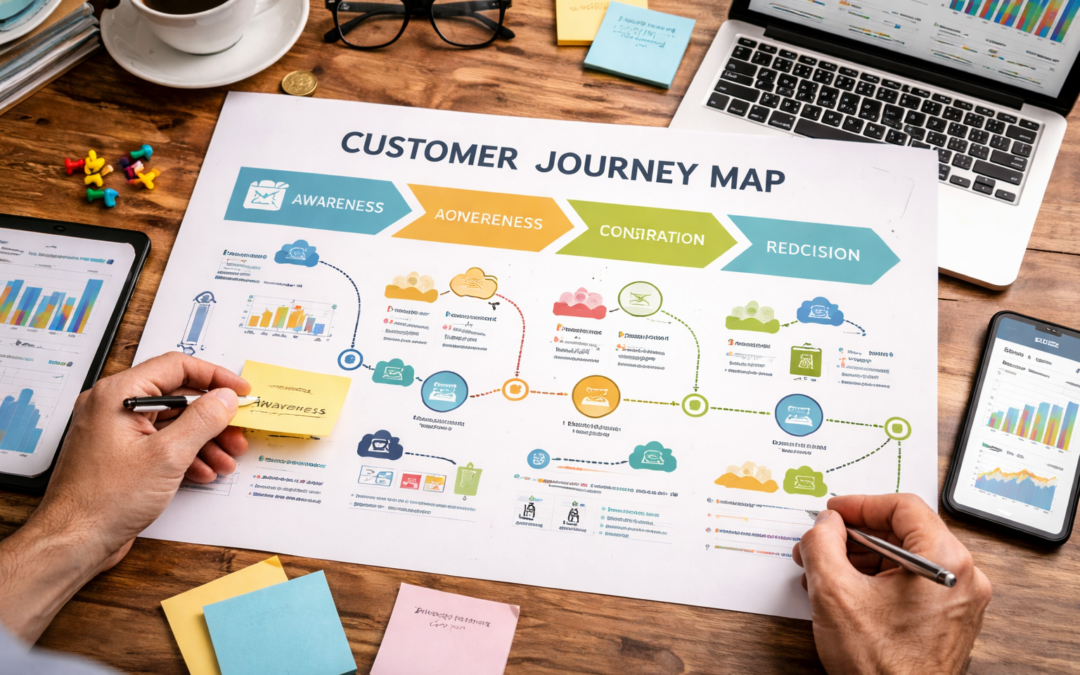
Marketing performance issues are rarely caused by a lack of effort. More often, they stem from a disconnect between how brands communicate and how customers actually experience the journey from first touch to conversion.
Customer journey mapping helps close that gap. By visualizing every interaction a customer has with your brand, marketers gain clarity on where friction occurs, where opportunities are missed, and where performance can be improved.
When used strategically, customer journey mapping becomes a powerful framework for optimizing campaigns, messaging, and conversions.
What Is Customer Journey Mapping
Customer journey mapping is the process of documenting and analyzing the steps a customer takes when interacting with a brand across channels and touchpoints.
This includes:
- Awareness and discovery
- Research and consideration
- Decision and conversion
- Post-purchase engagement and retention
A journey map focuses on customer behavior, motivations, emotions, and barriers, not just internal marketing activities. It shifts the perspective from what brands do to what customers experience.
Why Customer Journey Mapping Matters for Marketing Performance
Marketing performance improves when strategies align with customer reality. Journey mapping reveals where misalignment occurs.
Key benefits include:
- Identifying gaps between channels and messages
- Reducing friction that causes drop-offs
- Improving timing and relevance of campaigns
- Aligning teams around a shared customer view
- Increasing conversion rates and lifetime value
Without a clear journey map, marketing efforts often operate in silos, leading to inconsistent experiences and wasted spend.
Step 1: Define Your Customer Personas Clearly
Journey mapping starts with understanding who the journey belongs to. A single generic journey rarely reflects real behavior.
Define clear personas based on:
- Goals and pain points
- Buying motivations
- Objections and concerns
- Preferred channels and content formats
Each persona may follow a different path, even when purchasing the same product or service. Mapping journeys by persona ensures relevance and accuracy.
Step 2: Identify All Key Touchpoints
Touchpoints are every interaction a customer has with your brand, both direct and indirect.
Common touchpoints include:
- Search results and ads
- Blog content and landing pages
- Social media interactions
- Email campaigns
- Sales conversations
- Onboarding and support experiences
Map touchpoints across channels, not just owned platforms. Third-party reviews, referrals, and comparison sites often play a critical role in decision-making.
Step 3: Understand Customer Intent and Emotion at Each Stage
A strong journey map goes beyond listing steps. It captures intent and emotion at each stage.
Ask questions such as:
- What is the customer trying to achieve here?
- What questions or doubts do they have?
- What frustrations might they experience?
- What would build trust at this moment?
This insight helps marketers tailor messaging, content, and offers to match customer mindset instead of pushing premature calls to action.
Step 4: Identify Friction Points and Drop-Offs
Journey mapping exposes where performance breaks down.
Common friction points include:
- Confusing navigation or messaging
- Inconsistent information across channels
- Poor mobile experiences
- Lack of follow-up after engagement
- Misaligned offers or timing
Use data from analytics, CRM systems, and customer feedback to validate assumptions. High drop-off rates often indicate experience issues rather than demand problems.
Step 5: Align Marketing Channels to Support the Journey
Once friction points are identified, map each channel’s role in supporting the journey.
For example:
- SEO and content marketing support awareness and education
- Email nurtures consideration and trust
- Paid media accelerates decision-making
- Social proof reinforces confidence
- Post-conversion content supports retention
This alignment ensures channels work together rather than competing for attention.
Step 6: Optimize Content and Messaging by Stage
Customer journey mapping informs what content is needed and when.
At early stages, focus on education and problem definition.
At mid stages, provide comparisons, case studies, and deeper insights.
At decision stages, emphasize clarity, proof, and ease of action.
This approach prevents common mistakes such as pushing sales messages too early or overwhelming prospects with information at the wrong time.
Step 7: Use Journey Mapping to Improve Measurement
Journey mapping improves performance measurement by shifting focus from isolated metrics to holistic outcomes.
Instead of evaluating channels independently, assess how they contribute collectively to progression through the journey.
Key metrics may include:
- Assisted conversions
- Time between stages
- Engagement by journey stage
- Retention and repeat behavior
This perspective leads to more accurate attribution and smarter optimization decisions.
Step 8: Keep the Journey Map Updated
Customer behavior evolves. Platforms change. Expectations shift.
Journey maps should be reviewed regularly and updated based on:
- New data insights
- Changes in offerings
- Feedback from sales and support teams
- Market and competitive shifts
Treat the journey map as a living document, not a one-time exercise.
Common Mistakes to Avoid
Customer journey mapping fails when:
- It is created without real customer data
- Teams treat it as a visual exercise only
- Insights are not acted upon
- Ownership is unclear
The value lies not in the map itself, but in how it informs decisions.
Strategic Insight
Customer journey mapping improves marketing performance by aligning strategy with real customer behavior. It reveals where marketing supports progress and where it unintentionally creates friction.
Brands that invest in understanding and optimizing the journey create more consistent experiences, stronger trust, and better results across channels.
When marketing decisions are guided by the customer journey, performance becomes a natural outcome rather than a constant struggle.

by Research Team | Nov 17, 2025 | Marketing Analytics, Marketing Strategy
Modern digital marketing rarely happens on a single channel. Campaigns span search, social, email, paid media, partnerships, and more. While this creates more opportunities for reach, it also introduces complexity when measuring what actually drives results.
UTM parameters and tracking tags are foundational tools for understanding cross-platform performance. However, basic implementation often leads to messy data, attribution gaps, and unreliable insights. Advanced UTM and tagging strategies bring structure, clarity, and confidence to campaign measurement.
Below is a practical guide to developing a structured, reliable UTM and tracking tag framework that supports accurate cross-platform measurement and decision-making.
Why Basic Tracking Often Fails
Many marketers use UTMs inconsistently. Campaign names change mid-campaign. Source and medium values overlap. Links are tagged differently across teams.
Common issues include:
- Inconsistent naming conventions
- Overuse of custom parameters without documentation
- Mixing paid and organic traffic sources
- Missing tags on key touchpoints
- Lack of governance across teams
These issues lead to unreliable reporting and make performance optimization difficult. Advanced tracking focuses on standardization, clarity, and long-term usability.
Understanding the Core UTM Parameters
Before advancing, it is critical to understand the purpose of each standard UTM parameter.
- utm_source identifies where the traffic comes from
- utm_medium defines the marketing channel
- utm_campaign groups traffic under a specific initiative
- utm_content differentiates creatives or placements
- utm_term tracks keywords or targeting details
Advanced strategies rely on disciplined use of these parameters rather than adding unnecessary complexity.
Establish a Centralized Naming Framework
The foundation of advanced UTM strategy is a standardized naming framework that every team follows.
Key principles include:
- Use lowercase formatting consistently
- Avoid spaces and special characters
- Keep names descriptive but concise
- Align naming with reporting needs
Campaign names should reflect business objectives rather than internal shorthand. Documentation is essential to maintain consistency as teams scale.
Align UTMs With Your Measurement Model
Advanced tracking works best when UTMs support how performance is evaluated.
If success is measured by funnel progression, UTMs should reflect funnel stage. If performance is segmented by product or audience, campaign names should reflect that structure.
Design UTMs backward from reporting needs, not forward from link creation.
Use UTMs Strategically Across Channels
Not every link requires the same level of tagging. Advanced strategies apply UTMs where they add clarity without creating noise.
Best practices include:
- Use UTMs on paid media consistently
- Tag email links by campaign and placement
- Use utm_content to test creatives and calls to action
- Avoid tagging internal links
- Be intentional with affiliate and partner links
Thoughtful tagging improves clarity without inflating data.
Integrate UTMs With Tracking Tags and Pixels
UTMs tell part of the story. Tracking tags and pixels provide behavioral context.
Advanced strategies integrate UTMs with:
- Analytics platforms such as GA4
- Ad platform pixels
- CRM and marketing automation tools
- Conversion APIs
Ensure tracking tags fire correctly across all campaign-related events. Incomplete tagging undermines analysis.
Manage Cross-Platform Attribution More Effectively
Cross-platform campaigns challenge last-click attribution models. UTMs help identify touchpoints, but interpretation is key.
Advanced approaches include:
- Comparing first-touch and last-touch UTMs
- Evaluating assisted conversions by campaign
- Grouping campaigns by objective rather than channel
- Applying attribution models aligned with funnel length
This approach prevents undervaluing upper-funnel activity.
Build a UTM Governance Process
As teams grow, governance becomes essential.
Effective governance includes:
- A shared UTM builder or template
- Review processes for major campaigns
- Regular audits for inconsistencies
- Clear ownership of tracking standards
Governance protects data integrity over time.
Common Advanced Mistakes to Avoid
Even experienced marketers make tracking mistakes.
Avoid:
- Overly complex naming systems
- Using UTMs to replace proper channel grouping
- Changing conventions mid-campaign
- Ignoring platform auto-tagging rules
- Failing to document decisions
Clarity and repeatability outperform customization.
From Measurement to Marketing Impact
Advanced UTM and tracking tag strategies turn fragmented data into reliable insight. When tracking is structured and intentional, marketers gain confidence in performance analysis and optimization decisions.
Accurate measurement enables smarter budget allocation, clearer attribution, and stronger alignment across channels. In a multi-platform environment, disciplined tracking is not optional. It is a competitive necessity.