
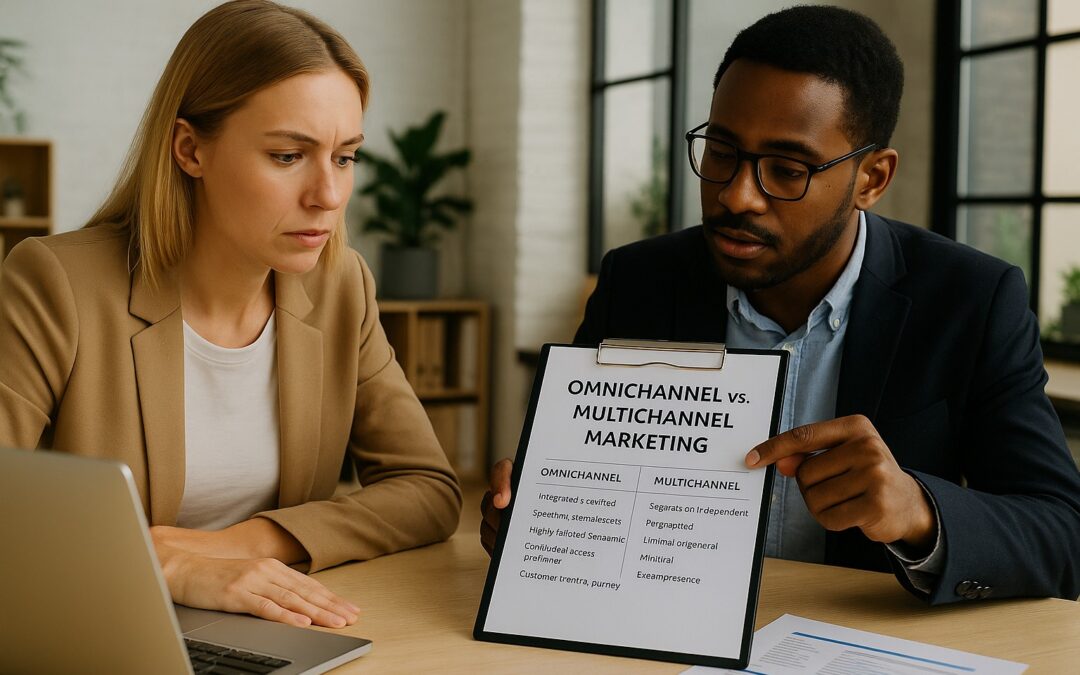
Digital marketing strategies often come with confusing terminology. Among the most commonly mixed-up terms are omnichannel and multichannel marketing. While they may sound similar, the two approaches represent distinct philosophies, and choosing the right one can greatly influence customer satisfaction, brand loyalty, and revenue growth.
Understanding how each strategy functions, along with its strengths and limitations, can help marketers align efforts with both customer expectations and business goals.
What Is Multichannel Marketing?
Multichannel marketing involves reaching customers through multiple platforms or channels, such as:
- Company website
- Email newsletters
- Social media pages
- SMS/text messages
- In-store promotions
- Print and offline advertising
Each channel operates independently. Campaigns might share a consistent brand voice or offer, but the platforms typically don’t share data or coordinate user experiences.
Example: A customer sees a promotional email from your brand and later encounters an ad on Instagram. They visit your physical store the next day, but none of those interactions are linked or recognized.
What Is Omnichannel Marketing?
Omnichannel marketing unifies all customer touchpoints to deliver a seamless, consistent, and personalized experience across platforms. Data and customer behavior are shared across departments and systems, ensuring customers feel recognized and valued no matter where or how they engage.
Example: A customer browsing your mobile app receives an email with recommendations based on their app activity. Later, when they visit your website on desktop, their preferences and cart contents are preserved, and live chat provides support relevant to their journey.
Key Differences at a Glance
| Feature | Multichannel | Omnichannel |
|---|---|---|
| Channel coordination | Separate and independent | Integrated and unified |
| Customer experience | Fragmented | Seamless and continuous |
| Personalization | Limited or general | Highly tailored and dynamic |
| Data sharing | Minimal | Centralized across platforms |
| Goal | Broad presence | Customer-centric journey |
Advantages and Drawbacks of Each Approach
Advantages of Multichannel Marketing
- Broader visibility: Allows brands to be present on multiple platforms and reach varied audiences.
- Simplified setup: Easier to manage, especially for businesses with limited tech resources.
- Faster execution: Each platform can run independent campaigns without the need for deep integration.
Limitations of Multichannel Marketing
- Inconsistent messaging: Experiences can feel disjointed to customers who engage across multiple channels.
- Siloed data: Valuable insights are often trapped within individual tools, making personalization more difficult.
- Lower customer retention: Lack of continuity can diminish trust and customer loyalty over time.
Advantages of Omnichannel Marketing
- Personalized engagement: Content and messaging adjust in real time based on user behavior across platforms.
- Better customer experience: Offers a fluid journey, leading to higher satisfaction and conversion rates.
- Efficient use of data: Centralized insights allow for smarter campaigns and better decision-making.
- Increased lifetime value: Studies show that customers engaging through multiple connected channels tend to spend more.
Limitations of Omnichannel Marketing
- Complex implementation: Requires integration across systems, from CRM to email marketing to point-of-sale.
- Higher resource demand: Involves investing in tools, staff training, and cross-department collaboration.
- Longer ramp-up time: Building a seamless experience takes time and strategic planning.
How to Choose the Right Strategy
The ideal marketing strategy depends on your brand’s current structure, customer behavior, and long-term goals.
Business Size and Resources
Small businesses or startups may benefit from beginning with a multichannel approach due to its simplicity. As the company grows and resources expand, transitioning to omnichannel can enhance efficiency and customer retention.
Customer Behavior
If your customers engage with your brand across multiple devices or platforms—desktop, mobile, physical stores—then omnichannel marketing is likely the better choice. Today’s consumers expect continuity and personalization at every stage.
Marketing Objectives
Multichannel works well for generating awareness and expanding reach. Omnichannel, on the other hand, supports relationship-building, brand loyalty, and higher customer lifetime value.
Steps Toward an Omnichannel Experience
Brands currently operating with a multichannel strategy can gradually transition to an omnichannel model by taking the following steps:
- Unify customer data
Use CRM or customer data platforms to connect insights from different channels and build full customer profiles. - Map the customer journey
Understand how customers move from one platform to another. Identify gaps or points of friction that can be improved. - Implement consistent messaging
Create brand and campaign guidelines that are adaptable yet consistent across all touchpoints. - Choose integrated tools
Leverage automation platforms that can coordinate email, social, chat, and analytics in one system. - Align internal teams
Marketing, sales, and support should collaborate around the same data and messaging goals to maintain a unified experience.
Final Thoughts
Both multichannel and omnichannel marketing approaches have valid use cases. Multichannel helps brands establish a wide presence, while omnichannel focuses on delivering a cohesive, customer-first experience across every interaction.
For brands focused on long-term growth, loyalty, and relevance, moving toward an omnichannel strategy can provide a competitive edge. The key is understanding your audience, investing in the right infrastructure, and building experiences that reflect your brand’s commitment to serving customers at every step of their journey.
