
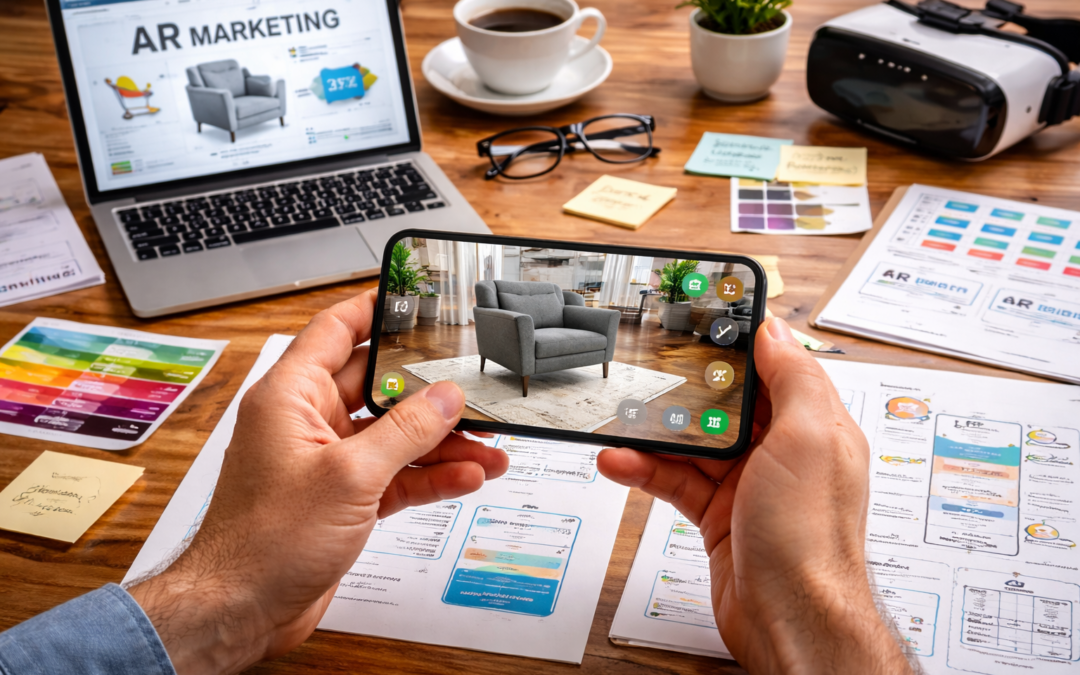
Digital marketing audiences expect more than static content and one-way messaging. As competition for attention intensifies, immersive experiences are becoming a differentiator rather than a novelty. Augmented reality, commonly referred to as AR, offers brands a way to engage audiences in interactive, memorable, and conversion-focused experiences.
AR blends digital elements into real-world environments through devices such as smartphones and tablets. When applied strategically, it enhances understanding, reduces hesitation, and helps users move confidently toward action.
This draft explores how augmented reality fits into digital marketing strategy and how it can be used to support measurable conversion outcomes.
What Augmented Reality Means for Marketers
Augmented reality overlays digital visuals, data, or interactions onto a real-world view. Unlike virtual reality, which replaces the environment entirely, AR enhances what users already see.
In marketing, AR experiences may include:
- Product visualization in real-world settings
- Interactive demos or tutorials
- Virtual try-ons
- Location-based experiences
- Immersive storytelling elements
The value of AR lies in its ability to reduce uncertainty and increase engagement by making experiences tangible before purchase.
Why AR Is Gaining Momentum in Digital Marketing
AR adoption has accelerated as mobile technology and consumer expectations evolve. Most users already carry AR-capable devices, lowering barriers to entry for brands.
From a marketing perspective, AR addresses several challenges:
- Short attention spans
- Lack of product understanding
- High purchase hesitation
- Low differentiation in crowded markets
By allowing users to interact with products or concepts directly, AR creates clarity and confidence, which are critical to conversion.
How AR Supports the Conversion Funnel
Augmented reality can influence multiple stages of the customer journey when designed with intent.
At the awareness stage, AR experiences capture attention and encourage exploration. Interactive filters, previews, or animations create curiosity and brand recall.
During consideration, AR helps users evaluate options more effectively. Visualizing scale, fit, or functionality reduces reliance on imagination alone.
At the decision stage, AR minimizes friction by answering unspoken questions. When users feel confident in what they are getting, conversion rates improve.
Post-conversion, AR can support onboarding, education, and retention by reinforcing value and usability.
Common AR Use Cases That Drive Results
Certain applications of AR consistently support performance goals.
Product visualization
Users can see how a product looks or functions in their own environment. This is especially effective for ecommerce, home goods, and fashion.
Virtual try-ons
Trying before buying reduces returns and increases confidence. Beauty, apparel, and accessories brands benefit significantly from this approach.
Interactive demos
AR-based demonstrations allow users to explore features step by step, improving understanding and perceived value.
Experiential campaigns
Location-based or event-driven AR experiences create memorable brand interactions that encourage sharing and engagement.
Each use case should be aligned with a specific conversion or engagement objective.
Designing AR Experiences With Strategy in Mind
AR should support business goals, not exist as a standalone novelty.
Effective AR strategy starts with clarity:
- What decision is the user trying to make?
- What information do they need to move forward?
- Where does uncertainty or friction exist?
Design AR experiences to answer those questions clearly and efficiently. Simplicity often outperforms complexity.
The experience should feel intuitive, load quickly, and integrate seamlessly with existing digital touchpoints.
Integrating AR Into Existing Marketing Channels
AR works best when embedded into broader campaigns rather than isolated activations.
Common integration points include:
- Paid social and display ads
- Landing pages and product pages
- Email campaigns
- QR code activations
- In-store or event experiences
For example, an AR preview embedded in a landing page can increase time on page and improve conversion rates without disrupting the user journey.
Measuring the Impact of AR on Conversions
Like any marketing initiative, AR must be measured to validate its effectiveness.
Key performance indicators may include:
- Engagement time and interaction rates
- Click-through and conversion rates
- Drop-off reduction during consideration
- Return and refund rates
- Post-purchase satisfaction
AR data should be evaluated alongside traditional analytics to understand its role within the full funnel.
Challenges and Considerations
While powerful, AR requires thoughtful execution.
Common challenges include:
- Overcomplicated experiences that frustrate users
- Technical limitations across devices
- High production costs without clear ROI
- Poor alignment with brand or audience expectations
Start with focused use cases and test performance before scaling. AR success depends more on relevance than spectacle.
Ethical and Accessibility Considerations
AR experiences should be inclusive and transparent.
Ensure:
- Clear user consent and privacy protection
- Accessibility considerations for different abilities
- Honest representation of products or outcomes
Ethical execution builds trust and prevents disappointment that can undermine conversions.
When AR Makes Strategic Sense
AR is not necessary for every brand or campaign. It is most effective when:
- Visualization significantly improves understanding
- Products benefit from spatial or contextual interaction
- Decision-making involves uncertainty
- Differentiation is needed in a competitive market
Used selectively, AR enhances rather than complicates digital strategy.
Practical Insight
Augmented reality offers marketers a way to bridge the gap between interest and action. By making experiences interactive and tangible, AR reduces hesitation and supports confident decision-making.
Brands that treat AR as a strategic tool rather than a trend can create meaningful engagement and stronger conversion outcomes. When immersive experiences serve clarity and value, performance follows.
