
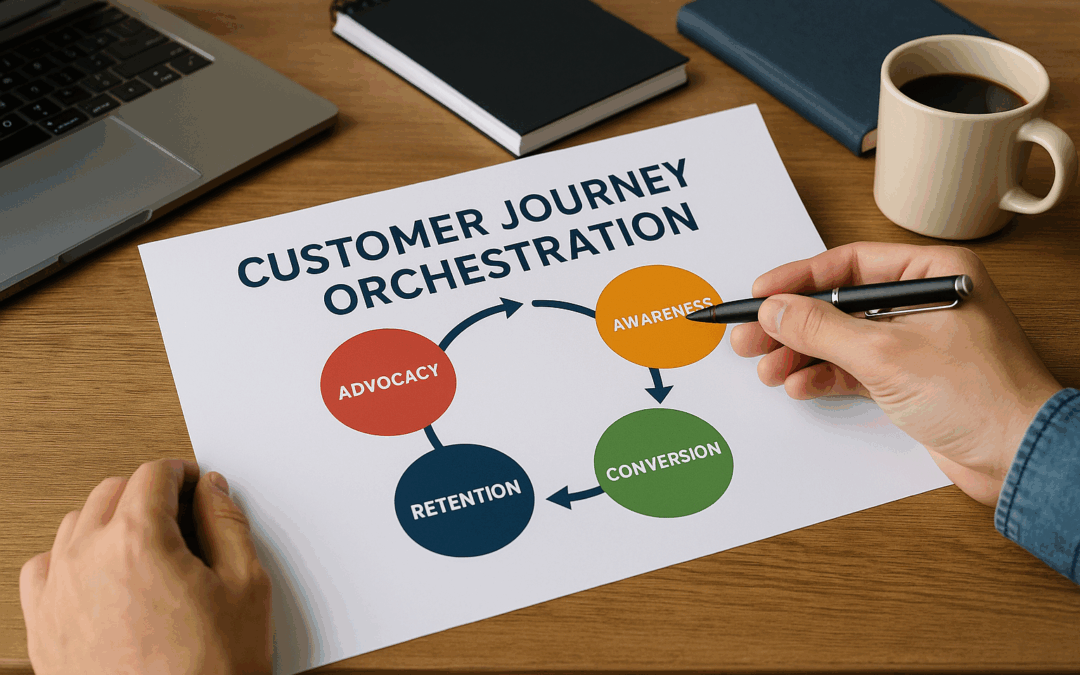
Every interaction a customer has with a brand shapes their perception—whether it’s a social media ad, a support email, or an in-store conversation. Yet many brands still treat these moments as separate events rather than a connected story.
Customer journey orchestration (CJO) changes that. It’s the process of designing and synchronizing every touchpoint across the customer lifecycle to create a seamless, personalized experience. When done effectively, CJO transforms fragmented interactions into a cohesive journey that feels effortless to the customer and strategic for the brand.
What Is Customer Journey Orchestration
Customer journey orchestration goes beyond mapping out customer paths—it’s about managing them in real time. Traditional journey mapping visualizes what customers might do, while orchestration actively responds to what they are doing.
It integrates data, automation, and analytics to deliver the right message, on the right channel, at the right moment.
In simple terms, CJO connects every part of the customer experience—marketing, sales, service, and loyalty—so that no interaction feels disconnected or repetitive. The result is a brand experience that’s consistent, personalized, and continuous.
Why Customer Journey Orchestration Matters
Today’s customers expect more than convenience—they expect consistency. They move between devices, channels, and platforms seamlessly, and they expect brands to keep up.
Without orchestration, experiences become fragmented: marketing messages don’t match sales offers, and customer support might not know about previous interactions. This creates frustration and erodes trust.
Here’s why CJO has become essential for modern marketing:
- Personalization at scale: It uses data to deliver experiences tailored to individual preferences and behaviors.
- Real-time responsiveness: Brands can react instantly to customer signals, improving satisfaction and conversions.
- Cross-department alignment: Marketing, sales, and service teams work from a unified understanding of the customer.
- Higher retention and loyalty: Seamless experiences increase satisfaction and reduce friction.
In an omnichannel world, orchestration is the key to making personalization truly work.
The Key Components of Effective Journey Orchestration
To build a synchronized customer journey, brands must align three critical elements: data, technology, and strategy.
1. Unified Customer Data
A complete view of the customer is the foundation of orchestration. That means consolidating data from multiple sources—CRM, website analytics, email, social, and offline interactions—into a single profile.
Unified data helps identify where each customer is in their journey and what actions will move them forward. The more accurate the data, the more effective the orchestration.
2. Intelligent Automation
Automation tools power orchestration by managing repetitive processes and triggering real-time actions based on customer behavior. For example, if a user abandons a shopping cart, the system can automatically send a reminder email or personalized offer.
3. Journey Analytics
Analytics turn raw data into insight. Journey analytics track how customers interact across touchpoints, identifying pain points, opportunities, and drop-offs. These insights guide optimization and help refine messaging and timing.
4. Orchestration Platforms
Customer journey orchestration platforms—like Adobe Journey Optimizer, Salesforce Interaction Studio, or Iterable—integrate data and automation into one ecosystem. They enable marketers to design, execute, and monitor journeys in real time.
5. Human Oversight
While automation drives efficiency, human creativity and empathy remain essential. Marketers interpret insights, craft narratives, and ensure that automated experiences stay aligned with brand values.
Steps to Implement a Customer Journey Orchestration Strategy
Transitioning from fragmented marketing to orchestrated experiences requires structure and patience. Here’s how to approach it effectively.
Step 1: Map the Customer Lifecycle
Begin by defining your major journey stages—awareness, consideration, conversion, retention, and advocacy. Identify the goals, emotions, and pain points customers experience at each phase.
Step 2: Audit Existing Touchpoints
List all customer interactions across channels, from digital ads to post-purchase support. Look for inconsistencies, gaps, or duplicated messages that could confuse or frustrate users.
Step 3: Centralize Data Sources
Integrate customer data across departments. A unified data view ensures that everyone—from marketing to customer service—operates from the same understanding of the user.
Step 4: Segment and Personalize
Group customers by intent, behavior, or lifecycle stage rather than broad demographics. Then tailor messaging and offers for each segment using automation and predictive analytics.
Step 5: Automate Responsively
Set up automated workflows triggered by real-time actions. For example, if a user views a product multiple times but doesn’t purchase, send a dynamic email offering additional information or an incentive.
Step 6: Measure and Refine
Use journey analytics to track engagement, satisfaction, and conversion across touchpoints. Adjust messaging, timing, and channel mix based on insights. Orchestration is a continuous process of learning and improvement.
Common Challenges in Journey Orchestration
Implementing CJO isn’t without its hurdles. The most common challenges include:
- Data silos: Disconnected systems prevent a unified view of the customer.
- Complex tech stacks: Managing multiple platforms can create integration issues.
- Over-automation: Too many automated messages can feel impersonal or overwhelming.
- Lack of alignment: Teams often operate in isolation without shared goals or metrics.
Overcoming these challenges requires clear leadership, cross-functional collaboration, and ongoing refinement. The most successful brands build orchestration into their culture—not just their marketing technology.
Real-World Applications of Journey Orchestration
Customer journey orchestration can be applied across industries to deliver more relevant, seamless experiences.
- E-commerce: Automate abandoned cart recovery, product recommendations, and loyalty follow-ups.
- Finance: Coordinate onboarding, education, and retention communications for new clients.
- Healthcare: Streamline patient engagement with personalized appointment reminders and follow-ups.
- Education: Guide prospective students from inquiry to enrollment with contextual content.
- B2B Marketing: Align lead nurturing, sales outreach, and customer success into one integrated experience.
In each case, orchestration ensures that every step of the journey feels connected and meaningful.
The Future of Customer Experience Is Orchestrated
The future of marketing lies in connection—not just between brands and customers, but between every touchpoint that defines their relationship.
As technology advances, AI and predictive analytics will make journey orchestration even more precise, anticipating needs before customers express them. But the heart of orchestration will always be empathy—the ability to understand, anticipate, and respond with care.
When brands orchestrate journeys thoughtfully, they transform marketing into relationship-building. The result isn’t just higher engagement or conversion—it’s loyalty built on consistency, trust, and understanding.
