
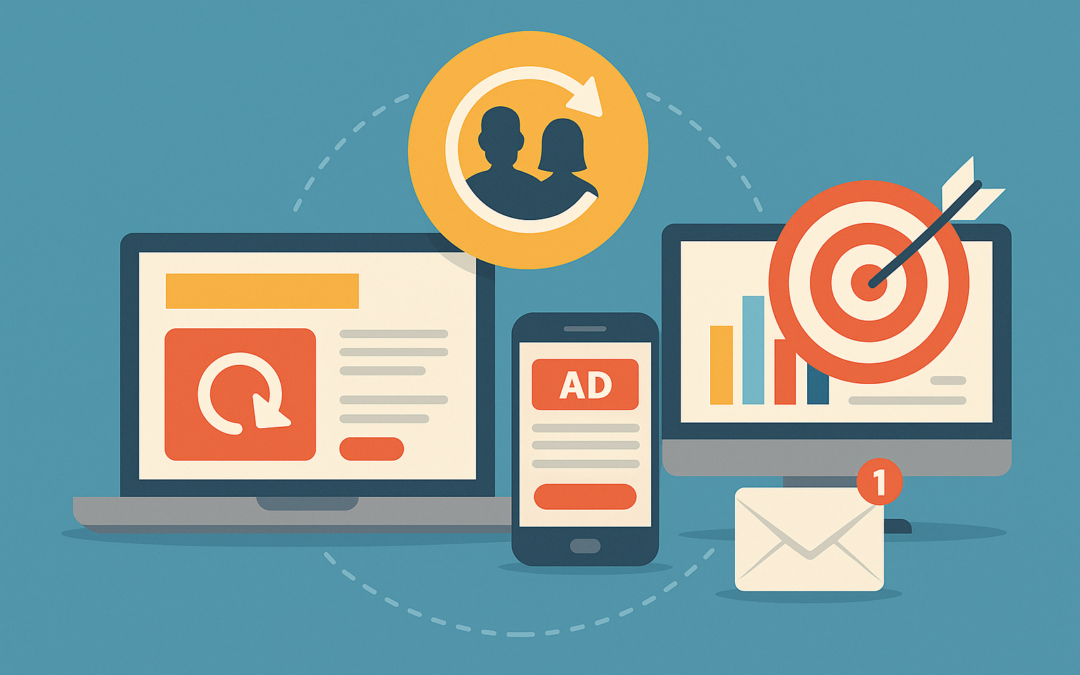
Most people who visit your website won’t convert on their first visit. Studies show that only 2% of visitors take action the first time around. That’s where retargeting comes in—a powerful digital marketing strategy that brings people back to your brand when they’re most likely to convert.
In this blog post, we’ll break down what retargeting is, why it works, how to implement it effectively, and common mistakes to avoid—plus examples of what high-performing campaigns look like.
What Is Retargeting?
Retargeting (also known as remarketing) is a digital advertising technique that allows you to re-engage users who have previously interacted with your website, content, or social media, without converting.
Using cookies, pixels, or platform-specific tracking tools, you can show tailored ads to these users while they browse other websites, scroll social feeds, or use search engines.
Platforms that support retargeting include:
- Google Ads
- Meta Ads (Facebook and Instagram)
- LinkedIn Ads
- YouTube
- TikTok Ads
- Programmatic networks like AdRoll, Criteo, and StackAdapt
Why Retargeting Works
Retargeting is so effective because it targets users already familiar with your brand, product, or service. These users are:
- Warmer leads compared to cold traffic
- More likely to convert with the right nudge
- Often just one offer, testimonial, or reminder away from taking action
Benefits of Retargeting:
- Increased conversion rates
- Improved ROI on paid advertising
- Enhanced brand recall and trust
- Shortened buyer journey
Retargeting bridges the gap between first touch and final action.
Retargeting Campaign Types
Here are several campaign types to consider based on your marketing funnel:
1. Website Visitor Retargeting
Target users who visited specific pages (like pricing, product, or contact pages) but didn’t convert. You can:
- Serve ads relevant to what they viewed
- Remind them of product benefits or key features
- Encourage them to revisit with incentives
2. Cart Abandonment Retargeting
If you run an e-commerce business, this is a must. These users showed purchase intent but didn’t complete checkout.
Tactics include:
- Offering time-sensitive discounts
- Highlighting product reviews or guarantees
- Addressing potential objections (e.g., shipping fees)
3. Lead Magnet Follow-Up
For content-driven brands or service businesses:
- Retarget users who downloaded a guide or watched a webinar
- Lead them toward the next step, like booking a demo or consultation
- Share case studies or client testimonials
4. Engagement-Based Retargeting
On social platforms, retarget based on engagement actions like:
- Video views (e.g., watch 50% or more)
- Post likes, shares, or comments
- Page or profile visits
Great for content marketing-focused strategies aiming to build long-term trust.
Best Practices for Effective Retargeting
Segment Your Audiences
Generic retargeting yields generic results. Break users down into segments like:
- Homepage visitors
- Category or product page visitors
- Lead form initiators
- Checkout abandoners
- Blog readers or webinar attendees
Each group needs customized messaging.
Match Your Creatives to Intent
- Use testimonials and reviews for users close to converting
- Provide more information or education for top-of-funnel visitors
- Keep visuals and tone aligned with your landing page or website
Set Frequency Caps
Show ads just enough to stay top of mind, not enough to become annoying. A good rule of thumb:
- 7–10 impressions per user per week
- Rotate ad creatives every 10–14 days
Create Urgency or Scarcity
Use phrases like:
- “Only 3 days left.”
- “Low stock”
- “Special offer ends soon”
These increase FOMO (fear of missing out) and drive faster decisions.
Tools and Platforms to Use
Here are the top tools for managing and scaling your retargeting efforts:
For Website-Based Retargeting:
- Google Ads (Display & Search)
- Facebook Ads Manager
- LinkedIn Campaign Manager
- Microsoft Ads
For Programmatic Retargeting:
- AdRoll
- Criteo
- Perfect Audience
- StackAdapt
Tracking Tools:
- Google Tag Manager
- Meta Pixel
- LinkedIn Insight Tag
- TikTok Pixel
- Segment or Heap (for advanced event tracking)
Metrics That Matter
Make sure you’re tracking the right data:
- Click-through rate (CTR): Is your ad engaging?
- Cost per click (CPC) and cost per acquisition (CPA): Are you paying efficiently?
- View-through conversions: Did someone convert after seeing the ad, not clicking?
- Frequency and reach: Are users seeing your ads too often?
Use A/B testing to compare ad copy, formats, visuals, and timing.
Real-World Example
Example: A SaaS company targeting demo sign-ups
- A visitor checks the pricing page but doesn’t convert
- The company retargets them on Facebook with a carousel ad featuring client testimonials
- The user clicks the ad and books a call
- Retargeting sequence ends, and follow-up email nurturing begins
Result? Lower cost per lead and a faster sales cycle.
Making Retargeting Work for You
Retargeting is one of the most cost-effective and powerful strategies to move users from awareness to action. Instead of letting hard-earned traffic slip away, you guide them back—strategically and intelligently.
Whether you’re an e-commerce brand, a B2B service provider, or a content creator, retargeting can help turn past visitors into future customers.
Ready to create a retargeting strategy that converts?
Let’s build a funnel that meets your audience where they are—and brings them back when they’re ready to buy.
