
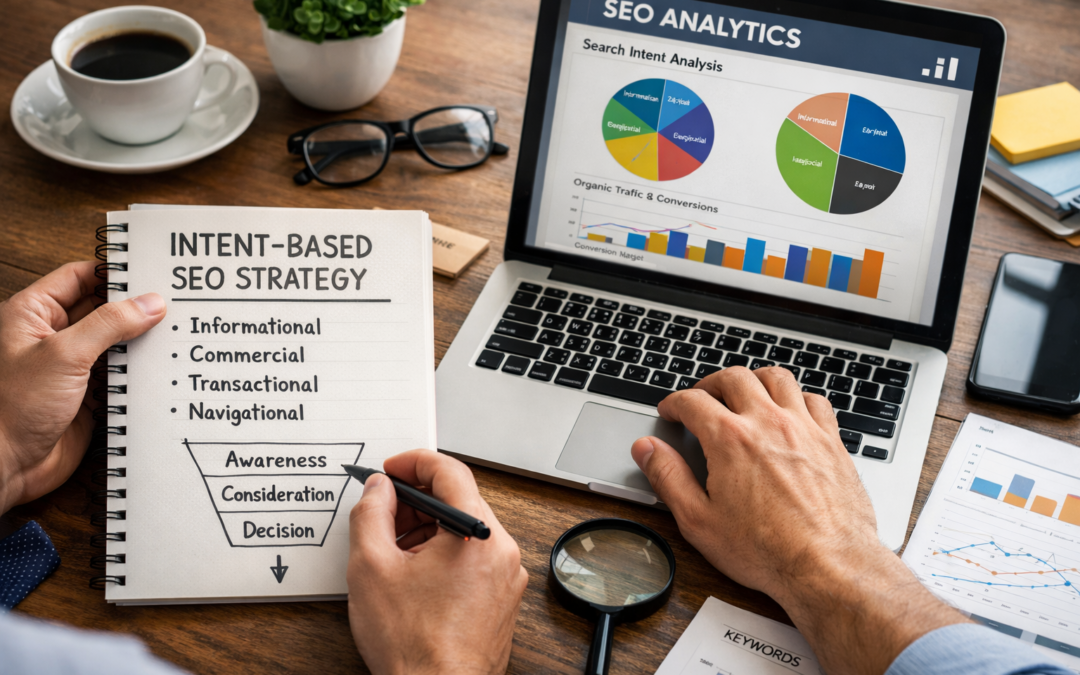
Search engine optimization has evolved far beyond keywords and backlinks. Today, successful SEO strategies focus less on rankings alone and more on understanding why users are searching in the first place. This is where intent-based SEO becomes essential.
An intent-based SEO content strategy aligns your content with the specific goals, needs, and readiness of your audience. When executed correctly, it does more than drive traffic. It attracts the right visitors and moves them closer to conversion.
This guide breaks down how to build an intent-based SEO content strategy that improves both visibility and results.
What Is Search Intent and Why It Matters
Search intent refers to the purpose behind a user’s query. Someone searching “what is digital marketing” has a very different goal than someone searching “digital marketing agency near me.” Treating both queries the same leads to mismatched content and poor performance.
Search engines prioritize content that best satisfies intent. When your content aligns with what users actually want, you see higher rankings, longer time on page, lower bounce rates, and stronger conversion signals.
There are four primary types of search intent:
- Informational: Users are looking to learn or understand something.
- Navigational: Users want to reach a specific website or brand.
- Commercial investigation: Users are comparing options before making a decision.
- Transactional: Users are ready to take action or purchase.
An intent-based SEO strategy intentionally maps content to these stages instead of relying solely on high-volume keywords.
Step 1: Identify Intent Behind Your Target Keywords
Keyword research is still foundational, but intent analysis must come first. High search volume means little if the traffic does not match your goals.
Start by analyzing the search engine results pages for your target keywords. Look at:
- The types of content ranking on page one
- Content format such as blogs, videos, product pages, or guides
- The language used in titles and meta descriptions
If Google is ranking how-to guides and explainer articles, the intent is informational. If product pages and service pages dominate, the intent is transactional or commercial.
Group keywords not only by topic but by intent category. This ensures that each piece of content has a clear purpose and audience readiness level.
Step 2: Map Content to the Buyer’s Journey
Intent-based SEO works best when paired with a clear understanding of the customer journey. Each stage requires a different type of content.
At the awareness stage, users are identifying a problem or opportunity. Content here should educate and provide clarity. Examples include blog posts, beginner guides, and definitions.
At the consideration stage, users are exploring solutions. This is where comparison content, case studies, and in-depth guides perform best.
At the decision stage, users are ready to act. Service pages, product pages, demos, and testimonials support transactional intent.
Mapping your content across these stages helps prevent gaps where traffic enters your site but has no clear next step.
Step 3: Create Content That Fully Satisfies Intent
Once intent is defined, your content must deliver exactly what the user expects and then go a step further.
For informational intent, this means clear explanations, structured formatting, and thorough answers. Avoid sales-heavy language too early, as it can undermine trust.
For commercial investigation intent, transparency is critical. Highlight benefits, limitations, comparisons, and real-world use cases.
For transactional intent, remove friction. Make it easy to convert with clear calls to action, trust signals, and concise value propositions.
Search engines increasingly reward content that demonstrates depth, relevance, and user satisfaction. Thin content rarely performs well in an intent-driven landscape.
Step 4: Optimize for Semantic Search and Context
Search engines no longer rely on exact-match keywords alone. They interpret context, relationships, and meaning.
To support intent-based SEO:
- Use related terms and natural language variations
- Answer follow-up questions within the same piece of content
- Structure content with clear headings and logical flow
This approach improves topical authority and helps your content rank for a wider range of relevant queries without keyword stuffing.
Internal linking also plays a key role. Link informational content to consideration and decision-stage pages to guide users naturally through the funnel.
Step 5: Align SEO Metrics With Conversion Goals
Traditional SEO metrics like rankings and traffic are no longer enough. Intent-based strategies require deeper performance analysis.
Track metrics such as:
- Engagement time by intent category
- Conversion rates from organic traffic
- Assisted conversions across the funnel
- Content drop-off points
This data reveals which types of intent drive real business outcomes. It also helps refine future content planning based on what actually converts.
SEO and conversion optimization should work together, not in isolation.
Step 6: Continuously Refine Based on User Behavior
Search intent is not static. User expectations change, competitors evolve, and search engines update how they interpret queries.
Regularly review top-performing pages and underperforming ones. Ask:
- Is the intent still the same?
- Does the content still match what users want?
- Are there new formats or angles dominating search results?
Refreshing content to better match current intent often delivers faster gains than creating new pages from scratch.
Why Intent-Based SEO Drives Better Results
Intent-based SEO bridges the gap between traffic and revenue. Instead of chasing visibility alone, it focuses on relevance, timing, and usefulness.
Brands that adopt this strategy see stronger alignment between content and conversions, improved trust with their audience, and better long-term SEO performance.
When you stop optimizing for keywords and start optimizing for people, search engines follow.
Final Thoughts
Building an intent-based SEO content strategy requires more upfront thinking, but the payoff is substantial. By understanding why users search, aligning content with their journey, and measuring success beyond rankings, you create a system that supports both growth and conversions.
SEO is no longer about being found. It is about being chosen.
