
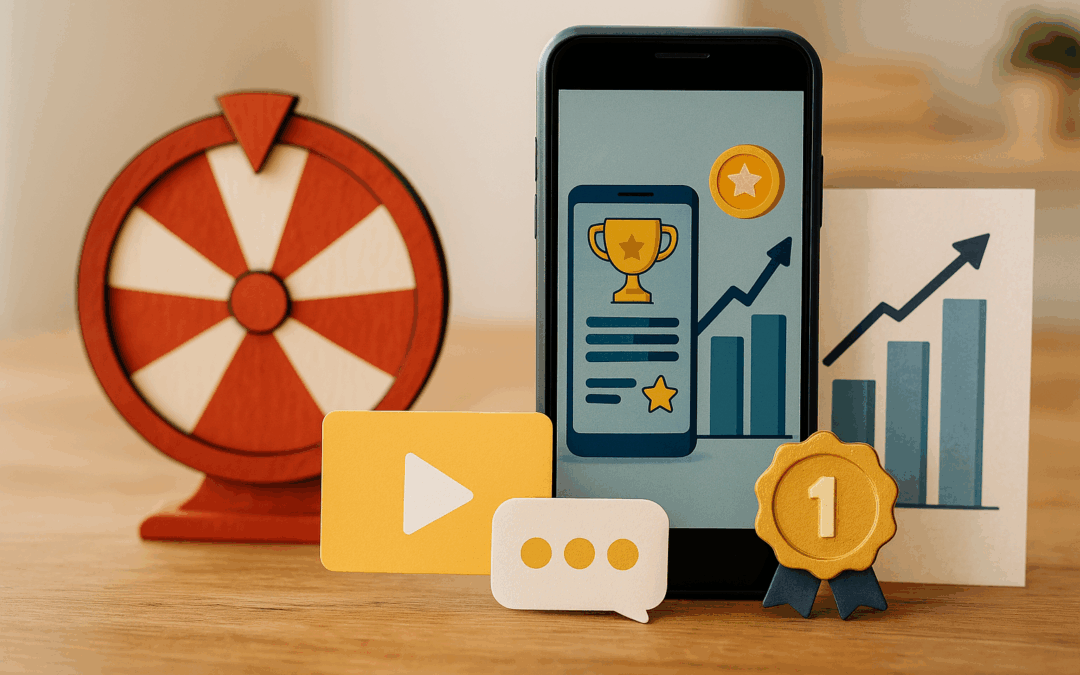
In today’s crowded digital space, it’s not enough to simply grab attention—you need to keep it. Gamification has emerged as one of the most creative and effective ways to do just that. By incorporating game-like features into websites, apps, and campaigns, brands are transforming routine interactions into fun and rewarding experiences. The result? Higher engagement, stronger customer loyalty, and more meaningful brand connections.
Whether it’s spinning a prize wheel, earning points for purchases, or leveling up through challenges, gamification taps into human behavior in a way that traditional marketing often doesn’t.
What is Gamification in Digital Marketing?
Gamification involves using game mechanics—such as points, levels, rewards, and competitions—in non-game contexts. In digital marketing, these elements are used to motivate customer behavior, increase interaction, and make marketing experiences more enjoyable.
Think of it as adding an extra layer of fun and motivation to everyday actions like browsing, signing up for a newsletter, or sharing content.
Why Gamification Works
Gamification is effective because it taps into natural human desires—achievement, competition, recognition, and progress. It offers a sense of accomplishment, even for simple tasks.
Some psychological triggers behind its success include:
- The urge to complete tasks and reach goals
- Dopamine boosts from winning rewards or achieving something
- Social motivation through leaderboards or community challenges
In short, gamification makes the customer journey more engaging and satisfying.
Common Use Cases of Gamification
Gamification can be applied across many types of digital experiences to enhance interaction. For example, some businesses implement a points-based reward system where customers earn perks for taking specific actions—such as signing up, referring friends, or completing a purchase. Others use interactive quizzes or surveys that provide personalized recommendations while collecting valuable insights.
Progress bars can help guide users through account setup or learning modules, creating a sense of momentum and completion. Challenges or contests may encourage participants to return daily, interact with content, or share experiences on social media. These elements help create stronger emotional connections and turn one-time visitors into long-term participants.
How to Use Gamification in Your Marketing Strategy
Set clear objectives
Start by identifying what you want your users to do. Do you want them to spend more time on your website, share content, sign up for a newsletter, or make a purchase? Your gamification strategy should align with these goals.
Choose the right mechanics
The type of game elements you use should suit your audience and business model. Some effective options include:
- Earning points for completing actions
- Badges for reaching milestones
- Progress bars to encourage profile completion or onboarding
- Leaderboards for friendly competition
- Spin-to-win popups or quizzes for fun interactions
Offer meaningful rewards
Make sure the reward is something your audience values. This could be discounts, freebies, exclusive access, or even digital recognition. The key is to make it worth the effort without overcomplicating the process.
Leverage personalization and NLP
Using natural language processing (NLP), brands can create more personalized, intelligent experiences. Chatbots with conversational gamification can deliver quizzes, guide product recommendations, and respond to users in a human-like way. This makes interactions feel less robotic and more dynamic.
Track performance
Use analytics tools to monitor user behavior, participation rates, and conversion metrics. This helps you refine your approach and focus on what’s working best.
SEO Benefits of Gamification
When users engage more deeply with your site, it positively affects your SEO in several ways:
- Lower bounce rates, because users stay longer
- More time-on-page, which signals value to search engines
- Increased social sharing, driving more inbound traffic
- A greater likelihood of user-generated content, such as reviews or comments
A more engaged user experience also improves your site’s relevance, trustworthiness, and overall ranking potential.
Common Pitfalls to Watch Out For
- Designing gamified experiences that are confusing or require too many steps can discourage participation. Keep interactions simple and intuitive.
- Overlooking mobile optimization can lead to a poor user experience. Most users interact via smartphones, so your gamified elements must be mobile-friendly.
- Providing incentives that lack value or relevance can lead to disinterest. Ensure rewards align with what your audience truly cares about.
- Using game mechanics that feel out of sync with your brand voice may reduce credibility. The design and tone should reflect your brand identity.
Gamification works best when it feels natural, easy to interact with, and aligned with user expectations. The goal is to enhance—not complicate—the user experience.
Final Thoughts
Gamification isn’t just a trend—it’s a proven strategy for building better relationships with your audience. By transforming routine digital experiences into interactive and rewarding journeys, you create more reasons for customers to stay, engage, and come back.
The key is to start small. Try adding a quiz, a points system, or a simple challenge to your campaign. Test, refine, and grow your strategy based on how your audience responds.
If you’re ready to bring more life into your digital marketing and connect with customers in a meaningful way, gamification could be the next big step forward.
