
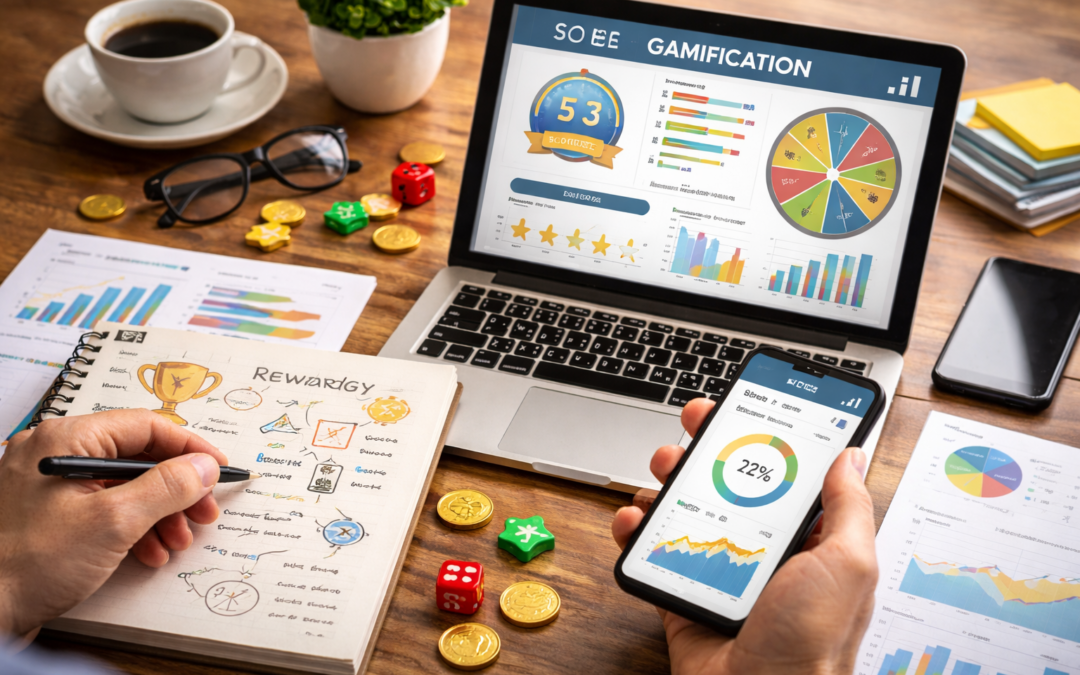
Digital audiences are overwhelmed with content, ads, and calls to action. As attention becomes harder to earn, marketers must find new ways to make participation feel rewarding rather than transactional. Gamification addresses this challenge by applying game mechanics to marketing experiences in a way that motivates engagement, loyalty, and action.
When implemented strategically, gamification does not trivialize marketing. Instead, it taps into fundamental human behaviors such as competition, achievement, and progress. This article explores how gamification works in digital marketing and how brands can use it to drive meaningful results.
What Gamification Means in a Marketing Context
Gamification is the use of game-like elements in non-game environments. In marketing, this includes mechanics such as points, levels, challenges, rewards, leaderboards, and progress tracking.
The goal is not entertainment for its own sake. The goal is to guide users toward desired behaviors while making the experience more engaging and memorable.
Examples of gamification in digital marketing include quizzes, interactive assessments, loyalty programs, referral challenges, achievement badges, and milestone-based incentives.
Why Gamification Works
Gamification works because it aligns with how people naturally engage with systems. Humans are wired to respond to feedback, progress, and rewards.
Key psychological drivers behind gamification include:
- Motivation through progress
- Instant feedback
- Recognition and validation
- Challenge and achievement
When these elements are thoughtfully applied, engagement increases without relying solely on discounts or aggressive sales tactics.
Strategic Benefits of Gamification in Digital Marketing
Gamification is not a novelty tactic. When aligned with strategy, it delivers measurable business value.
Benefits include:
- Increased time on site and interaction rates
- Higher content completion and participation
- Improved data collection through voluntary engagement
- Stronger brand recall and emotional connection
- Increased conversion and retention rates
Gamification shifts marketing from passive consumption to active participation.
Where Gamification Fits in the Marketing Funnel
Gamification can support multiple stages of the customer journey when designed intentionally.
At the awareness stage, quizzes, polls, and interactive content attract attention and encourage discovery.
At the consideration stage, assessments, challenges, and educational games help users evaluate solutions while learning.
At the decision stage, rewards, limited-time challenges, and loyalty incentives encourage conversion.
Post-conversion, gamification supports retention and advocacy through point systems, milestones, and referral programs.
Common Gamification Use Cases
Several digital marketing areas are especially well suited for gamification.
Content marketing benefits from interactive formats that increase dwell time and social sharing.
Email marketing uses progress tracking, challenges, and exclusive rewards to boost open and click-through rates.
Social media campaigns leverage contests, challenges, and user-generated content to increase reach and engagement.
Loyalty programs use points, tiers, and rewards to encourage repeat behavior and long-term retention.
Each use case should align with a clear business objective rather than engagement alone.
Designing Effective Gamification Strategies
Successful gamification requires planning and restraint. Overcomplicating mechanics or forcing participation often backfires.
Best practices include:
- Start with a clear goal such as engagement, lead generation, or retention
- Keep rules simple and intuitive
- Make rewards relevant to your audience
- Ensure progress feels achievable
- Align mechanics with brand voice and values
Gamification should feel natural within the user experience, not distracting or gimmicky.
Data, Measurement, and Optimization
Gamification provides valuable behavioral data when measured correctly.
Track metrics such as:
- Participation rates
- Completion rates
- Time spent interacting
- Conversion impact
- Retention and repeat engagement
Analyze which mechanics drive meaningful outcomes and refine accordingly. Not all game elements will resonate equally with every audience.
Common Mistakes to Avoid
While powerful, gamification is often misused. Common pitfalls include:
- Adding game elements without a strategic purpose
- Offering rewards that do not align with user motivation
- Making experiences too complex or time-consuming
- Ignoring accessibility and usability
Gamification should enhance the experience, not create friction.
Key Takeaway
Gamification in digital marketing is not about turning brands into games. It is about designing experiences that encourage participation, learning, and progress in a way that feels rewarding.
As digital competition intensifies, brands that invite audiences to engage rather than consume will stand out. Gamification offers a structured, scalable way to make marketing more interactive and human.
When strategy leads and play supports purpose, engagement becomes sustainable.
